The FAQs are AI-generated, and Fortune India is not responsible for its content or any associated copyright issues.
3,000 raids, 1,500 LPG cylinders seized as domestic supply ramps up 40%: Govt
/ 2 min read
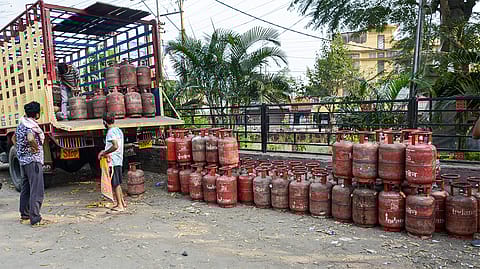
Representational Image | Credits: Shutterstock
3,000 raids, 1,500 LPG cylinders seized as domestic supply ramps up 40%: Govt
Amid rising global crude prices, India's Ministry of Petroleum and Natural Gas (MoPNG) has conducted 3,000 raids, seizing 1,500 LPG cylinders to combat hoarding. Despite panic buying and long queues, domestic LPG production has surged 40%, ensuring steady supply. The government has absorbed taxation losses to shield consumers, while refineries operate above full capacity.
This summary is AI-generated, and Fortune India is not responsible for its content or any associated copyright issues.
Panic buying hits petrol pumps, while government boosts LPG output and cracks down on hoarding
Representational Image | Credits: Shutterstock
Rising global crude prices and disruptions in international supply chains have added pressure on domestic fuel availability. While India imports a large part of its crude oil, production of Liquefied Petroleum Gas (LPG) and Piped Natural Gas (PNG) has been steadily increasing in recent years, supported by refinery expansions and government measures aimed at strengthening energy security.
Despite that, some cities have seen short-term shortages and long queues, as people rush to stock up amid price swings and uncertainty.
The Ministry of Petroleum and Natural Gas (MoPNG) has revealed that authorities conducted 3,000 raids, resulting in the seizure of 1,500 LPG cylinders amid rising concerns over domestic fuel availability. Sujata Sharma, Joint Secretary, MoPNG, noted that while panic buying and long queues at petrol pumps have become daily occurrences, supplies of LPG, PNG, diesel, and petrol remain “comfortable.”
MoPNG data shows that refineries are operating above full capacity, and domestic LPG production has surged nearly 40%, ensuring steady supply for households and key sectors. Commercial LPG, which had been temporarily halted, has been restored to about 70%, with priority given to industries such as chemicals, steel, dyes, and plastics.
Enforcement against hoarding has intensified, with 710 FIRs registered on March 27 and more than 350 fuel distributors issued show-cause notices.
Union Petroleum and Gas Minister Hardeep Singh Puri, citing MoPNG monitoring, said the government is closely tracking supply chains and has absorbed taxation losses to shield consumers.
“The government has taken a huge hit on taxation revenues to reduce oil companies’ losses, approximately ₹24 per litre for petrol and ₹30 per litre for diesel, amid sky-high international prices,” he said.
Recommended Stories
To maintain domestic availability, MoPNG stated that the Centre has reduced excise duties on petrol and diesel while reintroducing special additional excise duties (SAED) on diesel and ATF exports.
Earlier, in a post on X, he flagged the extent of the global price transmission.
Vivek Chaturvedi, CBIC Chairman, noted that export taxes are expected to generate ₹1,500 crore per fortnight while discouraging overseas shipments, with excise duty cuts projected to cost the government ₹7,000 crore over the next 15 days. The burden, he said, is being absorbed by the government rather than passed on to consumers.