
‘Crude at $122, global fuel prices up 20–50%; India absorbing ₹24–30/litre hit’: Petroleum Minister Puri
ADVERTISEMENT
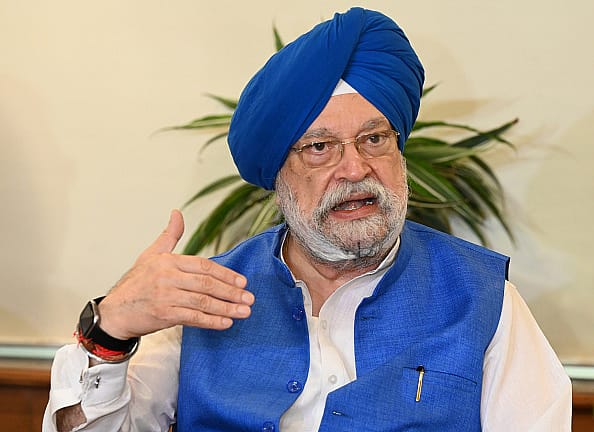
A steep run-up in international crude oil prices—from about $70 per barrel to $122 per barrel within a month—has triggered a broad surge in retail fuel prices globally, even as India has chosen to absorb much of the impact to protect domestic consumers.
In a post on X, Petroleum Minister Hardeep Singh Puri flagged the extent of the global price transmission. According to him, petrol and diesel prices have risen by 30–50% in Southeast Asia, around 30% in North America, 20% in Europe and nearly 50% in African markets.
“International crude prices have gone through the roof… Consequently, petrol and diesel prices for consumers have gone up all over the world,” Puri said.
Against this backdrop, the government opted against a full pass-through of global prices, choosing instead to cushion households and preserve demand momentum.
“The Modi Government had two choices—either increase prices drastically… or bear the brunt on its finances so that Indian citizen is insulated from international volatility.”
The decision continues a policy stance adopted since the onset of the Russia-Ukraine conflict, with a focus on shielding consumers from sharp external shocks. Puri credited Prime Minister Narendra Modi for backing the approach despite the fiscal implications.
“Hon’ble Prime Minister Narendra Modi Ji… decided to take a hit on its own finances again to safeguard the Indian citizen.”
The move has translated into sizeable under-recoveries for oil marketing companies, currently estimated at about ₹24 per litre on petrol and ₹30 per litre on diesel at prevailing crude levels.