The FAQs are AI-generated, and Fortune India is not responsible for its content or any associated copyright issues.
Dilip Shanghvi: The man behind India’s biggest pharma acquisition
/ 4 min read
By the time most of corporate India had woken up on Monday morning, Dilip Shanghvi had already redrawn the map of global pharmaceuticals.
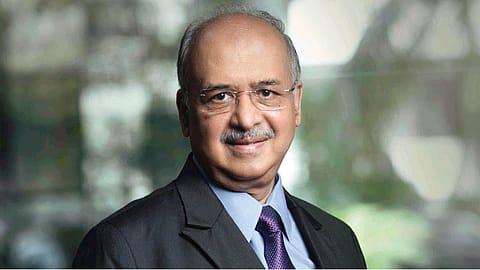
Dilip Shanghvi, Founder and Executive Chairman, Sun Pharmaceutical Industries
On April 27, 2026, Sun Pharmaceutical Industries announced a definitive agreement to acquire Organon & Co. in an all-cash deal valued at $11.75 billion—the largest-ever acquisition by an Indian pharmaceutical company. At $14 per share, the offer represented a premium of over 60% to Organon’s closing price in January. Sun’s stock jumped 7% on the news. Organon’s leapt 17%.
And yet, the man who authored this audacious move—executive chairman Dilip Shanghvi, now 70—said what he always says when the world is expecting fanfare. Quietly, methodically, precisely. "This transaction represents a significant opportunity for Sun Pharma to build on its vision of Reaching People and Touching Lives," he said. "Organon's portfolio, capabilities and global reach are highly complementary to our own." No triumphalism. No theatre. Just strategy.
The deal and what it does
The numbers are staggering. When the deal closes—expected by early 2027—Sun Pharma will vault into the world's Top 25 pharmaceutical companies, with combined revenues of $12.4 billion, operating across 150 countries. In one move, it becomes a top-three global player in women's health and the seventh-largest biosimilar company in the world—a market it had barely touched before.
Organon, spun off from Merck & Co. in 2021, reported $6.2 billion in revenue in FY2025. Its flagship product Nexplanon, a long-acting contraceptive implant, generates close to $900 million annually. Its portfolio spans fertility, respiratory, cardiovascular, and biosimilars. It is exactly the kind of business—global scale, established brands, undervalued—that Shanghvi has made his career acquiring and improving.
Sun plans to fund the deal with $2–2.5 billion of its own cash and bank financing from Citigroup, JP Morgan, and MUFG, with the combined entity expected to generate $2.5 billion in annual cash flow and $350 million in cost savings over the coming years. Unlike his $4-billion Ranbaxy acquisition—which was an all-stock deal—Shanghvi is paying cash this time. "We paid for that acquisition through a much more expensive currency, our stock, leading to dilution," he said. Shareholders will not be diluted. The balance sheet will carry the load.
₹10,000 to $11.75 billion
To understand the Organon deal, you have to understand where Shanghvi started.
Born in Amreli, Gujarat, he grew up in Kolkata as the son of a wholesale drug distributor. In 1983, a year after graduating from the University of Calcutta with a commerce degree, he founded Sun Pharma with five psychiatric products, a two-person marketing team, and ₹10,000 borrowed from his father. The first manufacturing unit came up in Vapi, Gujarat, that same year.
From the start, Shanghvi understood that niche beats volume in pharmaceuticals. While peers competed in crowded therapeutic categories, he focused on high-margin segments with limited competition — neuropsychiatry first, then cardiology and gastroenterology. While the industry norm was to spend 3–4% of revenues on R&D, he consistently invested around 6-9%, building what is now a global team of over 2,900 scientists.
The company went public in 1994. Three years later came Sun's first international acquisition: Detroit-based Caraco Pharmaceutical Laboratories. The template was set — find undervalued assets, enter strategically, and build patiently.
The art of waiting
If one quality defines Shanghvi above all others, it is patience. The Taro Pharmaceutical saga is the clearest proof. In 2007, Sun entered a merger agreement with Taro, an Israeli dermatology company with strong U.S. presence. Taro's promoters withdrew a year later. Rather than walking away, Shanghvi launched a hostile takeover, fighting simultaneous legal battles in American and Israeli courts. By 2010 he had a controlling stake. It took 14 more years—until July 2024—to complete full ownership.
Then came the $4-billion Ranbaxy acquisition in 2014, which made Sun the world's fifth-largest specialty generic company but temporarily dragged net margins from 30–35% down below 20%. His response was characteristically measured: improve by half a percentage point to one point each year. By FY25, Sun reported a gross margin of 79.3%, EBITDA margin of 29%, and net profit margin of 22.8%—a full recovery built on discipline, not shortcuts.
{{#most-powerful-women-snapshot-individual.slug}} {{/most-powerful-women-snapshot-individual.slug}} {{^most-powerful-women-snapshot-individual.slug}} {{/most-powerful-women-snapshot-individual.slug}} {{#showRanking}} {{current-rank}} {{/showRanking}} {{#photo.0.url}}
{{name}}
The Organon deal is the sixth major acquisition Sun has made in 16 years — each one deliberate, each one expanding a different dimension of the company's global reach.
Why biosimilars, why now
Sun's entry into biosimilars was not a reversal of strategy—it was the execution of a long-held view about timing. "The reason why we were not investing in biosimilars is there was no clarity about substitution as well as interchangeability," Shanghvi explained after the announcement. Now that regulatory pathways have clarified, the company aims to be "first to market"—buying into Organon's existing biosimilars platform rather than building from scratch. That platform already contributes 11% of Organon's revenues and is growing at a 13% CAGR. The deal also cracks open China, where Organon generates over $800 million annually—the world's second-largest drug market—and where Sun previously had minimal presence. In one transaction, three growth platforms unlocked: women's health, biosimilars, China.
The man beneath the milestone
Nothing about Shanghvi's manner would suggest the scale of what he has built. He walks Sun House's corridors like any other employee, arrives without an entourage, and speaks in a tone that leaves little room for misunderstanding.
Now serving as executive chairman after stepping down as MD in September 2025, he has handed over daily operations to managing director Kirti Ganorkar. Son Aalok serves as executive director and COO; daughter Vidhi heads consumer healthcare and India distribution. But the Organon deal—signed under Shanghvi's watch, bearing his strategic DNA—makes clear that a change in title has done nothing to reduce his ambition.
"Philosophically, we don't look at conventional business metrics," Shanghvi told Fortune India in an earlier interaction. "Our goal is to create what patients need and doctors expect. We design our processes around that, and it makes us successful."
For 43 years, that philosophy has taken Sun Pharma from five psychiatric drugs in Vapi to a $12.4 billion global enterprise. The Organon deal is not a new direction. It is the oldest one—pursued with the same quiet conviction that began with ₹10,000 and a factory in Gujarat.
Follow Fortune India
Frequently Asked Questions
NEXT STORY