Economic Survey 2026 bats for policy push for fairer gig work, flags power imbalance, income volatility
Economic Survey 2026 bats for policy push for fairer gig work, flags power imbalance, income volatility
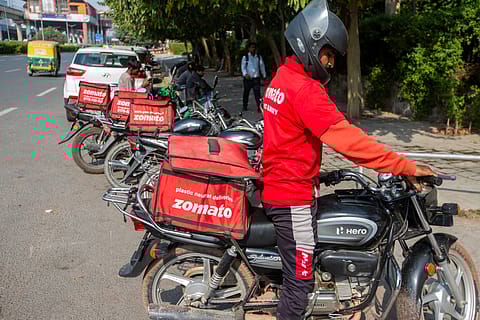
The Economic Survey 2026 emphasises the urgent need for policy reforms to address the power imbalance and income volatility in India's gig economy. It calls for competition rules, data access, and algorithmic transparency to ensure fairer worker protections and minimum earnings, as digital platforms increasingly control labor-market conditions.
The gig sector has grown sharply, from 77 lakh workers in FY21 to 1.2 crore in FY25, a 55% increase driven by widespread smartphone adoption and digital payments.
Policy must move faster to reshape India’s fast-expanding gig economy, with a sharper focus on competition, worker protections and minimum earnings, the Economic Survey 2026 tabled by finance minister Nirmala Sitharaman in Parliament on Thursday said, arguing that digital platforms have become critical labour-market infrastructure with disproportionate control over workers’ incomes and conditions.
“Policy should address this through competition rules, data access, and algorithmic transparency, while reorganising the social contract so that gig work benefits workers more fairly,” the survey said, warning that unchecked platform dominance risks widening income insecurity. It added that policy can “reduce the cost gap between regular and gig work by limiting incentives to avoid mandatory benefits and by setting minimum per-hour or per-task earnings (including waiting time).”
Long-due reforms
The intervention comes as the Union government rolls out the long-delayed labour codes, a reform the survey described as a “landmark step” in modernising labour regulation. The consolidation of 29 central laws into four codes is aimed at simplifying compliance while extending social security to a wider workforce, including gig and platform workers. “Importantly, the recognition of the gig and platform workers… marks a step towards formalising non-traditional forms of employment,” the report said.
The survey places these reforms against a labour market that is showing steady improvement. With a workforce of over 56 crore, indicators point to rising labour force participation, falling unemployment, and job creation across organised and unorganised sectors. However, it cautioned that realising the demographic dividend will depend on creating quality jobs and improving workforce skills, not just employment numbers.
The gig sector has grown sharply, from 77 lakh workers in FY21 to 1.2 crore in FY25, a 55% increase driven by widespread smartphone adoption and digital payments. Gig workers now account for over 2% of India’s workforce, with non-agricultural gig jobs projected to reach 6.7% by 2029-30, contributing an estimated ₹2.35 lakh crore to GDP.
Challenges
Yet, growth has come with vulnerabilities. Around 40% of gig workers earn less than ₹15,000 a month, while income volatility and “thin-file” credit histories limit access to formal finance, the survey noted. Platform algorithms control work allocation, ratings, and pay, raising concerns over bias and burnout. “The goal of gig-economy policy should be to reshape the terms so that workers exercise real choice rather than being pushed into gigs due to weak demand, skill mismatch, or the absence of a safety net,” it said.
The survey also flagged technology risks, including job displacement from AI and machine learning, underscoring the need for skilling and stronger social security. Provident fund coverage, insurance and maternity benefits remain patchy for gig workers, even as the nature of employer-employee relationships shifts towards flexible, task-based models with less defined accountability.