Economic Survey 2026: Rural consumption rebounds in 2025
/ 2 min read
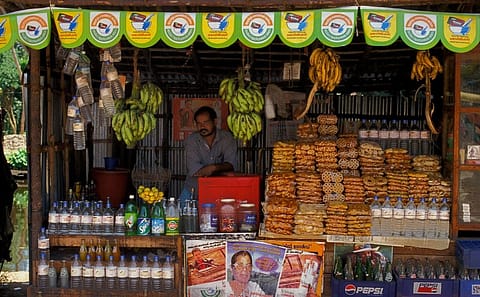
The Economic Survey also highlights a decline in dependence on MGNREGS for employment in rural areas. | Credits: Getty Images
Economic Survey 2026: Rural consumption rebounds in 2025
The Economic Survey 2026 highlights a significant rebound in rural consumption in 2025, surpassing urban areas. This growth is attributed to increased agricultural and non-agricultural wages, improved credit access, and better infrastructure. The survey also notes a decline in MGNREGS demand, indicating reduced rural unemployment and a shift towards non-farm employment.
This summary is AI-generated, and Fortune India is not responsible for its content or any associated copyright issues.
Rural consumption has risen to its highest level in 17 quarters.
The Economic Survey also highlights a decline in dependence on MGNREGS for employment in rural areas. | Credits: Getty Images
The year 2025 saw a resurgence of rural consumption. The quarterly results of consumer goods companies showed rural consumption outpacing urban. The Economic Survey 2026 endorses the trend.
The survey quoted NABARD’s latest Rural Economic Conditions and Sentiments Survey (RECSS) findings, which show a broad-based strengthening of rural economic fundamentals, with robust consumption, high income growth, rising investment, improved formal credit access, lower inflation perceptions, better loan repayment conditions and strong satisfaction with infrastructure.
Furthermore, the findings of RECSS are complemented by a recent research report stating that rural consumption has risen to its highest level in 17 quarters.
The report attributes this upturn to firm growth in real agricultural and non-agricultural wages, higher sales of tractors, fertilisers, and robust farm credit as well as healthy reservoir levels, lower input costs and steady MSP (Minimum Support Price) procurement, all of which have supported sowing activity and farm incomes. These developments collectively indicate improving rural economic conditions, says the Economic Survey.
It also highlights a decline in dependence on the Mahatma Gandhi National Rural Employment Guarantee Scheme (MGNREGS) for employment in rural areas. "While MGNREGS has long served as a critical safety net for rural households, recent trends reveal a notable decline in work demand under the scheme. Person days generated have declined significantly from a pandemic peak of 389.09 crore person days in FY21 to approximately 183.77 crore in FY26 (up to December 31, 2025), representing a decline of over 53%,” says the survey.
MGNREGS
This decline in MGNREGS demand coincides with a decrease in rural unemployment, from 3.3% in 2020-21 to 2.5% in 2023-24, suggesting that many rural households may be accessing non-farm or other non-MGNREGS work.
However, alongside these gains, deeper structural issues have persisted, points out the Economic Survey. “Monitoring in several states revealed gaps, including work not being done on the ground, expenditure not matching physical progress, the use of machines in labour-intensive work, and frequent bypassing of digital attendance systems,” says the report.
“Misappropriation accumulated over time, and only a small proportion of households completed the full 100 days of employment post-pandemic, indicating that while delivery systems improved, the overall architecture of MGNREGA has reached its limits and warrants reassessment in light of evolving rural realities,” it adds.
Viksit Bharat-Guarantee for Rozgar and Ajeevika Mission (Gramin) Act, 2025
This led to the Viksit Bharat-Guarantee for Rozgar and Ajeevika Mission (Gramin) Act, 2025, also referred to as VB-G RAM G Act, 2025. “The act is a comprehensive statutory overhaul of MGNREGS, aligning rural employment with the long-term vision of Viksit Bharat 2047, while strengthening accountability, infrastructure outcomes, and income security. The VB G-RAM G Act, 2025, represents a decisive shift in India’s rural employment policy. While MGNREGS, achieved significant gains in participation, digitisation and transparency over time, persistent structural weaknesses limited its effectiveness,” the survey adds.
Follow Fortune India
NEXT STORY