Even in a softer 2025, Mumbai showed resilience, here's why
/ 3 min read
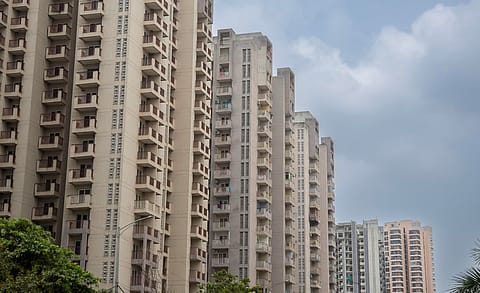
Mumbai's inherent structural depth and quality assets continued to attract buyers, maintaining liquidity and pricing power. | Credits: Sanjay Rawat
Even in a softer 2025, Mumbai showed resilience, here's why
In 2025, Mumbai's real estate market demonstrated resilience despite a 14% drop in housing unit sales across top cities. The total sales value rose by 6%, driven by a shift towards premium segments. Analysts attribute this to higher property prices, geopolitical uncertainties, and cautious consumer sentiment, while Mumbai's structural depth and quality assets maintained liquidity and pricing power.
This summary is AI-generated, and Fortune India is not responsible for its content or any associated copyright issues.
Despite a 14% decline in housing unit sales in 2025, Mumbai's real estate market saw a 6% increase in sales value, reflecting a shift towards premium segments. Analysts cite higher property prices and cautious consumer sentiment as key factors.
Mumbai's inherent structural depth and quality assets continued to attract buyers, maintaining liquidity and pricing power. | Credits: Sanjay Rawat
Sale of Indian housing units in the top seven cities dropped by 14% in 2025, even while the total sales value breached ₹6 lakh crore, a rise of 6%, a new report has revealed from ANAROCK Research in December 2025. Notably, these new data points towards a marked shift in buyer behaviour in favour of premium segments in the housing market.
Industry analysts attribite acombination of higher property prices, global geopolitical uncertainties, sporadic layoffs in technology sectors, and cautious consumer sentiment to the divergence in 2025. At the same time, parallel changes in lifestyles following the pandemic, growing incomes of professionals in urban areas, and steady demand from HNIs and NRIs, also pushed demand along the price spectrum.
Even as overall transactions moderated (in 2025), buyers demonstrated clarity, opting for better locations, stronger developers, and homes that offer longevity rather than just affordability. That is why sales value continued to expand despite lower volumes.
Sujay Kalele, CEO of TRU Realty
Sujay Kalele, CEO of Mumbai-based TRU Realty
Sujay Kalele, CEO of Mumbai-based TRU Realty, a new-age real estate development company, describes 2025 as a year when intent mattered more than impulse. “This was a value-led market,” he tells Fortune India. “Even as overall transactions moderated, buyers demonstrated clarity, opting for better locations, stronger developers, and homes that offer longevity rather than just affordability. That is why sales value continued to expand despite lower volumes.”
The dynamics of the supply side were largely in line with this optimism, as the ANAROCK report noted the number of new launches in the top seven cities increased by 2% on a YoY basis to around 4.19 lakh units in 2025. The MMR & Bengaluru regions together showed close to half of the new supply in the market, establishing the fact that these regions are the backbone of the Indian housing market. Notably, one-fifth of the supply was above the Rs 2.5-crore mark.
Mumbai’s performance is to be noted for its scale and complexity. MMR recorded the highest sales among all cities, selling around 1.28 lakh units in 2025, marking an 18% fall in sales compared to the previous year.
Mumbai's price trends are also reflective of stability and not speculation. While residential prices across the top seven cities rose by an average of 8% in 2025, most markets, including MMR, remained in single-digit appreciation territory.
Noting this trend, Kalele noted that Mumbai’s resilience lies in its structural depth. “Mumbai continues to attract end-users and long-term investors because supply is inherently constrained and demand is continuously refreshed through redevelopment, migration, and infrastructure upgrades,” he says. “Even in a softer year like 2025, the city showed that quality assets retain liquidity and pricing power.”
As the sector looks ahead, the year 2025 is likely to be remembered as a year that reaffirmed real estate’s transition into a more mature, value-conscious phase.
In 2026, the structural drivers that shaped 2025 are expected to extend. Kalele believes premiumisation and redevelopment are likely to continue anchoring housing demand, particularly in land-constrained urban markets, while lower interest rates and steady institutional capital flows should support buyer confidence. “The opportunity for developers will lie in disciplined execution, cost control, and alignment with infrastructure-led micro-markets, rather than chasing volumes.”
Mumbai-based TRU Realty, which has developed projects such as TRU MEADOWs, Vaarivana, Kekarav and Awestrum Life, works with a broad ecosystem of stakeholders across the real estate value chain, including homebuyers, channel partners, contractors, consultants and suppliers.
Follow Fortune India
NEXT STORY