From Premium to Mass: Bihar’s ‘Makhana Man’ is on a mission to democratise the superfood
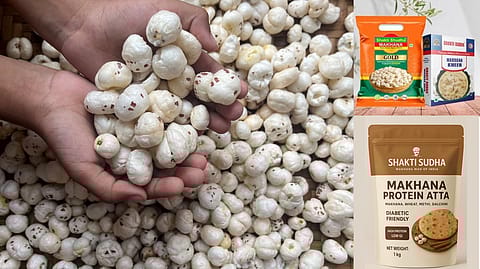
From Premium to Mass: Bihar’s ‘Makhana Man’ is on a mission to democratise the superfood
Satyajit Singh, known as the 'Makhana Man', is set to revolutionize the makhana market by launching his own brand, Sudha Shakti, offering affordable makhana products. With plans to open Pop N Mak cafes and expand cultivation, Singh aims to make makhana as popular as California almonds, democratizing this superfood for a wider audience.
After being a supplier of makhana for 26 years, Satyajit Singh is now going to launch his own consumer-facing makhana brand, Sudha Shakti. From snacks and cereals to atta and ready-to-cook products like kheer, the Sudha Shakti portfolio would have a host of makhana products.
A smoking hot plate of litti chokha or chana ghughni is comfort food for the average Bihari in Patna. It is available in every nook and corner of the city. The other delicacy that is extremely popular especially during the winter months is makhana. Roasted with ghee, pepper and salt, makhana is a popular tea-time snack not just in Bihar and Jharkhand but also in adjoining UP and other north Indian states.
Interestingly, the humble makhana (98% of the world’s makhana is produced in Bihar) or foxnut, today, a popular superfood with immense therapeutic properties, commands a Rs 6,000 crore market. Be it legacy snack brands like Haldirams or new-age direct-to-consumer brands such as Farmley and Mr Makhana, they are selling it at a huge premium. While a 100-gm packet of Farmley makhana is priced at a whopping Rs 165, a 20-gm pack of Mr Makhana costs Rs 50. In contrast, a 61-gram pack of Cornitos (corn) chips costs barely Rs 35, while a 75-gram pack of Doritos costs Rs 38.
Meet the Makhana Man
As Satyajit Singh, MD, Shakti Sudha Agro Ventures, sips into a latte at Starbucks in the Pataliputra Colony of Patna, he shows a picture of a new concept that he is incubating – Pop N Mak. “This will be a café concept where makhana would meet coffee. You will get freshly roasted makhana in various flavours as well makhana cookies, cereal bars and host of other goodies,” says Singh, better known as the ‘makhana man’. Will he partner with premium coffee chains like Starbucks? Not really. The makhana man wants to democratise the superfood and is hence trying to strike a deal with instant coffee brand, Nescafe. The first Pop N Mak café is likely to come up in July this year in Patna and Singh hopes to roll it out in Delhi, Bangalore and Mumbai. He has also set up a makhana vending machine at PVR in Gurugram. “Just as there are popcorn vending machines, we have installed a makhana vending machine. PVR patrons have a healthier snacking option,” he explains.
Singh built the makhana supply chain way back in 1999 when makhana production was barely 500 tonnes per year. From then to now, makhana production has reached 40,000 tonnes per annum. Singh has built a network of 15,000 farmers, who he helps to grow the nut and also buys it from them. His Rs 1,500 crore company, Sudha Shakti Agro supplies makhana to snack food companies and also exports. Singh claims the brands selling makhana are over-priced. “They buy from us at Rs 800 per kg and are selling at Rs 3,000-4,000. This is unfair.” After being a supplier of makhana for 26 years, he is now going to launch his own consumer-facing brand, Sudha Shakti. From makhana snacks and cereals to atta and even ready-to-cook products like makhana kheer, the Sudha Shakti portfolio would have a host of makhana products. “We are also a launching a microwave makhana snack which is pre-roasted. It will be like Act II popcorn.” Singh is clear that the products which he launches would be half the price of the existing makhana value-added products that are available in the market.
Sudha Shakti would hit the market in April and would primarily be distributed through ecommerce and quick commerce channels. “We want to have a national presence from day one,” says Singh. He is expecting to build a Rs 3,000 crore brand by 2030. He also plans to go international with both Pop N Mak and Sudha Shakti.
Makhana Ecosystem
Makhana today is being grown across 45,000 hectares of land, but the capacity of expansion according to Singh is 900,000 hectares. The crop typically grows in Madhubani, Darbangha, Purnia and Kathiar regions of Bihar. “These are flood prone and water-logged areas which have loamy soil (half sand and half soil) which is ideal for the crop. We are also expanding makhana cultivation in Eastern UP, Odisha and Assam which also have loamy soil,” explains Singh. Worldwide makhana is grown in certain regions Japan and China.
Singh’s dream is to make makhana as popular as California almonds. He already supplies to retailers such as Walmart and Costco, but the idea is to retail Sudha Shakti out of those shelves.