How Pritish Nandy Communications is building an ideas-first entertainment business for the streaming era
/ 3 min read
Rangita Pritish Nandy talks about how PNC balances creativity with profitability and adapts to changing audience behaviour, among other things.
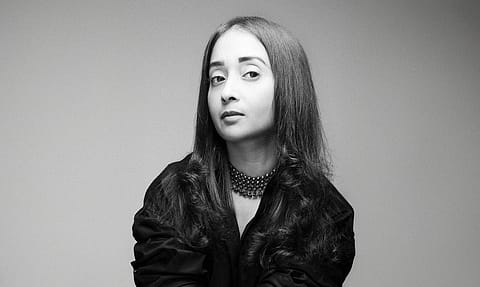
Rangita Pritish Nandy, President and Creative Director at Pritish Nandy Communications | Credits: Pritish Nandy Communications
Entertainment companies are often built for a format. Some emerge in television, some scale in cinema, and a few reinvent themselves for streaming. Very few survive every platform shift and remain culturally relevant across generations.
Pritish Nandy Communications (PNC) wants to be one of those exceptions.
Over 32 years, the Mumbai-based content company has navigated India’s biggest entertainment transitions—from terrestrial television and satellite broadcasting to theatrical cinema and now streaming-led storytelling. Along the way, it has built a portfolio that includes The Pritish Nandy Show, Kaante, Chameli, Hazaaron Khwaishein Aisi, Four More Shots Please!, Modern Love Mumbai, Ziddi Girls, and most recently, The Royals.
But for Rangita Pritish Nandy, president and creative director at PNC, platforms were never the real business. “At the core, we are a creative hot-shop that prides itself on having our ears to the ground at all times and actually building and leaving behind a creative legacy,” Nandy tells Fortune India. “Stories, experiences, world-building and ideas are at the heart of everything we do.”
That ideas-first philosophy has helped PNC navigate what may be entertainment’s most disruptive decade yet. “Everything is driven by money and profits—that’s not specific to entertainment,” says Nandy. “But it’s only the entertainment business that wants to toss profitability at the altar of creativity. At PNC, we’ve never done that.”
Instead, she argues, sustainable storytelling comes from balancing artistic ambition with commercial realities and understanding the expectations of distribution partners.
PNC reported revenue of ₹38.3 crore in FY26, reflecting the changing economics of the content business even as it continued investing in original storytelling. That philosophy is shaping how the company develops and pitches content today.
According to Nandy, creators can no longer think in terms of standalone projects. Every story now needs to demonstrate longevity. “As a creative house, we get one trailer to rope in the audience, one pilot to grab attention for a season, and one season to build a franchise that can ride across a decade,” she says. “One show, one season is not the game-changer.”
That shift reflects a broader industry reality where IP creation and world-building increasingly matter more than content volume.
Premium streaming vs newer formats?
While premium streaming recalibrates, newer formats such as micro-dramas, vertical storytelling and creator-led entertainment are attracting both audiences and investors.
PNC does not see these formats as competition. “Complementary, entirely,” says Nandy. “The world needs more storytellers. Good, better, best will emerge out of that. But there is an audience for almost everything.”
{{#most-powerful-women-snapshot-individual.slug}} {{/most-powerful-women-snapshot-individual.slug}} {{^most-powerful-women-snapshot-individual.slug}} {{/most-powerful-women-snapshot-individual.slug}} {{#showRanking}} {{current-rank}} {{/showRanking}} {{#photo.0.url}}
{{name}}
That openness to experimentation comes from experience. Across more than three decades, PNC has built content for television, theatres, and digital audiences without treating any one medium as permanent.
Nandy points to what she calls “first moves”—content that arrived ahead of market trends. The Pritish Nandy Show, she says, opened up intimate celebrity conversations long before personality-led content became mainstream. Four More Shots Please! created a women-led ensemble format that travelled globally and earned an International Emmy nomination. More recently, The Royals demonstrated how Indian storytelling can scale globally through premium world-building and franchise ambition.
Behind every successful show, she says, sits collaboration.
“Our writers are our heart. We are, because they are,” says Nandy. “An idea can belong to one person, but for it to seize audiences and pop culture, it needs a village to believe and deliver.”
That becomes more relevant as AI begins reshaping production workflows. AI tools are entering development, production and distribution, but Nandy believes technology will remain an enabler rather than the source of originality. “Technology will enable scale, but ideas and instinct will still lead the way,” she says.
At the same time, audience behaviour continues to evolve. Attention spans are becoming more fragmented and consumption increasingly mobile-first.
Yet Nandy rejects the idea that long-form storytelling is under threat.
“Good stories and powerful storytellers will always have an audience because they’ll evolve with changing consumer preference,” she says.
Follow Fortune India
NEXT STORY