iD Fresh eyes ₹2,000 crore revenue and an IPO by FY30, driven by technology-led scale and fresh food innovation
/ 3 min read
In an interview with Fortune India, CEO Rajat Diwaker explains how the preservative-free food brand is using predictive analytics, cold-chain innovation and a near-zero inventory model to drive growth—while preparing for its next phase of expansion and public markets.
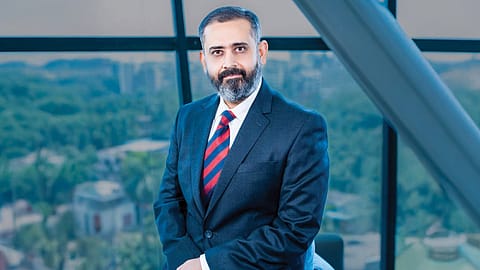
Rajat Diwaker, CEO, iD Fresh Food
For most food companies, scale and shelf life move together. For iD Fresh Food, scale has meant solving for freshness.
Over the last two decades, the Bengaluru-headquartered company has emerged as one of India's most recognisable fresh food brands by building an unconventional proposition: ready-to-cook and convenience foods without preservatives. What began with batter has expanded into a broader portfolio spanning parathas, paneer, curd, coffee, rotis and other fresh food offerings.
Now, the company is preparing for its next phase of growth.
According to Tracxn data, iD Fresh reported annual revenue of ₹688 crore in FY25, up 22% year-on-year, while net profit stood at ₹50.8 crore. The company has raised $126 million across 10 funding rounds and was valued at ₹4,450 crore following its latest funding round in February 2026. Employee strength stood at around 1,943 as of August 2025.
Speaking to Fortune India, Rajat Diwaker, CEO, iD Fresh Food, says the company's success has been less about chasing growth milestones and more about staying disciplined on what consumers expect from the brand.
"When consumers think of iD, two things stand out—freshness and food without preservatives," says Diwaker. "Trust does not happen overnight. It gets built over years of consistently delivering the same promise."
What does iD 3.0 look like?
Interestingly, Diwaker says the company has already moved beyond what it internally called iD 2.0.
Three years ago, the company set itself a mid-term target of becoming a ₹1,000 crore business. According to him, that phase has largely played out as planned.
"We should actually talk about iD 3.0," he says.
The ambition now is larger: to build a ₹2,000 crore business by FY30 while becoming what he calls a "powerhouse of innovation and execution".
While the target implies an accelerated growth trajectory from current levels, Diwaker says the plan is designed to remain aligned with iD's historical CAGR rather than pursue unsustainable expansion.
{{#most-powerful-women-snapshot-individual.slug}} {{/most-powerful-women-snapshot-individual.slug}} {{^most-powerful-women-snapshot-individual.slug}} {{/most-powerful-women-snapshot-individual.slug}} {{#showRanking}} {{current-rank}} {{/showRanking}} {{#photo.0.url}}
{{name}}
The strategy, according to him, is not dependent on dramatic category shifts but on deepening penetration within existing markets and selectively expanding internationally.
India will continue to remain the primary growth engine, led by stronger execution and scale within existing geographies rather than aggressive market additions. Internationally, iD plans to strengthen its presence across the UK, US, Canada and Singapore, while continuing to expand operations in Saudi Arabia. That journey also includes an eventual public listing.
"There is absolute intent to land a successful IPO in the next two years," says Diwaker, while clarifying that timing would depend on market conditions and multiple external factors.
The company says preparations for public-market readiness are underway, although listing timelines remain flexible.
On funding and ownership, Diwaker confirmed that iD's cap table includes investors such as Apax Partners, Premji Invest and TPG NewQuest. While the company has raised capital across seed, Series A, B, C and later-stage rounds over the years, detailed round-wise disclosures remain confidential.
How is iD building convenience without compromising freshness?
Unlike traditional packaged food companies that optimise for longer shelf life, iD's operating model is designed around preserving freshness.
Diwaker says the company's consumer proposition has always centred on enabling convenience without replacing the experience of home cooking.
Its core target audience remains working women aged 25–55—consumers looking for convenience while still retaining ownership of the final meal experience.
"We want consumers to get the credit for serving the finest dosa or meal at home. We simply help make that possible faster," he says.
Any new product entering the portfolio must pass three filters: it should enable smarter convenience, remain fresh, and use ingredients commonly found in household kitchens.
As part of broadening its fresh food portfolio, iD is also expanding into healthy snacking, with launches already underway across select markets including India, while strengthening distribution in international markets.
Can fresh food scale nationally?
That question has shaped much of iD's operational architecture. The company has embedded technology across sourcing, production planning and demand forecasting to operate a highly responsive supply chain.
Predictive analytics determines raw material and packaging requirements months in advance while daily production decisions are continuously adjusted based on expected demand.
The goal, Diwaker says, is simple: eliminate food waste.
"We really want every packet that leaves our factory to reach consumers. We do not want products coming back into the system."
To make that possible, iD operates on what it describes as an ultra-thin inventory structure—roughly one day of inventory across manufacturing facilities, distribution centres and retail channels.
Shelf life, however, remains the category's toughest challenge.
According to Diwaker, three variables determine success: quality of incoming raw materials, packaging technology and temperature-controlled logistics.
Its multi-layer packaging system, combined with cold-chain discipline, currently allows the company to maintain approximately seven days of shelf life without preservatives.
For iD Fresh, the next phase is not about becoming another packaged foods company—it is about proving that fresh food can become a scaled, profitable, and eventually public-market-ready business.
Follow Fortune India
NEXT STORY