India must shift from production to value addition, says Chirag Paswan on India's food processing industry
/ 2 min read
A recent FICCI-Deloitte report estimates that India's food processing industry could become a $600 billion market by 2030, driven by higher value addition, innovation, technology adoption and exports.
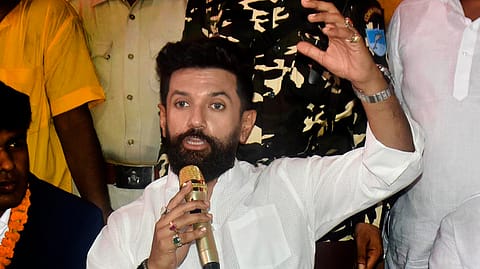
Chirag Paswan, Cabinet Minister of Food Processing Industries of India | Credits: Getty Images
India's food processing industry is still at the beginning of its growth journey despite being one of the world's largest agricultural producers, Union Food Processing Industries Minister Chirag Paswan said today, making a case for greater value addition, technology adoption and stronger links between farms and factories to unlock the sector's full potential.
Speaking at Coca-Cola's celebration marking 50 years of Maaza in India, Paswan said the beverage brand's journey demonstrates how processing can transform a seasonal, perishable fruit into a product that reaches consumers throughout the year and across markets.
"Today, when we have volume, the challenge is how to add value to it and how to convert our produce into a product. That is exactly what food processing is about," he said, adding that the same model should be replicated across multiple agricultural categories.
A recent FICCI-Deloitte report estimates that India's food processing industry could become a $600 billion market by 2030, driven by higher value addition, innovation, technology adoption and exports. The report notes that India currently processes only about 12-13% of its food output, far below developed economies, leaving considerable room for growth.
Value addition, not just production
Paswan argued that food processing should not be viewed merely as industrial activity but as an economic tool that strengthens farmers' incomes, reduces wastage and creates employment.
He pushed back against what he described as misconceptions around processed food, saying the term is often wrongly associated with unhealthy products.
"When we talk about processing, we are talking about value addition. The objective is to improve quality and increase shelf life. We have been doing forms of food processing in our homes for generations, whether it is making papad, pickles or preserving mangoes," he said. At the same time, he stressed that consumers have a right to transparent labelling and accurate nutritional information so they can make informed choices.
The minister said extending the shelf life of perishable produce gives farmers greater flexibility to sell when prices are favourable instead of being forced to offload crops immediately after harvest.
He highlighted the ministry's PM Formalisation of Micro Food Processing Enterprises (PMFME) scheme, which aims to connect at least two lakh people by providing financial assistance, handholding, packaging support and market access for small food businesses. Paswan cited the example of a woman entrepreneur in Ladakh who, after availing support under the scheme, built her own processing unit with turnover running into crores after previously earning around ₹8,000 a month. The venture now employs 23 people, illustrating the sector's potential to generate rural jobs.
Paswan also called for wider adoption of technologies such as irradiation to extend the life of perishable food and said platforms like World Food India help bring together startups, technology providers and industry stakeholders to share global best practices.
Looking ahead, he said India's ambition of becoming a "global food basket" will depend not just on producing more but on building globally competitive food brands while maintaining uncompromising quality standards.
{{#most-powerful-women-snapshot-individual.slug}} {{/most-powerful-women-snapshot-individual.slug}} {{^most-powerful-women-snapshot-individual.slug}} {{/most-powerful-women-snapshot-individual.slug}} {{#showRanking}} {{current-rank}} {{/showRanking}} {{#photo.0.url}}
{{name}}
"My dream is that there should not be a single dining table anywhere in the world without at least one Indian food product. But that can only happen if we never compromise on quality. A brand's reputation takes decades to build and can be lost in minutes," Paswan said.
Follow Fortune India
NEXT STORY