
Why India's frozen foods market is entering its next growth phase
ADVERTISEMENT
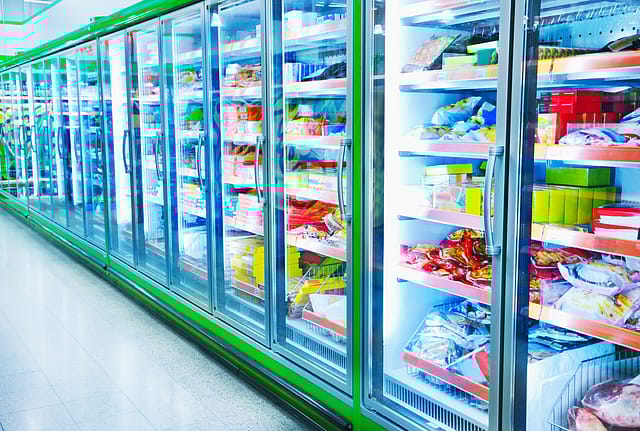
Frozen foods are shedding their image as an occasional indulgence in India. From burger patties and nuggets to momos and kebabs, ready-to-cook products are increasingly finding a place in household freezers as consumers seek quicker meal solutions without compromising on freshness.
The shift is prompting food companies to expand product portfolios, invest in cold-chain infrastructure and tap the rapid growth of quick commerce. According to Market Research Future, India's frozen foods market is projected to grow at a CAGR of 14.5% between 2025 and 2035. The Ministry of Food Processing Industries (MOFPI) says investments in cold-chain and value-addition infrastructure are improving market access while reducing post-harvest losses.
Industry executives say the next phase of growth will be driven not just by convenience, but by changing meal habits, product innovation and wider availability across digital and modern retail channels.
"The growth is largely being driven by convenience, but consumers still want food that feels freshly cooked at home," says Rishav Jain, managing director and co-lead, consumer, consumer tech & retail, Alvarez & Marsal India. "Unlike developed markets, India is moving more towards ready-to-cook frozen products than ready-to-eat meals."
According to Jain, products such as nuggets, fries and momos are seeing the strongest momentum because they allow consumers to complete the final stage of cooking at home. "There are two big consumer trends driving the category—convenience and the desire to serve something freshly prepared. Consumers don't want to prepare everything from scratch, but they also don't want food that simply needs reheating," he says.
He estimates the overall frozen food category is growing at over 13% annually, with prepared frozen foods outpacing traditional frozen vegetables such as peas and corn.
Why are frozen foods becoming an everyday staple?
For food companies, the biggest shift has been the transformation of frozen snacks into pantry essentials.
"What was once considered an occasional or premium indulgence is steadily becoming a more frequent choice in Indian households," says Ashu Phakey, vice president and business head – frozen and fresh foods, ITC Master Chef. Rising incomes, busier lifestyles and increasing workforce participation among women have fundamentally changed meal planning, making frozen foods a practical solution for everyday consumption.
Consumer behaviour is also evolving beyond quick snacking. "Consumers are no longer viewing the category only as a snacking solution. Frozen foods are becoming part of regular pantry stocking. Burger patties, kebabs and nuggets offer convenient meal solutions that elevate food at home. The freezer is now becoming the new pantry," says Phakey.
To capitalise on the shift, ITC has expanded its portfolio with products such as Onion Rings, Piri Piri Prawns, Falafel Kebab, Sabudana Tikki and Veg Pizza Pocket, while leveraging Individually Quick Freezing (IQF) technology that preserves taste and texture without added preservatives.
The category is also benefiting from changing cooking habits. Shreyashi Keshri, head of marketing, McCain Foods India, says the growing adoption of air fryers has expanded consumption occasions beyond traditional snacking. "Consumers are looking for convenience, taste and versatility. Air fryers have helped bridge the gap between restaurant-style experiences and at-home consumption," she says.
McCain has introduced products specifically designed for air fryers while broadening its portfolio for after-school snacking, evening cravings, family sharing occasions and mini meals. Keshri adds that quick commerce has emerged as an important growth lever by improving accessibility, accelerating trial among younger consumers and helping brands become more agile in assortment planning and consumer acquisition.
Can quick commerce unlock the next growth phase?
The opportunity is drawing companies beyond the frozen category as well. LT Foods, known for its DAAWAT rice brand, is strengthening its presence in ready-to-eat and ready-to-cook foods through offerings such as Biryani Kits, Thai Green Curry Rice Kits and Cuppa Rice.
"The food landscape is undergoing a fundamental transformation driven by changing lifestyles, urbanisation and dual-income households," says Ritesh Arora, CEO – India & Far East, LT Foods Ltd. He says younger consumers are increasingly comfortable with packaged foods, while e-commerce and quick commerce have lowered the barrier to trial. The company's digital channels grew more than 45% in FY26, reflecting the rising importance of online grocery platforms in scaling convenience foods.
Yet, despite the strong demand outlook, profitability remains a challenge. Jain points out that frozen foods are inherently capital-intensive because companies must maintain uninterrupted cold-chain infrastructure from factories to retail outlets. Success, he says, will depend on balancing distribution costs with affordable pricing while continuing to innovate.
With quick commerce improving reach, cleaner-label products gaining favour and brands investing aggressively in new formats, India's frozen foods industry appears to be entering its next phase of growth—one where convenience is no longer a premium proposition but an everyday expectation.