Indian firms are ditching risky global markets; 91% exploring new regions as tariffs bite, says HSBC report
/ 3 min read
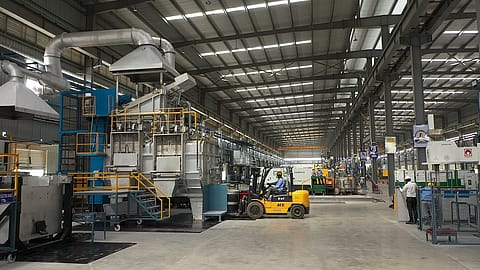
The survey reveals that 76% of Indian firms are reassessing their long-term business strategies in response to changes in trade policies.
Indian firms are ditching risky global markets; 91% exploring new regions as tariffs bite, says HSBC report
HSBC's survey shows Indian firms are shifting focus due to global trade uncertainties, with 91% exploring new markets and 87% concentrating on domestic clients. This strategic pivot aims to mitigate risks and capitalise on emerging opportunities. Indian companies are adjusting to higher costs and disruptions, yet remain confident in their growth prospects over the next two years.
This summary is AI-generated, and Fortune India is not responsible for its content or any associated copyright issues.
Amid global trade tensions, Indian firms are pivoting their strategies to focus on domestic markets and explore new regions, as revealed by an HSBC survey. With 91% of companies seeking new markets and 87% prioritising local clients, businesses are adapting to minimise risks and seize opportunities. Despite challenges, Indian firms remain optimistic about international growth prospects.
The survey reveals that 76% of Indian firms are reassessing their long-term business strategies in response to changes in trade policies.
Amid global tariff and trade tensions, Indian firms are rethinking their trade strategies to adapt to evolving market dynamics, with 87% them pivoting focus toward domestic clients, prioritising local customer needs to ensure stability, according to the HSBC Global Trade Pulse Survey, which examines the business strategies and sentiments of 5,750 international companies in 13 global markets, including 250 firms from India.
The survey reveals that 76% of Indian firms are reassessing their long-term business strategies in response to changes in trade policies, while 80% report exercising greater caution in expansion and investment decisions due to trade-related uncertainties.
“Indian businesses are demonstrating remarkable resilience and adaptability in the face of global trade uncertainties. The findings of the HSBC Global Trade Pulse Survey highlight a pivotal shift, with Indian firms recalibrating their focus toward domestic markets and actively exploring new regions to mitigate risks and seize emerging opportunities. This dual approach underscores the agility of Indian enterprises in navigating complex trade dynamics while maintaining an optimistic outlook on growth,” said Runa Baksi, Head of Global Trade Solutions, HSBC India.
The survey found that in light of the current trade dynamics, businesses are adopting various strategies to navigate uncertainties. A significant 91% of Indian firms are focusing on entering new markets, particularly in regions less affected by trade disruptions, while 87% are shifting their attention to domestic markets, prioritising local customers, and minimising international exposure.
Additionally, 82% are choosing to exit high-risk markets impacted by trade uncertainty, and 87% are exploring mergers and acquisitions to bolster their market position or strengthen supply chains through strategic partnerships.
The survey also shows 83% of Indian firms (73% global average) anticipate a substantial rise in cost in the next six months due to trade uncertainties, with 51% being concerned by the escalating expenses driven by tariffs and other trade-related factors.
To address these challenges, 42% of Indian companies have already adjusted their prices to account for higher costs, while 48% are planning similar measures. Additionally, 45% of Asian firms have increased their inventory levels to mitigate supply chain disruptions, with another 48% of Indian firms intending to follow suit.
Despite these challenges, Indian firms remain optimistic. An impressive 96% of Indian companies (compared to an 89% global average) express confidence in their international growth prospects over the next two years. To achieve this, Indian firms are adapting their trade strategy to significantly increase their reliance on the USA, as well as South Asia and the Middle East.
Furthermore, 80% of the Indian firms believe that trade uncertainties have encouraged their businesses to evolve and explore new opportunities. During this period of disruption, 56% of Indian firms seek support with crisis planning and business resilience, while 53% require tools to manage trade risks effectively.
Notably, India is currently engaged in negotiations for around 10 Free Trade Agreements (FTAs) and bilateral trade deals with various global partners, even as it secured a “historic and ambitious” agreement with the UK on May 6.
Since 2019, India has been actively pursuing these trade deals in response to changing economic conditions and to address the trade imbalance that tends to favour its partners. FinMin sources say India is in discussions regarding updates to existing FTAs and bilateral agreements, as well as new deals with approximately 10 countries. Negotiations are ongoing with the US and the EU, with efforts also focused on establishing fresh trade relations with other nations.
Follow Fortune India
NEXT STORY