India's infrastructure build-out sets records, but the wires and warehouses need to catch up
/ 5 min read
The numbers point to an economy that is building faster than at any point in the past decade—but also to one that is straining the wires, warehouses and waterways meant to move that new capacity to where it is needed. That tension, more than any single project, is the real infrastructure story of the year.
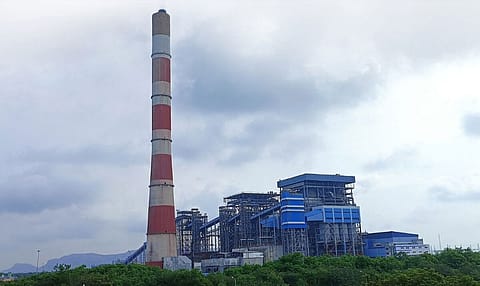
Credits: Vedanta
India's power and infrastructure sector spent the past year setting records on almost every metric that matters—peak electricity demand, generation capacity, highway construction, port cargo and non-fossil power capacity all hit new highs. The country met its highest-ever peak electricity demand of 256.1 GW on April 25, a milestone the Ministry of Power said was managed without any shortage even as India continued to export power to neighbouring countries, and one that surpassed the previous high of 250 GW recorded in May 2024. Energy shortages at the national level fell to just 0.03% in FY 2025-26, down sharply from 4.2% in FY 2013-14.
The numbers point to an economy that is building faster than at any point in the past decade—but also to one that is straining the wires, warehouses and waterways meant to move that new capacity to where it is needed. That tension, more than any single project, is the real infrastructure story of the year.
Power demand and capacity
India met peak power demand of 242.49 GW during FY 2025-26 even as the government described the year as a landmark period for generation, transmission and distribution. By April 2026, that record had already been broken, with demand climbing to 256.1 GW on the back of an early, intense summer—consumption grew nearly 8.9% in April compared with the same period a year earlier. Officials now expect demand to touch around 270 GW later in the year.
Supply has kept pace so far. India's total installed power generation capacity rose 104.4% over a decade, from 249 GW as of March 2014 to 509.74 GW as of November 30, 2025, with 55.57 GW added between January and November 2025 alone. The Ministry of Power attributed the record demand being met without disruption to a capacity addition of around 65 GW during FY 2025-26. Thermal power still does the heavy lifting: at the moment of peak demand in April, thermal accounted for 66.9% of generation, with solar the second-largest contributor at 21.5%. Coal capacity itself continues to expand alongside renewables—13.32 GW of new coal-based thermal capacity was awarded in FY 2025-26 through November, taking total coal and lignite capacity to 226.23 GW.
Renewables reshape the power mix, but the grid has to keep up
The clean-energy build-out accelerated sharply. India added a record 55.29 GW of non-fossil capacity in FY 2025-26—its highest annual addition ever, and nearly double the 29.5 GW added the previous year—taking total non-fossil capacity to 283.46 GW as of March 31, 2026. By late July 2026, that figure had crossed 300 GW. Solar led the additions, with the country crossing 150 GW of installed solar capacity during the year. Momentum has continued into the new financial year: India installed a record 29 GW of solar and wind capacity in the first half of calendar 2026 alone, with Gujarat and Rajasthan accounting for over half the solar additions.
Capacity additions are not the same as electricity actually delivered, and that distinction matters more as the renewable share rises. In July 2025, renewables met a record 51.5% of the country's electricity demand of 203 GW—but that was a single high point, not a sustained baseline, since solar output falls to near zero after dark and wind is variable. Storage remains the weak link: India has identified pumped storage potential of around 258 GW but has developed only about 7 GW, or 2.7%, of it so far. Battery storage contributed a token 201 MW even at the April peak, per the ministry's own data. As solar and wind additions keep outpacing storage and transmission build-out, grid balancing—not capacity creation—becomes the binding constraint on how much of this clean power actually reaches consumers.
Roads, highways and logistics shift up a gear
Road-building also set records, though the numbers vary by agency. NHAI alone constructed over 5,300 km of national highways in FY 2025-26, about 15% above its target of 4,640 km, with capital expenditure exceeding ₹2,44,000 crore—2.5% above budgetary support for the year. NHAI's own construction accounts for only 45-50% of total national highway building; the rest comes from NHIDCL, the Border Roads Organisation and state PWDs. Independent auditing of NHAI's accounts has also flagged gaps between announced capex and booked capex, stressing that headline construction numbers do not always translate cleanly into completed, revenue-generating assets. The shift now underway is qualitative as much as quantitative: newer projects favour access-controlled expressways and high-capacity corridors—such as the DND-Faridabad-KMP Expressway—over simple lane-length additions, indicating a push toward corridors that can absorb rising freight and passenger traffic rather than just more kilometres of tarmac.
Railways, ports and freight increasingly move as one system
Indian Railways reached 99.6% electrification of its broad-gauge network by March 2026, covering 69,873 route km, up from just 21,801 km in 2014, and carried a record 741 crore passengers in 2025-26. The freight-specific build-out is the more consequential shift for logistics costs: India became the first country to commercially run electric double-stack container trains at scale on the Western Dedicated Freight Corridor, a 1,506-km line built for freight alone. The corridor connects directly to JNPT and Gujarat's ports, aiming to reduce truck congestion around port hinterlands. A new 2,100-km Dankuni-Surat DFC was announced in the Union Budget 2026-27 to link the eastern and western freight networks.
Ports matched this momentum. India's major ports handled a record 915.17 million tonnes of cargo in FY 2025-26, surpassing the government's 904-MT target and growing over 7% year-on-year. Deendayal Port led individual throughput at 160.11 MT, followed by Paradip at 156.45 MT and JNPA at 102.01 MT. The alignment of rail freight corridors with port hinterlands—rather than each mode expanding independently—is what will determine whether these gains show up as lower logistics costs for exporters, a metric India has historically lagged on relative to manufacturing peers.
Urban transit expands, and the harder test begins
India's metro network crossed 1,143 km of operational track across 29 cities, making it the world's third-largest, with roughly 936 km more under construction. Under PM-eBus Sewa, the first electric city-bus operations began in February 2026 in Guwahati, Bhavnagar, Nagpur and Chandigarh, part of a plan to deploy 10,000 e-buses across smaller cities that currently lack organised bus services.
As we take them together, the year's numbers describe an economy that has proven it can build at scale—generation, highways, rail and ports have all expanded faster than at almost any point in independent India's history. What has not kept pace is the connective tissue: transmission lines and storage to carry renewable power reliably, financing models robust enough to survive a pause in asset monetisation, and the land acquisition and execution capacity to convert awarded projects into completed ones on schedule. The next phase of India's infrastructure cycle will be judged less by how much capacity gets added, and more by how efficiently the country uses what it has already built. END
Follow Fortune India
NEXT STORY