IndiGo faces scrutiny over alleged abuse of market dominance: What the law says about such practices
/ 3 min read
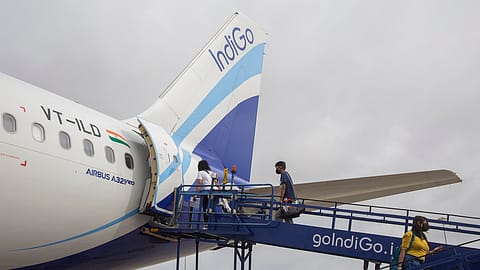
Let’s understand what the law says about unfair practices by dominant market players and the action the CCI can take if the allegations against IndiGo are proved | Credits: Sanjay Rawat
IndiGo faces scrutiny over alleged abuse of market dominance: What the law says about such practices
IndiGo, India's largest airline, is under investigation by the Competition Commission of India (CCI) for allegedly abusing its market dominance. The probe follows a complaint from a Bengaluru traveller who claimed IndiGo's fare surge after flight cancellations amounted to dominance abuse. The CCI rejected IndiGo's argument that the issue falls under DGCA jurisdiction, emphasizing its mandate over competition law.
This summary is AI-generated, and Fortune India is not responsible for its content or any associated copyright issues.
Under the Competition Act, 2002, simply having a large market share or being the biggest player is not illegal. What matters is whether you exploit that position in a way that harms competition or consumers
Let’s understand what the law says about unfair practices by dominant market players and the action the CCI can take if the allegations against IndiGo are proved | Credits: Sanjay Rawat
India’s largest airline, IndiGo, which commands about 65% of the domestic aviation market, has again landed in trouble. The Competition Commission of India (CCI) on Wednesday ordered an investigation to examine whether the airline abused its dominant position in the domestic airline market, following a complaint filed by a Bengaluru-based traveller. Responding to the CCI’s order, IndiGo contended that the issue should fall under the jurisdiction of the Directorate General of Civil Aviation (DGCA), as it pertains to flight operations and safety norms. The competition regulator, however, rejected this argument, asserting that questions related to market dominance and competition law fall squarely within its mandate.
Let’s understand what the law says about unfair practices by dominant market players and the action the CCI can take if the allegations against IndiGo are proved.
What happened this time?
A Bengaluru-based traveller, Kartikeya Rawal, approached the CCI after his flight was cancelled on December 5 last year, alleging that the only alternative flights offered were significantly more expensive. Rawal claimed that the higher fares amounted to an “abuse of dominance” by IndiGo. The airline denied the allegations and also contested the CCI’s jurisdiction to hear the matter, according to reports.
“…IndiGo is a significant market player… (has) effective control over market capacity and supply-side conditions. The domestic passenger aviation market exhibits very high and increasing concentration, exhibiting leading firms to possess the ability to operate independently of competitive forces, as the presence of effective rivals is materially constrained,” industry regulator CII said in its 16-page order.
The background
In early December 2025, IndiGo cancelled thousands of flights amid severe operational disruptions. On peak days, more than 2,500 flights were either cancelled or delayed, stranding tens of thousands of passengers across the country.
The disruption followed the implementation of new pilot duty and rest norms by the DGCA. IndiGo was reportedly underprepared for the changes, resulting in pilot shortages and an inability to operate flights as scheduled. The DGCA subsequently imposed a fine of ₹22 crore on the airline and directed it to take corrective measures.
Abuse of dominant position: What the law says
When IndiGo cancelled a large number of flights in December, it created an “artificial scarcity” in the domestic aviation market during the peak travel time, CII said in its order. According to the competition watchdog, when such actions are undertaken by a dominant player, it could amount to restricting the provision of services under Section 4(2)(b)(i) of the Competition Act.
The regulator also said IndiGo’s strong position in the market may have left consumers “locked in”, making it difficult for them to switch to other airlines. This is unfair or discriminatory conduct under Section 4(2)(a)(i) of the Act, according to CII. Under the Competition Act, 2002, simply having a large market share or being the biggest player is not illegal. What matters is whether you exploit that position in a way that harms competition or consumers.
Section 4 of the Act deals with abuse of dominant position. For example; charging unfair or discriminatory prices, limiting or restricting the production or supply of services and imposing unfair conditions on consumers, etc.
What if CCI finds a violation
If the probe concludes that IndiGo abused its dominant position, the CCI has several statutory powers under the law, including:
Penalties: Fines up to 10% of the average turnover over the last three years.
Cease-and-desist orders to stop the conduct and change business practices.
Corrective measures or behavioural remedies to prevent harm to competition.
Affected parties could also use CCI’s findings to seek compensation, although that would be through separate legal claims.
{{#most-powerful-women-snapshot-individual.slug}} {{/most-powerful-women-snapshot-individual.slug}} {{^most-powerful-women-snapshot-individual.slug}} {{/most-powerful-women-snapshot-individual.slug}} {{#showRanking}} {{current-rank}} {{/showRanking}} {{#photo.0.url}}
{{name}}
How IndiGo can defend itself
Reports suggest IndiGo may contend that the flight cancellations stemmed from operational planning challenges and regulatory changes, rather than any attempt to restrict services or exploit its market position. If the conduct is found to be unintentional and not aimed at harming competition, it could weaken the case for abuse of dominance.
Also, the airline may argue that the relevant market is broader and more competitive than the CCI has defined, citing the presence of other domestic carriers, international flight options, or alternative modes of transport (e.g. trains and buses). A broader market definition would make it more difficult to establish dominance.
The airline has already said the matter should be handled by DGCA. While CCI has rejected this view, IndiGo can pursue this in court or tribunal as a legal defence. If it succeeds, the competition inquiry could be delayed or limited.
NEXT STORY