


The FAQs are AI-generated, and Fortune India is not responsible for its content or any associated copyright issues.
Instamart sees 150% surge in protein orders as India’s food basket turns healthier
/ 3 min read
While India's tech-hub Bengaluru continues to lead protein demand, Tier II and smaller cities are growing over 200% faster than metros on protein orders.
THIS STORY FEATURES
Credits: Shutterstock
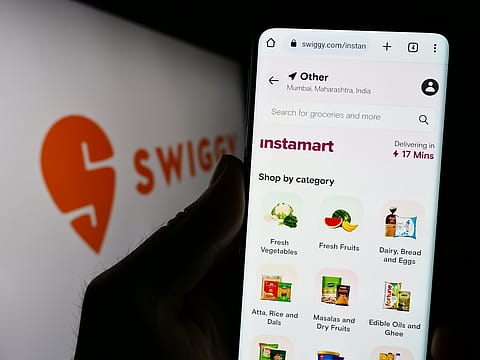
India’s growing appetite for healthier food choices is increasingly playing out on quick commerce platforms, with Instamart reporting a 150% surge in protein orders over the last two years as consumers shift towards protein-led consumption.
Swiggy's quick commerce arm said user spending on protein products has tripled during the period, prompting the company to expand its protein catalogue to nearly 10,000 stock keeping units (SKUs) across categories. The assortment spans everyday staples such as eggs, paneer and chickpeas to newer nutrition products including protein snacks, bars, shakes and oats.
The Indian protein market has evolved into a lucrative industry. IMARC, a global market research and advisory firm, estimates India’s protein supplements market at ₹7,461 crore in 2024, projected to reach ₹13,186 crore by 2033.
Swiggy's data, based on orders placed between January 2023 and December 2025 across more than 131 Indian cities, points to a widening shift in consumer behaviour beyond metros. While India's tech-hub Bengaluru continues to lead protein demand, Tier II and smaller cities are growing over 200% faster than metros on protein orders, led by Nagpur, Jaipur, Chandigarh, Bhubaneswar, Guwahati and Visakhapatnam.
Hari Kumar G, chief business officer at Instamart, said the platform is witnessing a structural shift in shopping baskets. “Instamart solved for access and convenience; now, we are solving for a fundamental shift in how India consumes. We are seeing a move from an ‘essentials’ basket to an ‘aspirational’ one, where ‘better-for-you’ is the new baseline,” he said.
For instance, a Chennai user spent ₹2.71 lakh largely on peanut-based protein staples, while a Bengaluru consumer spent ₹2.09 lakh on protein bars alone. Mumbai, Delhi and Surat also recorded high-value protein carts dominated by whey protein purchases.
The trend is gaining pace as more and more FMCG firms like Amul, Parag Milk, Britannia and others are trying to embed protein into everyday diets rather than position it as a supplement. The recommendation for an average adult is to consume about 60 grams of protein per day, according to the Indian Council of Medical Research, but urban India’s median intake stands at just 37 grams, underscoring a significant shortfall.
Kumar added that the company is trying to democratise access to nutrition-focused products across metros as well as emerging markets through wider assortments and affordable trial packs.
Traditional staples stay strong
Despite the rise of newer formats, traditional protein staples continue to dominate consumer carts. Eggs and paneer emerged as India’s most popular protein combination, followed by chicken and eggs. Chickpeas, makhana, oats, Greek yogurt, protein bars and protein snacks also featured prominently in consumer baskets.
Among search trends, peanut butter emerged as the most searched protein term on the platform in 2025, followed by Greek yogurt. Protein bread recorded the highest search-to-checkout conversion rate. But the fastest-growing category was protein snacks, which grew 300% year-on-year, while protein yogurt rose about 280%, led by Greek yogurt. Protein milk and shakes grew 225%, signalling that protein consumption is moving beyond gym users into everyday diets.
Traditional Indian staples also saw strong traction. Demand for soya chunks more than doubled, tofu grew nearly 87%, while makhana, chana sattu, besan and roasted chana witnessed a sharp rise as consumers increasingly added a protein lens to household staples.
{{#most-powerful-women-snapshot-individual.slug}} {{/most-powerful-women-snapshot-individual.slug}} {{^most-powerful-women-snapshot-individual.slug}} {{/most-powerful-women-snapshot-individual.slug}} {{#showRanking}} {{current-rank}} {{/showRanking}} {{#photo.0.url}}
{{name}}
The report also highlighted changing shopping patterns. The peak protein ordering window was between 7 am and 11 am, driven largely by breakfast consumption, while late-night orders between midnight and 4 am are emerging as a fast-growing behaviour.
Follow Fortune India
Frequently Asked Questions
NEXT STORY