Iran-Gulf tensions put spotlight on Dubai’s property boom, but fundamentals remain strong
/ 3 min read
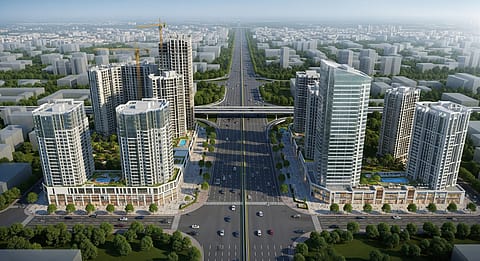
Rising tensions in the region have sparked concerns among international investors about the resilience of the UAE property market | Credits: Special Arrangement
Iran-Gulf tensions put spotlight on Dubai’s property boom, but fundamentals remain strong
Despite escalating geopolitical tensions involving Iran and the Gulf, Dubai's real estate market remains robust, supported by strong economic fundamentals and a diversified investor base. Experts believe that while short-term caution may arise, the emirate's property sector is well-positioned to absorb shocks and sustain long-term growth, maintaining investor confidence.
This summary is AI-generated, and Fortune India is not responsible for its content or any associated copyright issues.
Market participants say geopolitical tensions may slow property transactions in the short term as investors delay decisions until the regional outlook becomes clearer.
Rising tensions in the region have sparked concerns among international investors about the resilience of the UAE property market | Credits: Special Arrangement
Escalating geopolitical tensions involving Iran and parts of the Gulf are prompting global investors to reassess risks in Dubai’s booming real estate market. However, industry experts say the emirate’s property sector is entering the current uncertainty from a position of considerable strength, with robust fundamentals expected to cushion any long-term impact.
Rising tensions in the region have sparked concerns among international investors about the resilience of the United Arab Emirates property market, particularly as geopolitical uncertainty typically encourages investors to adopt a cautious “wait-and-watch” approach.
Still, developers and market analysts maintain that Dubai’s real estate market has historically demonstrated the ability to absorb shocks and rebound quickly, supported by strong economic fundamentals, investor-friendly policies, and a diversified global investor base.
According to analysts, while geopolitical developments may lead to short-term caution, Dubai’s strong fundamentals and diversified investor base could help the property market navigate the current uncertainty and sustain long-term growth.
Rizwan Sajan, founder and chairman of Danube Group, told Fortune India Dubai continues to attract investor confidence despite the current geopolitical developments.
Can strong fundamentals shield Dubai real estate?
“Dubai has consistently demonstrated its ability to absorb external shocks and recover swiftly because its core fundamentals remain strong,” Sajan said. “The city offers stability, effective governance, world-class infrastructure, tax efficiency, and a diversified economy, all of which continue to drive long-term real estate demand.”
According to Sajan, the ongoing situation has so far not led to investor withdrawals from the company’s projects. “To date, we have not seen a single case of an investor pulling back their investment from Danube. While geopolitical developments may create temporary uncertainty, the impact currently appears to be driven more by sentiment rather than any structural change in the market,” he added.
Sajan also pointed to Dubai’s track record of navigating crises, from the 2008 global financial downturn to the Covid-19 pandemic, and emerging stronger each time.
“For over three decades Dubai has been my home. Even during challenging times we continue to feel safe and secure here. Resilience is embedded in Dubai’s DNA, and I remain confident that the city’s economy and real estate sector will continue to grow,” he said, adding that Danube Group has accommodated more than 450 stranded individuals in its buildings and hotels during the current situation.
Market participants say geopolitical tensions may slow property transactions in the short term as investors delay decisions until the regional outlook becomes clearer. As geopolitical tensions in the region intensify, any shift in investor sentiment could directly influence the flow of Indian capital into Dubai’s property market.
Why does the UAE remain an attractive property investment destination?
Swatee Sawhney of EVG Real Estate LLC said investors typically prioritise stability and confidence when making real estate decisions.
{{#most-powerful-women-snapshot-individual.slug}} {{/most-powerful-women-snapshot-individual.slug}} {{^most-powerful-women-snapshot-individual.slug}} {{/most-powerful-women-snapshot-individual.slug}} {{#showRanking}} {{current-rank}} {{/showRanking}} {{#photo.0.url}}
{{name}}
“When geopolitical uncertainty rises, investors often adopt a wait-and-see approach. Some international buyers may defer property purchases until the situation becomes clearer,” Sawhney said. However, she noted that the UAE remains an attractive property destination due to its long-term growth prospects, strong rental yields and a large international investor base.
“Once geopolitical stability improves, the UAE property market is likely to see a rebound in purchasing activity. In the near term, however, transaction volumes may moderate and investors may adopt a more cautious approach,” she said.
Indian buyers continue to play a crucial role in Dubai’s property market. Industry estimates suggest that Indian nationals account for roughly 20–22% of foreign property purchases in the emirate, making them the largest overseas investor group.
Many Indian investors, experts say, are currently pausing transactions rather than cancelling them outright, opting to wait for greater clarity on the geopolitical situation before committing to large investments.
“The escalation of tensions involving Iran and parts of the Gulf has once again brought Dubai’s real estate market under the spotlight,” said Prashant Thakur of ANAROCK Group.
“While geopolitical tensions can temporarily affect investor sentiment, Dubai’s real estate market has historically demonstrated a remarkable ability to absorb shocks and recover relatively quickly. Assessing the impact of the current conflict therefore requires looking at both market fundamentals and past cycles,” Thakur added.
Follow Fortune India
NEXT STORY