The FAQs are AI-generated, and Fortune India is not responsible for its content or any associated copyright issues.
Jindal Stainless part-commissions 315.6 MW hybrid renewable project in MP, targets lower energy costs and emissions
/ 2 min read
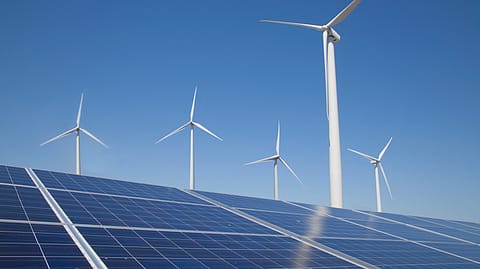
India aims to install 500 gigawatts (GW) of renewable energy projects by 2030. | Credits: Getty Images
Jindal Stainless part-commissions 315.6 MW hybrid renewable project in MP, targets lower energy costs and emissions
Jindal Stainless has part-commissioned a 315.6 MW solar-wind hybrid project in Madhya Pradesh, marking a significant step in its clean energy transition. This initiative aims to reduce energy costs and emissions, aligning with global ESG expectations. The project, developed with Oyster Renewable Energy, highlights the growing industrial demand for reliable and cost-efficient renewable solutions.
This summary is AI-generated, and Fortune India is not responsible for its content or any associated copyright issues.
Phased commissioning at Agar-Malwa to support decarbonisation goals and stabilise power costs amid rising energy volatility
India aims to install 500 gigawatts (GW) of renewable energy projects by 2030. | Credits: Getty Images
Jindal Stainless on Friday stated that it has part-commissioned a 315.6 MW solar-wind hybrid renewable energy project in Agar-Malwa, Madhya Pradesh, in partnership with Oyster Renewable Energy Pvt Ltd, as the stainless steel maker steps up its clean energy transition.
The project, developed by Oyster Renewable and set at a total investment of over ₹2,000 crores, includes a committed investment of ₹132 crore from Jindal Stainless.
It spans Madhya Pradesh and Gujarat, with 216 MW of solar and wind power to be generated in Madhya Pradesh and an additional 99 MW in Gujarat. The project is currently being commissioned in phases, starting with the Madhya Pradesh facility, to be followed by the commissioning of the Gujarat facility. Designed to support Jindal Stainless’ transition towards a cleaner and more resilient energy mix, the project reinforces the growing role of large-scale renewable infrastructure in driving industrial decarbonisation.
The hybrid project—combining solar and wind generation to deliver a more stable power profile—is being commissioned in phases. Once fully operational, it is expected to meet a sizeable portion of the company’s energy needs, while reducing dependence on conventional power sources.
Siddharth Bhatia, Managing Director and CEO, Oyster Renewable Energy, said, “This project represents Oyster’s capability to develop and execute large-scale hybrid infrastructure with capital discipline and technological depth. Our self-developed asset for Jindal Stainless Limited reflects this approach - combining solar and wind to deliver stable, cost-efficient, renewable energy while reducing carbon emissions by approximately 6.5 lakh tonnes per year."
A company spokesperson termed the development a “significant milestone” in its sustainability journey. “This hybrid renewable energy project aligns with our commitment to lower emissions intensity while ensuring a reliable and cost-efficient power supply for our operations,” the spokesperson said.
Hybrid model gains traction
The commissioning comes amid a broader shift by energy-intensive industries to secure renewable power as input cost volatility persists. Hybrid projects, which balance intermittency between solar and wind, are increasingly being adopted to improve generation consistency and optimise transmission infrastructure.
Recommended Stories
For Jindal Stainless, the move is also aligned with rising ESG expectations from global customers and investors, particularly in carbon-intensive sectors such as metals.
Industrial demand shapes deployment
From the developer’s perspective, the project reflects a growing preference among industrial users for customised clean energy solutions.
A spokesperson for Oyster Renewable Energy said, “Hybrid projects offer improved efficiency and consistency in generation. Our collaboration with Jindal Stainless reflects the increasing demand for solutions tailored to industrial consumption patterns.”
The Agar-Malwa facility will see additional capacity commissioned over the coming months, in line with the phased execution plan.
RANK
COMPANY NAME
REVENUE
(INR CR)
(INR CR)
{{#current-rank}} {{current-rank}} {{/current-rank}} {{^current-rank}} {{rank}} {{/current-rank}} {{name}} {{#revenue}} {{revenue}} {{/revenue}} {{^revenue}} {{noi}} {{/revenue}}
Notably, companies are accelerating renewable adoption and through captive and group captive routes across India’s manufacturing landscape. The objective remains two-fold: reducing carbon footprints and improving cost visibility. Industry analysts note that hybrid and round-the-clock renewable solutions are likely to play a central role in this transition, particularly for sectors with high energy intensity.