The FAQs are AI-generated, and Fortune India is not responsible for its content or any associated copyright issues.
JioStar bets big on content commerce
/ 3 min read
The media veteran considers the Swiggy partnership a first step towards building an all-new monetisation engine.
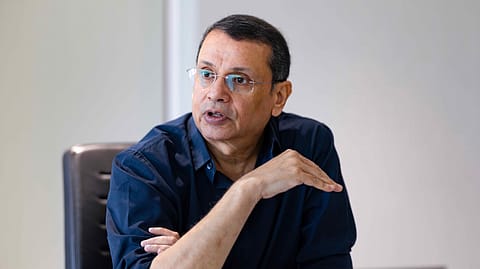
Uday Shankar, Vice Chairman, JioStar. | Credits: Narendra Bisht
If you had watched IPL on JioHotstar this year you may have ordered dinner on Swiggy too. The duo had partnered for an in-app food ordering experience through the tournament. The experience allowed viewers to browse restaurant menus, unlock exclusive match-triggered offers, place orders and track deliveries without leaving the live stream. Not only did the service attract over 37 million consumers to order dinner while watching a match, it also proved that sports and impulse binging indeed go hand-in-hand.
While repeated in-app ordering became a way of life, there were also instances of a single user ordering over 100 burgers in one transaction. Big-ticket food transactions on an entertainment app also became the norm. The partnership was undoubtedly a win-win for both JioHotstar and Swiggy. For Uday Shankar, vice chairman, JioStar, this deal is not just another monetisation opportunity; it is perhaps the first step towards building an all-new monetisation engine—content commerce. Shankar sees this operating in parallel with the traditional revenue-generation engines of advertising and subscription.
The media and entertainment veteran firmly believes that the industry has run out of monetisation ideas. He is determined to re-invent that cycle. He agrees that it is early days, but he is confident content commerce would emerge as a strong vertical of revenue generation for the media company. Shankar has always bet on newer revenue models. As CEO of Star India (which went on to become Disney Star and now JioStar), he was determined to build subscription as a strong alternative to advertising. In the business of streaming, he introduced concepts such as ‘freemium’ which enabled consumers to watch content free initially and then move on to subscription. Today, subscription revenue for JioStar is far higher than advertising, he claims.
“The default for media has always been innovation in content. We always think content first and that everything else will follow. If the content innovations look very interesting, we think the job is done. Be it print, radio, TV or streaming, content innovation has always been the focus. However, the only way to monetise the content has been through advertising and subscription. That's a huge limitation in my mind,” Shankar points out.
He says, advertising, which was once the preserve of the media companies, is no longer so. “Today, everybody is doing advertising. E-commerce companies are doing advertising; delivery platforms are also resorting to advertising. So, our pool of income or revenue has been hit by everybody. And, we haven't created anything new. The most disruptive media companies, even in streaming, are still limited to these two things—give me an ad or buy a subscription. That is not sustainable.”
“That has been my fundamental insight for a long time. So, when we were conceiving JioHotstar, this is this was the problem that we wanted to solve,” he further adds. Shankar believes that technology has enabled the media network to come up with newer methods of monetisation. “You just need to know what each customer wants and go very targeted. We have the ability to do that now. I am excited about this Swiggy experiment. It's a huge piece of engineering.” The coming months would see more such content commerce deals fructifying, he promises.
Shankar, who prefers JioStar to be referred to as a technology company which delivers content, says the latter has made it a secular platform. “We are limited by our imagination, how to use it. So, I am very clear that monetising through just vanilla subscription or advertising is not going to take you through to the next level.”
Frequently Asked Questions
NEXT STORY