‘LIC felt HDFC Bank’s valuations were right’, says bank treasury head Arup Rakshit
/ 2 min read
HDFC Bank stock rose 0.55% after the announcement; DII holding in the lender rose to 32.94% in the June quarter
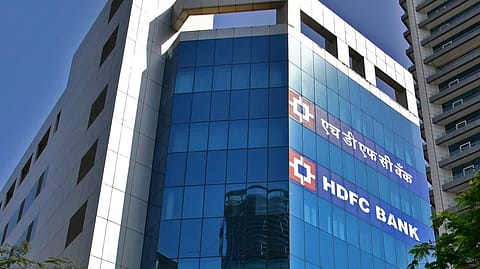
LIC stake in HDFC Bank analysis | Credits: Fortune India
This week, the RBI approved Life Insurance Corporation of India’s proposal to acquire an aggregate holding of up to 9.99% of HDFC Bank’s paid-up share capital or voting rights. Data shows that the insurer already held 4.11% of HDFC Bank’s total share capital as of August 14.
“Life Insurance Corporation of India increasing its stake in private lender HDFC Bank is part and parcel of them identifying good equity stocks. They believe the valuations are right for them in the stock and reflects the confidence they have in the bank,” said Arup Rakshit, Group Head, Treasury at HDFC Bank.
Domestic institutional investor (DII) holding in HDFC Bank has been rising in recent months, with LIC being the largest DII. DIIs held a 32.94% stake in HDFC Bank as of Q1 FY27, compared with 31.83% in the March-ended quarter. FII holding in HDFC Bank stood at 36.2%, down from 38.16% at March-end 2026.
On Friday, HDFC Bank announced that it had raised up to $1.75 billion through fixed-rate senior unsecured notes, its biggest overseas fundraise since the Covid-19 pandemic. The issuance was carried out through its GIFT City branch.
The notes are debt securities issued by the bank to investors at a fixed interest rate, with the principal to be repaid by the bank according to the terms of the issuance.
S&P Global Ratings assigned a BBB rating, while Moody’s assigned a Baa3 rating with a stable outlook to the offering.
Following the fundraise, HDFC Bank shares rose 0.55% on August 21 to ₹729 on the BSE. However, the stock remains down 4.2% over the past four weeks and 26.45% so far in calendar year 2026, amid concerns over corporate governance at the bank in recent months.
The rupee appears to have stabilised in the 95-96 range to the dollar since July-end, as the geopolitical tensions and the crude oil prices have eased. The success of the FCNR(B) scheme has also eased market sentiment. The SBI Research Ecowrap of August 17 says India has mobilised close to $57 billion through this scheme. "Another $25-30 billion could easily flow in the remaining days of August taking the total collections to around $85 billion. The balance of payments will be in surplus of around $50 billion with CAD at 1% of GDP," the SBI report says.
Rakshit expects the rupee to trade in a range of 94-96.5 against the US dollar over the next three years.
NEXT STORY