Lionsgate exits direct ownership of Lionsgate Play in India
/ 3 min read
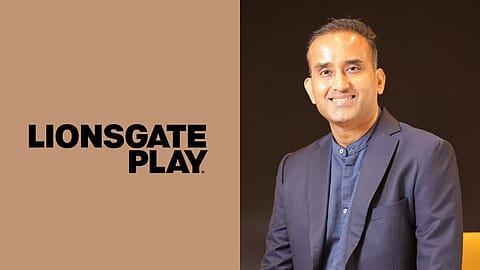
The transaction transfers full ownership and operational control of Lionsgate Play to Jain, who has led the platform for the past eight years as president of Lionsgate Play Asia. (In Pic: Rohit Jain)
Lionsgate exits direct ownership of Lionsgate Play in India
Lionsgate has transferred ownership of its streaming service, Lionsgate Play, in India and Southeast Asia to Rohit Jain, marking a strategic shift from direct control to licensing. This move allows Lionsgate to focus on global content production while Jain aims to scale the platform independently, maintaining its Hollywood-centric appeal in a competitive OTT market.
This summary is AI-generated, and Fortune India is not responsible for its content or any associated copyright issues.
Founder Rohit Jain takes control of the streaming platform as the Hollywood studio pivots to a licensing-led strategy in the region.
The transaction transfers full ownership and operational control of Lionsgate Play to Jain, who has led the platform for the past eight years as president of Lionsgate Play Asia. (In Pic: Rohit Jain)
Lionsgate has exited direct ownership of Lionsgate Play, the Hollywood studio's streaming service in India and Southeast Asia. Rohit Jain, founder and longtime Asia head of Lionsgate Play, has taken control—marking a clear shift in how the studio wants to participate in regional OTT markets.
The transaction transfers full ownership and operational control of Lionsgate Play to Jain, who has led the platform for the past eight years as president of Lionsgate Play Asia. Lionsgate will retain all its other film and television businesses in India and Southeast Asia, and will continue to license its content and brand to the platform under a multi-year agreement.
For Lionsgate, the deal sharpens its positioning as a standalone global content company focussed on film and television production, distribution, franchises, talent management arm 3 Arts Entertainment, and a library of over 20,000 titles—without the operational and capital intensity of running a regional streaming service.
“Rohit is an entrepreneur with a deep understanding of the Asia landscape,” said Lionsgate COO Brian Goldsmith, adding that founder-led ownership gives Lionsgate Play a clearer runway for its next phase of growth while allowing Lionsgate to participate through licensing rather than direct control.
A recalibration, not a retreat
The sale comes at a time when global studios are reassessing how much capital and management bandwidth to allocate to local OTT platforms, especially in price-sensitive and hyper-competitive markets like India. Rather than a full exit, Lionsgate’s approach mirrors a broader industry recalibration—shifting from ownership to partnerships, licensing, and content supply.
Under the new structure, Lionsgate will continue to license the Lionsgate Play brand and its film and television catalogue, ensuring the platform retains its Hollywood-heavy positioning while operating independently.
Jain will exit Lionsgate as part of the transaction and focus exclusively on scaling the platform. He credited Lionsgate CEO Jon Feltheimer and Goldsmith for giving him the freedom to build the India and Asia business.
“Lionsgate Play has established itself as a leading destination for Hollywood content in India,” Jain said, adding that the platform is now positioned to evolve into a “differentiated, future-ready streaming service” for the region.
Lionsgate Play’s Asia bet
Lionsgate Play has deliberately avoided chasing scale at any cost in a crowded OTT market dominated by global and local giants. Instead, it has focussed on breadth—mixing Hollywood titles with regional Indian content. The platform now reaches over 40 million viewers in India.
In 2025, it expanded its slate with Tamil, Telugu, and Malayalam premieres alongside Hollywood releases such as Den of Thieves 2, Locked, and The Apprentice. Its wider catalogue includes established Lionsgate franchises and titles such as John Wick, The Hunger Games, The Expendables, Now You See Me, Twilight, and Knives Out, reinforcing its positioning as a premium destination for Hollywood films in India. These additions helped drive a reported 40% jump in overall viewership. The service has announced plans for more than 100 premieres in 2026 across Hollywood, Hindi, and regional languages.
Whether founder-led ownership gives Lionsgate Play the agility to compete more effectively remains to be seen. India’s OTT market is showing signs of maturity: subscription growth is slowing, advertising remains uneven, and competition for attention is intensifying from YouTube, connected TV, and short-form video platforms.
{{#most-powerful-women-snapshot-individual.slug}} {{/most-powerful-women-snapshot-individual.slug}} {{^most-powerful-women-snapshot-individual.slug}} {{/most-powerful-women-snapshot-individual.slug}} {{#showRanking}} {{current-rank}} {{/showRanking}} {{#photo.0.url}}
{{name}}
The larger industry context
India’s media and entertainment sector was valued at ₹2.5 lakh crore in 2024 and is expected to cross ₹3 lakh crore by 2027, according to the FICCI-EY Media & Entertainment Report 2025. Digital media is the fastest-growing segment, but the economics are tightening—pay TV continues to lose subscribers, and content costs remain high.
Against this backdrop, the Lionsgate Play deal underlines a strategic reality: for global studios, India is increasingly a licensing and partnership market rather than one for balance-sheet-heavy ownership. For regional platforms like Lionsgate Play, independence now comes with both greater freedom and greater accountability to prove long-term commercial viability.
The transaction, then, is less about exit and more about repositioning—on both sides of the table.
Follow Fortune India
NEXT STORY