The FAQs are AI-generated, and Fortune India is not responsible for its content or any associated copyright issues.
McDonald’s operator Westlife Foodworld Q4 profit jumps 56% on stronger footfall, digital growth
/ 2 min read
Digital remained a major part of the business, with around 3.5 million monthly active users and roughly 52 million cumulative app downloads. The company said digital channels contributed about 76% of overall sales, stressing the shift toward online ordering and improving demand predictability.
THIS STORY FEATURES
Credits: McDonald’s facebook page
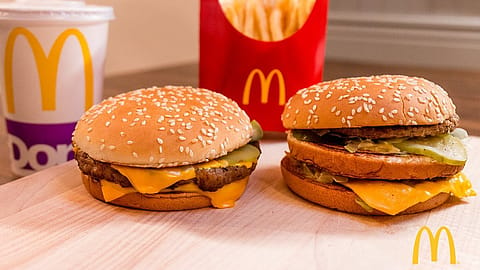
Westlife Foodworld, the McDonald’s operator in West and South India, reported a steady Q4 FY26 performance, supported by higher guest counts, channel growth and tighter cost control. Consolidated revenue rose 8.7% year on year to ₹655 crore from ₹603 crore, while net profit jumped 55.92% to ₹2.37 crore from ₹1.52 crore in the year-ago quarter. Operating EBITDA increased 12.7% to ₹86.85 crore from ₹77.04 crore, with EBITDA margin improving to 13.25% from 12.77%.
The company said the quarter reflected resilience despite a challenging operating environment, with affordability-led offers and execution discipline helping maintain momentum. Same-store sales growth stood at 1.5% for the quarter, and the company said the improvement built progressively through the period.
Management sees disciplined execution
Amit Jatia, chairperson of Westlife Foodworld, said, “In a quarter marked by evolving market dynamics, our performance reflects the strength of our long-term strategy and disciplined execution.”
He added, “Despite ongoing external pressures, our focus on value leadership, digital engagement, and operational efficiency enabled us to sustain margins while improving guest counts.” Jatia also said the company is “well-positioned to drive consistent, sustainable growth” as it builds a seamless omni-channel ecosystem and expands its footprint.
The management commentary pointed to continuing inflationary pressure in LPG and key commodities, but said supply-chain efficiencies and proactive sourcing helped offset the impact. The company also highlighted prior investments in store modernisation and capability upgrades, which supported operational resilience.
Channel mix and digital traction
Westlife said demand trends were mixed across channels, with on-premise sales accounting for 58% of total revenue. Dine-in and takeaway grew 9% year on year, helped by positive footfall across all three months of the quarter. Off-premise sales rose 6%, with McDelivery emerging as an important growth driver as it gained scale and salience.
Digital remained a major part of the business, with around 3.5 million monthly active users and roughly 52 million cumulative app downloads. The company said digital channels contributed about 76% of overall sales, stressing the shift toward online ordering and improving demand predictability.
Westlife added 21 restaurants in the quarter, taking its total network to 478 restaurants across 78 cities. The company reiterated its medium-term goal of 580-630 restaurants by 2027, supported by EOTF and McCafé formats across eligible stores.
It also continued pushing value initiatives, including Everyday Value Meals at ₹99, merchandise-led meal bundles and a monthly McCafé coffee subscription, designed to drive frequency and strengthen loyalty. For the quarter, cash PAT stood at ₹48.7 crore, equal to 7.4% of sales, reflecting the company’s continued focus on profitability.
Westlife Foodworld shares ended 0.72% higher at ₹498 apiece on the NSE on Thursday, but the stock has fallen over 28% in the past year, underperforming the Nifty Total Market index, which has risen more than 5% over the same period.
Follow Fortune India
Frequently Asked Questions
NEXT STORY