PM Modi inaugurates Adani Ports’ fully automated dry bulk terminal at Haldia
/ 2 min read
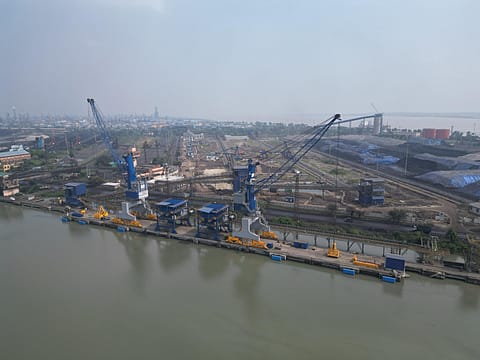
PM Modi inaugurates Adani Ports’ fully automated dry bulk terminal at Haldia
Prime Minister Narendra Modi inaugurated Adani Ports' fully automated dry bulk terminal at Haldia, marking a significant advancement in India's eastern maritime corridor. The terminal, with a 4 million metric tonnes annual capacity, features a direct rail evacuation system, enhancing cargo movement efficiency for key industrial states like West Bengal, Odisha, and Jharkhand.
This summary is AI-generated, and Fortune India is not responsible for its content or any associated copyright issues.
The company said the facility is aimed at improving cargo movement for industrial users in West Bengal, Odisha and Jharkhand, three states that depend heavily on bulk raw materials for steel, aluminium and power production.
THIS STORY FEATURES
Prime Minister Narendra Modi on Saturday inaugurated Adani Ports and Special Economic Zone’s Haldia Bulk Terminal, a fully automated dry bulk facility that the company said is the first of its kind in India, as it steps up capacity on the country’s eastern maritime corridor.
Located inside the Haldia Dock Complex of Syama Prasad Mookerjee Port, Kolkata, the terminal has an annual handling capacity of 4 million metric tonnes and is designed for dry bulk cargo such as imported coal and other commodities. The project has been developed under a 30-year concession through the design, build, finance, operate and transfer model.
The company said the facility is aimed at improving cargo movement for industrial users in West Bengal, Odisha and Jharkhand, three states that depend heavily on bulk raw materials for steel, aluminium and power production. The east coast accounts for about 60% of India’s dry bulk imports, including coal, bauxite and limestone, making Haldia a key entry point for these sectors, according to the release.
How will the terminal change cargo movement?
A key feature of the Haldia terminal is its direct rail evacuation system, which allows cargo unloaded from ships to move straight onto railway wagons. APSEZ said the terminal includes a 2,000-tonne railway wagon loading system and a 1.54-km dedicated rail line linked to the main network, which should reduce port dwell time and lower the delivered cost of raw materials.
The facility also includes a refurbished jetty, a 2.10-km conveyor system, two stacker-cum-reclaimers for automated stockyard management, and two mobile harbour cranes for vessel discharge. The berth has an 8.5-metre draft and a berth length of 193 metres, with extreme mooring points extending to 337 metres.
“The Haldia Bulk Terminal is a next-generation facility that brings full mechanisation and direct rail evacuation to the Hooghly, setting a new benchmark for efficiency on India’s eastern seaboard,” said Ashwani Gupta, whole-time director and chief executive officer of APSEZ. “By eliminating jetty dumping and lowering cargo loss through advanced automated systems, we are ensuring cleaner, safer and more sustainable operations.”
The company said construction began on July 14, 2023 and the terminal was delivered within its construction window. APSEZ said the project aligns with the Centre’s Sagarmala programme and PM Gati Shakti National Master Plan, both of which aim to build multimodal infrastructure and reduce logistics costs.
APSEZ currently has cargo handling capacity of 633 million tonnes per annum and accounts for roughly 28% of India’s port volumes. It is targeting throughput of 1 billion tonnes by 2030.

Follow Fortune India
NEXT STORY