The FAQs are AI-generated, and Fortune India is not responsible for its content or any associated copyright issues.
Rocklink India commissions 10,000 TPA lithium-ion recycling facility, bets on rare earth recovery in UP
/ 2 min read
Sikandrabad plant combines battery, magnet recycling and 1,500 TPA rare earth processing as India races to secure critical mineral supply chains
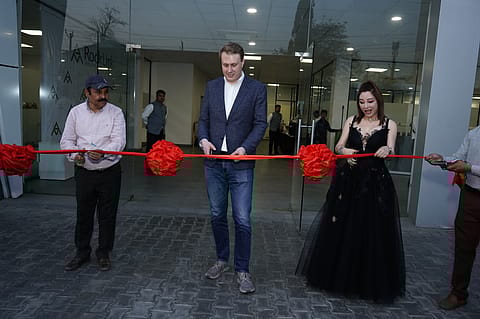
Leonard Ansorge, Director of Rocklink India inaugurating the facility | Credits: Rocklink
Rocklink India Pvt. Ltd has commissioned an integrated lithium-ion battery and rare earth magnet recycling facility in Sikandrabad, Uttar Pradesh, adding early-stage capacity to a segment critical for India’s electric mobility and clean energy ambitions. The plant comes with an initial lithium-ion battery recycling capacity of 10,000 Tonnes Per Annum (TPA), alongside 60 tonnes per month of rare earth magnet dismantling and processing capability.
Commenting on the development, Leonard Alexander Ansorge, Director of Rocklink India Pvt. Ltd, noted, “The establishment of this facility marks an important step in building advanced recycling infrastructure for critical materials in India. With capabilities to process lithium-ion batteries and rare earth magnets, we aim to support the development of a circular ecosystem for critical raw materials that are essential to electric mobility, renewable energy systems, and advanced manufacturing.”
The company is also setting up a 1,500 TPA rare earth chloride processing line, scheduled for commissioning in Q1 2026, which will enable downstream processing of recovered materials. The facility is located in the UPSIDC Industrial Area and is designed to handle both battery scrap and metal-bearing industrial waste streams.
Multi-chemistry processing, 98% recovery rates
The plant is engineered to process 95 types of pre- and post-consumer lithium-ion battery scrap, spanning multiple formats and chemistries. Rocklink has deployed its proprietary recycling technology (R2), which uses encapsulated systems and advanced gas treatment to safely process battery waste and capture volatile organic compounds.
The process delivers over 98% recovery efficiency for metals such as aluminium, copper, and iron, while producing high-purity “black mass”—a key intermediate for extracting lithium, nickel, and cobalt. This is significant in a market where domestic recovery of battery-grade materials remains limited and import dependence remains high.
Rare earth recycling, reverse logistics play
Beyond batteries, the facility targets permanent magnet recycling, covering alloys such as NdFeB, SmCo, and AlNiCo, widely used in EV motors, generators, and industrial equipment. Semi-automated dismantling lines are expected to improve throughput and material traceability.
Rocklink is also introducing its Magcycle reverse logistics model in India, aimed at streamlining collection and routing of magnet scrap—an area that remains largely unorganised. The model, already operational in Europe since 2018, is expected to support scale-up of recycling volumes in India.
The company plans to integrate battery refurbishment capabilities, enabling reuse of viable cells through testing, balancing, and repackaging. This could extend battery life cycles and reduce raw material intensity per unit of storage deployed.
Meanwhile, India is projected to generate over 1 lakh tonnes of lithium-ion battery waste annually by 2030, according to industry estimates, but formal recycling capacity remains nascent.
Frequently Asked Questions
NEXT STORY