Rush to premiumise could come at the expense of recruiting future consumers, says Havmor MD Debabrata Mukherjee
Though the ₹1,600-odd crore legacy ice-cream brand from Gujarat (founded in 1944 and acquired by Korea’s Lotte in 2017) has been premiumsing, around 30%-35% of its turnover still comes from its mass portfolio.
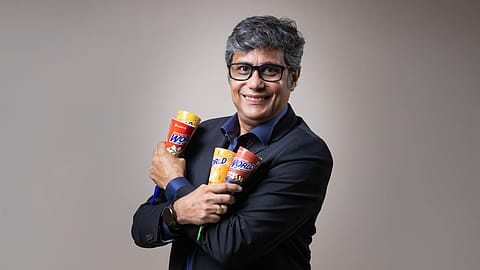
At Havmor’s sprawling manufacturing facility in Pune, MD, Debabrata Mukherjee, offers a generous helping of the brand’s bestseller this year, guava chilli ice-cream. Along with the ice-cream he also hands out a couple of sachets of masala which he says could be sprinkled on the ice-cream. He then points at some of the other variants such as rose and lychee, biscotti and Mahabaleswar strawberry, which have also had a successful run this year. Mukherjee is clearly betting on not just innovation but also personalisation for the company’s next level of growth.
Does the personalisation narrative naturally lend to a premiumisation strategy? Premiumisation, yes, but the strategy isn’t to completely vacate the mass space, says Mukherjee. “I feel that for a category like ice-cream, which is so underpenetrated both in distribution and in consumption, if you rush to premiumise, you are not recruiting your future generation of consumers. If you are going to premiumise, then you are only betting on your frequency consumers to engage with you. If you don't recruit, then you might not be left with the frequency or retention audience in the future,” he explains.
The rush to premiumise just to get value growth, according to Mukherjee, is tactical. “It might build some immediate uptick in revenue. But in the long-term, you are losing out on building a large broad-based ice cream consumer franchise for your branded company.” Though the ₹1,600 crore legacy ice-cream brand from Gujarat (founded in 1944 and acquired by Korea’s Lotte in 2017) has been premiumsing, around 30%-35% of its turnover still comes from its mass portfolio priced at ₹10.
“Even today, 80%-85% of my revenue comes from general trade and vending. I am actually putting a product in the arms reach of desire. And for an impulse category to be in arms reach of desire, which is unplanned purchase, pricing is very important,” says Mukherjee.
When Lotte invested in Havmor in 2017, the strategy clearly was to penetrate into the under-penetrated Indian ice-cream market with Havmor as well as its global portfolio. This was also the time when Indians had started consuming ice-creams not just to beat the hot summers but also as a round-the-year dessert. Ice-cream cakes, bars and cassatas were gaining popularity. So, Lotte capitalised on this opportunity with its masstige and premium strategy.
It launched in the country popular Korean brands such as Krunch, World Cone, Subak and Shark. While Subak and Shark are priced at ₹20 for a 75 ml stick, World Cone and Krunch are priced between ₹55 and ₹90. The Havmor portfolio also saw a string of premium innovations such as premium cones, ice-cream sandwiches and cakes, between price-points of ₹20 and ₹55. It also introduced a range of new flavours in 500-750 ml tubs such as Mahabaleswar strawberry, shahi kesar, biscotti and so on. The company’s plan is to make Havmor (currently a western Indian brand) a brand with a national footprint.
For the health conscious, the ice-cream brand has also launched sugar-free variants and is also planning to enter protein ice-creams. However, Mukherjee is excited about his chain of 250 ice-cream parlours, which enable the brand to innovate and experiment with new flavours. But the plan is not to mindlessly expand the number of parlours, but to increase the experience in the existing ones and do interesting experiments with flavours. “Almost 20% of our revenue in ice-creams parlours come out new flavours.”