Semaglutide patent loss opens up a $6 billion opportunity for Indian generic drug makers
/ 4 min read
With Ozempic and Wegovy losing protection in key markets, Indian pharma majors gear up for launches that could sharply cut prices and expand access to diabetes and weight-loss therapy
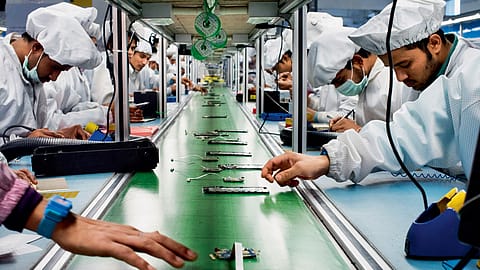
Industry estimates say Canada and Brazil, with a combined $2 billion market for semaglutide, offer an initial generic opportunity of around $500 million.
The world's second-largest-selling drug - Novo Nordisk’s anti-diabetes/weight management drug semaglutide (branded as Ozempic and Wegovy) - is set to lose patent protection in several countries this year, including in India, China, Canada, and Brazil, starting in the fourth week of March.
India's leading generic companies, such as Sun Pharma, Zydus Lifesciences, Lupin, MSN Lbs, Alkem Laboratories, Dr Reddy's Laboratories, Torrent Pharmaceuticals, Natco Pharma, and many others, are set to tap a massive revenue opportunity exceeding Rs 50,000 crore (approximately $6 billion) from India, select regulated markets, and emerging economies. The Indian opportunity alone is estimated to be around $250 million initially, with 10-15 manufacturers readying to launch their generics in the next 10-15 months, say analysts.
Further, the generic entry will dramatically change the diabetes and weight management market, with prices expected to reduce by 30–50% initially and up to 70–75% over time, making the glucagon-like peptide-1 (GLP-1) - a natural hormone produced in the gut that regulates blood sugar, slows digestion - next-generation drug affordable to many people in these markets. Currently, semaglutide treatment costs over $1000 a month in countries like the US and many parts of Europe, where its patent protection lasts till December 5, 2031 and beyond.
Industry estimates say Canada and Brazil, with a combined $2 billion market for semaglutide, offer an initial generic opportunity of around $500 million. Sun Pharma and Dr Reddy's are likely to be early movers in that market. In other emerging markets, growth and margins will be steady for the generic versions in the coming years, as regulatory hurdles are relatively less, they say.
Global sales revenue of Ozempic was estimated to be over USD 24 billion, and that for Wegovy was around $13 billion in 2025. Currently, Eli Lilly's GLP-1 weight-loss and diabetes drugs, Mounjaro (tirzepatide) and Zepbound (tirzepatide) are the global leaders, with combined 2025 revenue exceeding $36.5 billion and accounting for over 56% of the company's total revenue. The global GLP-1 receptor agonist market size is estimated at USD 70.08 billion in 2025 and is projected to reach USD 201.79 billion by 2033, growing at a CAGR of 12.78% from 2026 to 2033. As per the International Diabetes Federation, there are 8.9 crore adults with diabetes in India.
Sun Pharma, Dr Reddy's, Zydus plan early launch
In December 2025, India's largest drug maker, Sun Pharmaceutical Industries, received Drug Controller General of India (DCGI) approval for manufacturing and marketing semaglutide injection for the treatment of adults with insufficiently controlled type 2 diabetes mellitus as an adjunct to diet and exercise. It will be launched under the brand name Sematrinity.
In January, Sun Pharma got approval from the DCGI after Phase III trials to sell semaglutide injection, indicated for chronic weight management in adults as an adjunct to a reduced-calorie diet and increased physical activity. It will be marketed under the brand name, Noveltreat. The products are administered via an easy-to-use prefilled pen, designed to support convenient and accurate dosing.
''We are well-positioned across both indications, chronic weight management andtype-2 diabetes, enabling us to offer a comprehensive solution to physicians and patients. We will ensure sufficient supplies to meet demand in India,'' said Kirti Ganorkar, managing director, Sun Pharma.
Dr Reddy's plans to launch semaglutide in March under the brand name Obeda. Reportedly, it plans to sell about 12 million injectable semaglutide pens in the first year. Sources say Dr Reddy's Laboratories is planning a phased global launch in about 87 countries within the next 2 years. Another Hyderabad-based company MSN Laboratories, also has approval to launch the drug, and the company is also planning launch by the end of March.
Zydus Lifesciences plans to launch semaglutide injection under three brand names – Semaglyn, Mashema and Alterme - on day one of patent expiry, with a Made in India adjustable single-pen device. ''By introducing a first-of-its-kind drug delivery mechanism in India, we plan to simplify the treatment. This leap in convenience will drive better long-term adherence and, ultimately, significantly improved clinical outcomes for patients,” says Dr Sharvil Patel, Managing Director, Zydus Lifesciences.
Different strategies
Mumbai-based drug major Lupin has partnered with Spain-based Galenicum Health with plans to commercialise a generic injectable semaglutide for type 2 diabetes and obesity in 23 countries, including Canada, Southeast Asia, and parts of Europe. Lupin is developing its own internal oral solid version of semaglutide for launch by FY27. Hyderabad-based Natco Pharma has out-licensed its semaglutide generic formulation's India marketing rights to Ahmedabad-based Eris Lifesciences.
{{#most-powerful-women-snapshot-individual.slug}} {{/most-powerful-women-snapshot-individual.slug}} {{^most-powerful-women-snapshot-individual.slug}} {{/most-powerful-women-snapshot-individual.slug}} {{#showRanking}} {{current-rank}} {{/showRanking}} {{#photo.0.url}}
{{name}}
Others are also trying for the big opportunity. ''Our formulation is made wth rDNA technology and the end product through this process is of high purity, quality and efficacy,'' says Samit Mehta, whole time director, Emcure Pharmaceuticals. Saurabh Agarwal, director of HAB Pharmaceuticals and Research says the company is developing both injectable formats, single and multidose, as well as oral versions, with regulatory filings and bioequivalence studies progressing. He notes that when multiple players enter the market, quality matters. Peptide manufacturing involves complex synthetic chemistry and stringent impurity controls and device products are regulated as drug-device combinations requiring high compliance standards'', he says.
Follow Fortune India
NEXT STORY