The FAQs are AI-generated, and Fortune India is not responsible for its content or any associated copyright issues.
SpaceX will hand Elon Musk 200 million shares — but only if 1 million people live on Mars
/ 2 min read
Under the plan, Musk would reportedly receive 200 million super-voting restricted shares — but only if SpaceX establishes a self-sustaining Martian colony of at least one million people. That's roughly the population of Chandigarh or Mysore, on a planet that currently has zero permanent human residents and no breathable air.
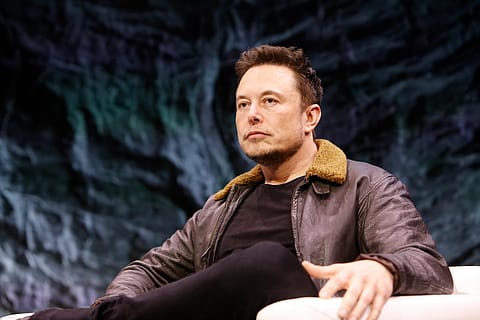
Tesla's founder Elon Musk | Credits: Alamy
SpaceX's board reportedly approved a pay package for Elon Musk in January that ties his biggest potential windfall to a goal most people would consider science fiction: a permanent human colony on Mars with at least one million residents.
The details were revealed in SpaceX's confidential SEC registration statement, reviewed by Reuters ahead of the company's planned Nasdaq IPO.
The mars condition
Under the plan, Musk would receive 200 million super-voting restricted shares — but only if SpaceX establishes a self-sustaining Martian colony of at least one million people. That's roughly the population of Chandigarh or Mysore, on a planet that currently has zero permanent human residents and no breathable air.
SpaceX's own website has long said a self-sufficient Mars colony would require "upwards of one million people and millions of tons of cargo" delivered to the Red Planet. That benchmark has now been written into Musk's compensation agreement.
The valuation bar
The Mars colony isn't the only condition. The same 200 million share award also requires SpaceX to reach a market valuation of $7.5 trillion — more than four times the $1.75 trillion the company is targeting in its upcoming IPO. For context, only a handful of companies (Nvidia, Alphabet, Apple, and Microsoft) have ever crossed $3 trillion. SpaceX would need to become, by far, the most valuable company on the planet to unlock this tranche.
A second tranche — in space
Reuters also reported a separate award of up to 60.4 million restricted shares, granted in March, tied to additional valuation milestones and a requirement that SpaceX operate data centres in orbit delivering at least 100 terawatts of computing power. That's equivalent to roughly 100,000 one-gigawatt nuclear reactors running at the same time. Both tranches are Class B shares, meaning if Musk clears every milestone across both awards, the total payout would be 260.4 million super-voting restricted shares.
Super-voting shares and no deadline
All shares in the package are reportedly Class B stock, carrying 10 votes each compared to one vote for ordinary Class A shares. It's worth noting that Musk's control over SpaceX post-IPO doesn't actually hinge on this pay package. In a separate exclusive published April 29, Reuters reported that SpaceX's IPO filing states Musk "can only be removed from our board or these positions by the vote of Class B holders" — super-voting shares he will already control after listing, making his removal effectively a self-vote. The 200 million shares from the Mars package would add to that existing position, but only if the targets are ever met.
None of the targets carry a deadline. Musk just has to remain CEO and hit the milestones.
His annual base salary from SpaceX remains $54,080, where it has sat since 2019. The rest, apparently, depends on Mars.
Frequently Asked Questions
NEXT STORY