Strait of Hormuz transits hit one-month low as security tensions escalate; July 12 sees just 11 vessel crossings
/ 3 min read
Between July 10 and July 12, a total of 73 vessels transited the strait, averaging fewer than 25 crossings per day.
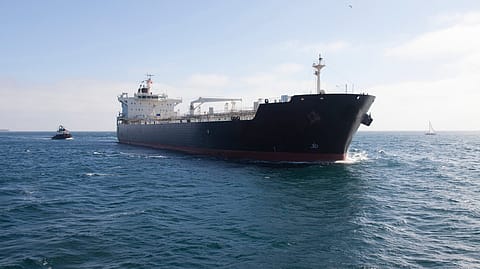
Around two-thirds of these energy shipments were carried by compliant vessels. | Credits: Getty Images
Vessel traffic through the Strait of Hormuz fell to its lowest level in nearly a month as heightened geopolitical tensions and security risks continued to disrupt shipping in one of the world's busiest energy chokepoints, according to a report by S&P Global Energy.
Between July 10 and July 12, a total of 73 vessels transited the strait, averaging fewer than 25 crossings per day. Traffic fell sharply to 11 transits on July 12, marking the lowest daily tally since June 14 and the first day since June 12 with no inbound vessel crossings recorded.
The decline followed Iran's announcement that the Strait of Hormuz had been closed during the day, with the Persian Gulf Strait Authority claiming passage was not possible because of what it described as "illegal movements of US military forces" in the region. Of the 11 vessels that crossed on July 12, six were classified as compliant vessels.
Despite Iran's declaration, the Western-led Joint Maritime Information Center (JMIC) said in an advisory issued on July 12 that the regional threat level remained "severe", but noted that the southern navigation route remained operational and had been expanded to facilitate two-way traffic.
Transit volumes stood at 32 vessels on July 10 and 30 on July 11, with energy carriers—including crude oil, chemical, LPG, and LNG tankers—accounting for around 48% of total traffic during the three-day period.
Around two-thirds of these energy shipments were carried by compliant vessels. However, only 10 compliant energy carriers entered the Gulf, with most inbound voyages taking place without visible Automatic Identification System (AIS) signals. These included the Greek-owned Suezmax tanker IMOLA, Sinokor-operated VLCCs ARGENTINA B and ROTTERDAM ENERGY, along with several refined product tankers.
Inbound tanker capacity weakens
The report also pointed to weakening inbound tanker capacity. Average new oil and LPG tanker capacity entering the Gulf through the Strait of Hormuz stood at 6.5 million barrels per day (bpd) between July 1 and July 12, with VLCCs and Suezmax tankers contributing nearly 80% of the total.
However, average inbound capacity declined to 6 million bpd during July 10-12, down from 8.5 million bpd recorded in the first week of July, indicating growing caution among shipowners amid escalating regional tensions.
Meanwhile, all compliant outbound energy carriers transiting the strait during the three-day period also sailed without visible AIS signals. These included ADNOC-operated LNG tanker AL HAMRA, VLCCs BELGIUM B, SERIFOS, and NISSOS HERACLEA, as well as LR1/Panamax tankers CAPETAN ANDREAS and NAUTILUS.
Iran-linked vessels dominate traffic
Iran-linked and US-sanctioned vessels continued to account for a disproportionately large share of maritime traffic, representing nearly 60% of all crossings during the period.
Several sanctioned crude tankers, product tankers, bulk carriers, container ships and Iran-flagged coastal vessels transited the strait, including RANI, DAN, DUNE, SCALER, DING XIANG, ARTABAZ and ARTMAN. Many of these vessels were observed using the Iranian Traffic Separation Scheme.
{{#most-powerful-women-snapshot-individual.slug}} {{/most-powerful-women-snapshot-individual.slug}} {{^most-powerful-women-snapshot-individual.slug}} {{/most-powerful-women-snapshot-individual.slug}} {{#showRanking}} {{current-rank}} {{/showRanking}} {{#photo.0.url}}
{{name}}
Security situation deteriorates
The maritime slowdown comes amid a sharp deterioration in the regional security environment as tensions between the US and Iran intensified. According to the report, the US Central Command said late on July 12 that it had completed a fourth wave of strikes against Iran within a week, targeting dozens of locations to degrade Tehran's ability to disrupt commercial shipping through the Strait of Hormuz.
The escalation followed an attack by Iran's Islamic Revolutionary Guard Corps (IRGC) naval forces on the container ship GFS GALAXY while it was transiting the strait on July 11.
The UK Maritime Trade Operations centre reported that the vessel sustained damage to its stern about 9 nautical miles east of Oman, forcing the crew to abandon ship. The vessel had last been tracked at Jebel Ali port in the UAE on July 9.
The report added that the US subsequently launched retaliatory strikes against approximately 140 Iranian military targets, following which Iran reportedly carried out attacks against several neighbouring countries, including Kuwait, Bahrain, the UAE, Oman, and Jordan, further raising concerns over the security of maritime trade in the Gulf.
NEXT STORY