The FAQs are AI-generated, and Fortune India is not responsible for its content or any associated copyright issues.
Tata Trusts to scrap clause barring non-Zoroastrians as trustees on Bai Hirabai Trust
/ 2 min read
No comparable religious restrictions exist in the deeds of other Tata Trusts
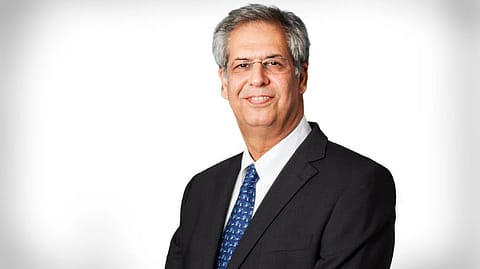
Noel Naval Tata, Chairman, Tata Trusts
The Tata Trusts announced on Sunday that they will seek to formally remove restrictive clauses barring non-Zoroastrians from serving as trustees of the Bai Hirabai Jamsetji Tata Navsari Charitable Institution, a philanthropic body whose founding deed has contained the provisions since 1923.
"In order to correct anomalies in the Trust Deed and to align it with the values that the Tata Trusts have always epitomised, the trustees have decided to adopt proceedings before the appropriate authority for alteration of restrictive clauses in respect of eligibility of trustees," read a statement from the Tata Trusts.
The board of trustees met on April 17 under the chairmanship of Noel Tata, who leads the Tata Trusts, to review the organisation's activities amid recent coverage highlighting the discriminatory clauses.
The development comes days after Mehli Mistry, a former trustee of the Tata Trusts, challenged the appointment of noted industrialist and TVS Motor chairman emeritus Venu Srinivasan and former defence secretary Vijay Singh to the board of Bai Hirabai Trust in a complaint to the Maharashtra Charity Commissioner.
“The board said that a statement should go out to address the issue which was totally incorrect,” a source at Tata Group told Fortune India.
Contentious Clauses were introduced by trustees in 1923
The move is being framed as a correction of historical anomalies rather than a policy reversal. The trust pointed out that the original 1916 Codicil to the will of Sir Ratan Tata, under which the Bai Hirabai Trust was established, contained no restrictions based on ethnicity, race, or religion. The contentious clauses were introduced by trustees in 1923, years after Sir Ratan Tata's death in 1918, and went beyond what his Codicil had stipulated.
In 2015, the objects of the Bai Hirabai Trust were enlarged to also cover the general public as beneficiaries of the activities of the Trust. There are no such restrictions as to qualifications for Trusteeship of Sir Ratan Tata Trust (SRTT) nor of the Sir Dorabji Tata Trust (SDTT) nor of any other Tata Trust.
Recommended Stories
In practice, non-Zoroastrians have already been appointed to the trust since 2000, following a legal opinion obtained from a former Chief Justice of India.
The Bai Hirabai Trust itself is described as a non-shareholding body with a minimal asset base and limited activities. Of the seven trusts that collectively own 66% stake in Tata Sons, the unlisted holding company of the $180 billion Tata Group, SDTT and SRTT hold 27.98% and 23.56%, respectively. While the other five trusts (Sarvajanik Seva Trust, RD Tata Trust, Tata Education, Trust Tata Social Welfare Trust and JRD Tata Trust) hold the remainder close to 14% stake.
“The statement is generic in many aspects and talks about the secular nature of all trusts, although it is specific to Bai Hirabai Trust,” said the source.
The trustees also used the occasion to express full confidence in the trust's chief executive officer and his stewardship of the organisation.
RANK
COMPANY NAME
REVENUE
(INR CR)
(INR CR)
{{#current-rank}} {{current-rank}} {{/current-rank}} {{^current-rank}} {{rank}} {{/current-rank}} {{name}} {{#revenue}} {{revenue}} {{/revenue}} {{^revenue}} {{noi}} {{/revenue}}
Founded in 1892, the Tata Trusts are India's oldest and among Asia's largest philanthropic institutions, working across healthcare, education, nutrition, water and sanitation, and rural and urban livelihoods.