‘The next generation of entertainment companies will operate as intelligence businesses’: Azim Lalani, BULLET Microdrama
/ 3 min read
In an interview with Fortune India, Azim Lalani, co-founder and chief business officer of BULLET Microdrama, explains how audience intelligence, AI-assisted production, and localisation could reshape the economics of content creation.
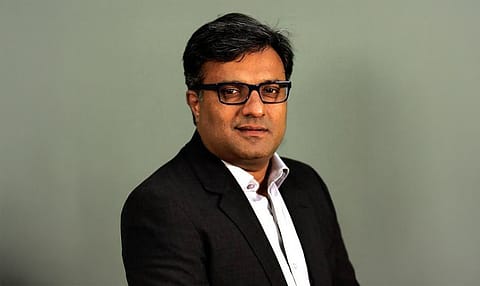
Azim Lalani, co-founder and chief business officer, BULLET Microdrama
Artificial intelligence has already begun reshaping entertainment—from script generation and production workflows to audience analytics. But one challenge continues to define content economics: creators and studios still spend heavily before knowing whether audiences will respond.
BULLET Microdrama believes that equation is due for a reset.
The move comes as ZEE5 expands its digital entertainment business. ZEE5 reported revenue of ₹976 crore in FY25, up from ₹919.5 crore in FY24, while reducing EBITDA losses, with BULLET positioned within that broader push toward scaled, technology-led content ecosystems.
The Zee Entertainment-backed microdrama platform has launched Trinetra AI, positioning it as an intelligence layer designed to support decision-making across the content lifecycle—from concept evaluation and scripting to production, localisation and audience prediction. Positioned as an end-to-end filmmaking and content intelligence platform, the company sees it as infrastructure for India’s emerging creator economy rather than another standalone generative AI tool.
For Azim Lalani, chief business officer and co-founder of BULLET Microdrama, the inspiration came from a long-standing inefficiency in entertainment.
“Despite advances in production technology, many of the most important decisions in content creation still rely on creative instinct, experience and fragmented data,” Lalani tells Fortune India. “Creators often commit significant resources before understanding how audiences may actually respond.”
That insight became the foundation for Trinetra AI.
Can AI reduce the uncertainty built into content creation?
Unlike traditional AI tools focused on generating assets, Trinetra is designed to introduce intelligence earlier into the process. Its architecture combines three capabilities: Trishul, a script intelligence engine that evaluates audience resonance and engagement potential; Rudra, which supports AI-assisted production workflows; and Damrooh, which focuses on multilingual localisation through region-sensitive voice and language adaptation.
The broader ambition is to compress feedback cycles in entertainment.
Historically, commissioning has remained linear—stories are developed, produced and distributed before audience signals become visible. According to Lalani, that creates high capital intensity and elevated creative risk.
“With Trinetra, creators can evaluate concepts earlier, identify engagement drivers, generate creative assets and test audience response before making large production commitments,” he says.
{{#most-powerful-women-snapshot-individual.slug}} {{/most-powerful-women-snapshot-individual.slug}} {{^most-powerful-women-snapshot-individual.slug}} {{/most-powerful-women-snapshot-individual.slug}} {{#showRanking}} {{current-rank}} {{/showRanking}} {{#photo.0.url}}
{{name}}
That shift could materially alter content economics.
At a time when entertainment companies are under pressure to improve success rates while controlling costs, Lalani argues the larger opportunity is improving capital efficiency.
Instead of deploying resources across broad portfolio bets, studios can validate demand sooner, automate repetitive workflows and direct investment toward stronger-performing ideas.
“What changes is the speed of learning,” Lalani says. “Teams can shorten iteration cycles, improve utilisation of creative resources and ultimately increase returns on content investment.”
The approach appears particularly relevant for microdrama, where shorter formats demand rapid experimentation and audience retention becomes a core performance metric.
BULLET says it is already using Trinetra across content evaluation, development, localisation and performance analysis to strengthen output without compromising storytelling quality. The platform combines predictive content intelligence, multilingual audio generation and commercial evaluation capabilities to improve hit probability and help creators scale faster.
Yet Lalani rejects the growing narrative that AI will replace creators.
“I don’t believe great storytelling can be automated,” he says. “Stories come from emotion, imagination and lived experiences. AI changes everything around the creative process—but not the source of creativity itself.”
Will AI become entertainment’s next competitive moat?
That distinction becomes even more important in India.
Unlike homogeneous entertainment markets, India operates through multiple cultural and linguistic ecosystems. Lalani says Trinetra has been built with an India-first approach that goes beyond translation and instead attempts to understand regional storytelling structures, audience behaviour and local nuance, drawing from audience insights across Zee’s entertainment ecosystem.
“The objective is not to create one universal storytelling model,” he says. “It is to help creators preserve authenticity while scaling stories across audiences.”
Looking ahead, BULLET sees competitive advantage shifting away from access to AI models and towards proprietary audience intelligence.
“The next generation of entertainment companies will operate as intelligence businesses as much as content businesses,” Lalani says.
If that thesis plays out, Trinetra AI may be less about producing more content—and more about helping creators make better bets.
NEXT STORY