
The FAQs are AI-generated, and Fortune India is not responsible for its content or any associated copyright issues.
Why Vedanta’s demerger test begins after listing
/ 3 min read
The group currently carries overall debt of about ₹1.03 lakh crore, including about ₹49,800 crore debt (as of December 31) at the holding company, Vedanta Resources, and ₹53,254 crore (March 2026) at the listed step-down entity, Vedanta Ltd.
THIS STORY FEATURES
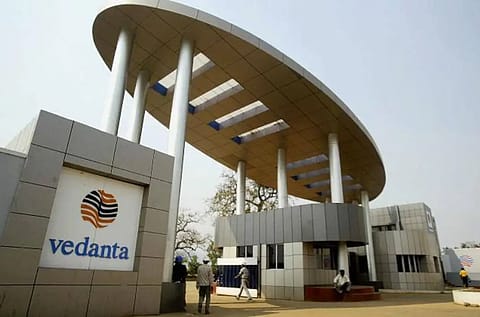
Vedanta holds 64.92% stake in Hindustan Zinc | Credits: Vedanta
The success of Vedanta Ltd’s much-awaited demerger, which is expected to culminate in the listing of five separate entities by the end of June, will ultimately be judged not by the restructuring itself, but by how effectively each new business improves cash generation and reduces leverage in the years ahead.
As the group prepares to unlock value by separating its diversified businesses, investors and analysts are focused on one central question—can each business independently sustain growth while managing debt without relying on cross-company cash flows?
The group currently carries overall debt of about ₹1.03 lakh crore, including about ₹49,800 crore debt (as of December 31) at the holding company, Vedanta Resources, and ₹53,254 crore (March 2026) at the listed step-down entity, Vedanta Ltd.
Even as concerns around leverage have persisted for years, the group has made measurable progress in reducing debt. Vedanta Resources has demonstrated deleveraging discipline over the last four years, reducing its debt from $9.65 billion in March 2022 to $5.17 billion in December 2025. The net debt-to-EBITDA ratio of the parent shrank to 1.9 times in December from 3.3 times in FY20. Following a recent upgrade in the company’s credit profile, S&P Global Ratings said, "Vedanta Resources' improving cost structure and rising product prices will strengthen its earnings and credit metrics."
At the operating company level, Vedanta Ltd reported consolidated gross debt of ₹81,740 crore as of March 2026. Net debt stood at ₹53,254 crore, supported by cash and cash equivalents of ₹28,485 crore on its books. Its net debt-to-EBITDA ratio improved to 0.95 times, compared with 1.22 times a year earlier, reflecting stronger profitability and better balance sheet management.
The demerger, effective from May 1, will result in five separately listed entities—Vedanta Aluminium, Vedanta Power, Vedanta Oil & Gas, Vedanta Iron & Steel, and the residual Vedanta Ltd. Existing shareholders will receive one share in each of the four newly created entities for every one share held in Vedanta Ltd. The residual company will continue to house lucrative assets like Hindustan Zinc, Zinc International, copper, and ferro chrome operations.
Over the years, the group accumulated significant debt, raising concerns over repayment capacity, capital raising for expansion, and dividend sustainability. According to ICICI Securities, while the parent company reduced its external debt to $4.8 billion from $8.9 billion between March 2022 and December 2025, Vedanta Ltd’s net debt shot up sharply from ₹20,600 crore to ₹60,600 crore, largely due to capex spending and upstream obligations. Now, the focus will be on reducing debt at the company level post-listing and strengthening the balance sheet through improved cash flows.
Company officials said debt will now be allocated across individual businesses, enabling sharper capital allocation and clearer risk assessment post-demerger. According to estimates by Nuvama Institutional Equities, Vedanta Oil & Gas is expected to remain debt-free post-demerger. Vedanta Aluminium may carry the largest debt burden of ₹32,700 crore, followed by Vedanta Power at ₹7,500 crore, Vedanta Iron & Steel at ₹3,900 crore, and the residual Vedanta Ltd at ₹9,300 crore, the brokerage noted.
Operationally, the company enters the demerger from a position of strength.
Vedanta Ltd reported its highest-ever quarterly revenue of ₹51,524 crore in Q4 FY26, up 29% year-on-year, while annual revenue rose 15% to ₹1,74,075 crore. Quarterly EBITDA surged 59% to a record ₹18,447 crore, with margins expanding by 915 basis points to 44%.
For FY26, EBITDA stood at ₹55,976 crore, up 29%, with margins of nearly 39%. Profitability also touched record levels. The company posted profit after tax of ₹9,352 crore in Q4 FY26, up 89% year-on-year. For the full year, PAT rose 22% to an all-time high of ₹25,096 crore.
{{#most-powerful-women-snapshot-individual.slug}} {{/most-powerful-women-snapshot-individual.slug}} {{^most-powerful-women-snapshot-individual.slug}} {{/most-powerful-women-snapshot-individual.slug}} {{#showRanking}} {{current-rank}} {{/showRanking}} {{#photo.0.url}}
{{name}}
Hindustan Zinc CEO Arun Misra said, "FY26 was a year of strong execution for Vedanta, with record operational performance across the portfolio." During the year, the company deployed around ₹15,000 crore in growth capex, commissioning projects including Lanjigarh Train II, the new BALCO smelter, downstream expansions at Jharsuguda, the Debari roaster at Zinc India, and 1.3 GW of power capacity.
In a recent report, Motilal Oswal Financial Services said management remains focused on earnings growth supported by new capacities, higher value-added products, and favourable commodity pricing.
"The guided capex plans are progressing well and will likely lead to further cost savings. Vedanta Ltd remains firm on its deleveraging plans, and going forward, higher cash flows will support both its expansion plans and deleveraging efforts," it added.
For the Vedanta group, the demerger may unlock value on paper. But the real test will begin once the new entities start operating independently—and whether fresh capacity, stronger cash flows, and tighter capital discipline can translate into durable balance sheet strength.
Follow Fortune India
Frequently Asked Questions
NEXT STORY