Ahmedabad-GIFT City corridor may attract 50 GCCs, to create 50,000 jobs: Report
/ 2 min read
Cost advantage, deep talent pool and GIFT City’s financial ecosystem position the corridor for the next phase of GCC growth
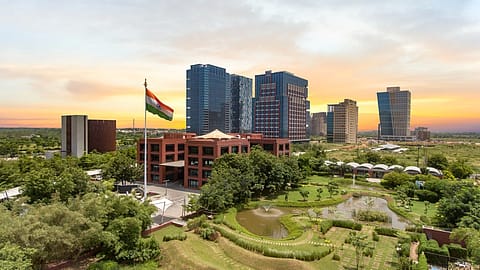
The Ahmedabad-GIFT City corridor is emerging as a potential new hub for Global Capability Centres (GCCs), with the region expected to attract 40-50 new centres over the coming years and generate more than 50,000 high-skilled jobs, according to a joint report by Dev Accelerator (DevX) and real estate consultancy Anarock.
The report, titled Ahmedabad: New Phase of Urban & GCC Growth, estimates that the expected GCC expansion could create demand for 4-6 million sq. ft. of Grade A office space, strengthening Ahmedabad and GIFT City’s position as an alternative to established technology hubs such as Bengaluru, Hyderabad and the National Capital Region.
India currently has more than 1,700 GCCs employing nearly 1.9 million professionals. The sector is projected to cross 2,400 centres by 2030. As companies increasingly adopt hub-and-spoke models and diversify operations beyond traditional Tier I locations, Ahmedabad is positioned to capture a share of this expansion.
Ahmedabad currently has nearly 26 million sq. ft. of Grade A office stock, while GIFT City adds another 4.1 million sq. ft. The emergence of GIFT City as India's first operational International Financial Services Centre (IFSC), along with its infrastructure and regulatory framework, has strengthened the region's appeal to financial institutions, technology companies and consulting firms.
Cost competitiveness is another key advantage. Average non-CBD office rentals in Ahmedabad stand at around ₹50 per sq. ft. per month, while the Ahmedabad-GIFT City corridor has a net effective office occupancy cost of ₹147 per sq. ft. per month, according to the report. This is 30-35% lower than costs in several major Indian office markets.
The region also benefits from a technology talent pool of around 90,000-95,000 professionals and produces nearly 55,000-60,000 graduates annually. Institutions such as IIM Ahmedabad and IIT Gandhinagar add to the city's talent ecosystem. Attrition levels of 7-12% are also considerably lower than those seen in established technology hubs, potentially helping companies manage employee retention and operating costs.
"India's GCC story is evolving beyond the traditional metros," said Umesh Uttamchandani, Managing Director, DevX. He said companies are increasingly evaluating locations based on skilled talent, operational resilience and their ability to scale over the long term.
Anarock Group Chairman Anuj Puri said the changing geography of GCC expansion was becoming increasingly significant, with cities offering talent availability, infrastructure, business-friendly policies and cost competitiveness emerging as the next engines of commercial real estate growth.
The report expects demand for managed and flexible workspaces to reach 1-1.5 million sq. ft. across GIFT City, SG Highway and Ahmedabad's western commercial corridor as enterprise activity expands.
Policy support is also expected to aid growth. Under the Gujarat GCC Policy 2025-30, the state aims to attract more than 250 GCCs and investments exceeding ₹10,000 crore through incentives for technology and infrastructure development.
Large infrastructure projects, including Metro Phase II, the Sabarmati Multimodal Transport Hub and the Mumbai-Ahmedabad High-Speed Rail corridor, are expected to further improve connectivity. Ahmedabad's selection as the host city for the 2030 Commonwealth Games could also accelerate infrastructure investment and raise its global profile, the report said.
NEXT STORY