The FAQs are AI-generated, and Fortune India is not responsible for its content or any associated copyright issues.
Aviation sector nosedives on West Asia turbulence, airlines may face losses up to ₹18,000 crore: PHDCCI
/ 2 min read
Airspace disruptions, cost inflation and cautious global travel sentiment weigh on key sectors, even as domestic demand cushions impact
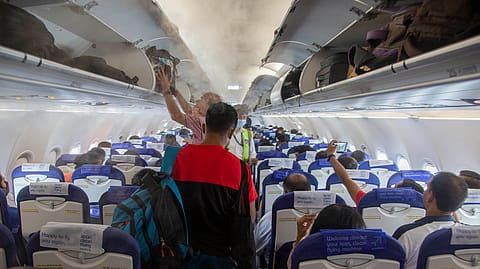
Representational Image | Credits: Sanjay Rawat
Escalating tensions in West Asia have begun to ripple through India’s tourism, aviation and hospitality ecosystem, triggering a sharp rise in operating costs, weakening inbound travel and eroding industry margins, according to a report released by the PHD Chamber of Commerce and Industry (PHDCCI).
The report estimates a net loss of around ₹18,000 crore for the aviation sector, alongside a 15–20% decline in inbound tourist traffic. The restaurant industry, meanwhile, is witnessing a monthly business impact of nearly ₹79,000 crore, with about 10% of establishments shutting operations amid rising cost pressures.
Aviation takes hardest hit as costs surge, routes disrupted
The aviation sector has emerged as the worst affected, grappling with airspace restrictions, flight cancellations and longer international routes. Rerouting has increased flight durations by 2–4 hours on key sectors, significantly raising fuel burn and operating expenses. With aviation turbine fuel accounting for 35–40% of airline costs, the disruptions have further strained profitability and pushed up airfares. Reduced access to busy Middle East transit corridors has also dented connectivity efficiency.
Inbound tourism weakens; domestic demand emerges as shock absorber
Inbound tourism has taken a visible hit, particularly in the leisure segment, as geopolitical uncertainty prompts global travellers to defer or reroute trips. Indian outbound travel patterns are also shifting, with travellers favouring short-haul destinations such as Thailand, Singapore and Vietnam over long-haul routes dependent on West Asian transit hubs.
Despite external pressures, domestic demand continues to anchor the sector. The report notes that India’s tourism and hospitality industry—contributing nearly 8% to GDP and supporting over 40 million jobs—remains resilient, aided by trends such as staycations, experiential travel and “revenge travel”.
Restaurants, hotels face margin squeeze despite stable volumes
However, profitability is under strain across hospitality and food services. Hotels are facing rising energy and input costs, while premium and business segments linked to international travel are seeing softer demand. In the food services space, input cost inflation of 10–15%, coupled with weaker foreign tourist footfall, has compressed margins, particularly for smaller operators. Food delivery and domestic consumption, contributing 20–30% of revenues for organised players, have provided partial relief.
To navigate the disruption, PHDCCI has called for diversification of international air routes, rationalisation of taxes on aviation turbine fuel and hospitality services, and targeted financial support for MSMEs. It has also recommended strengthening domestic tourism circuits, improving connectivity infrastructure and expanding outreach to alternative inbound markets.
While the conflict has introduced near-term volatility, the report underscores an opportunity for India to build a more resilient and diversified tourism ecosystem, anchored by strong domestic fundamentals.
Follow Fortune India
Frequently Asked Questions
NEXT STORY