Budget 2026: Govt may shift to PPP route for capex as it weighs a major fillip to consumption
/ 2 min read
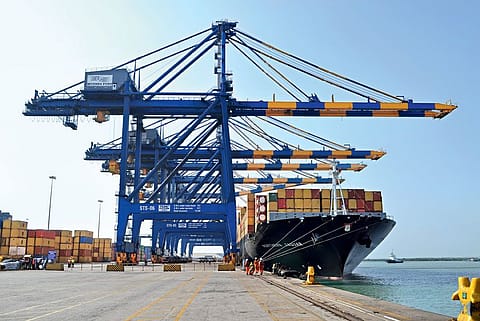
Of the total 852 projects to be taken up on PPP basis in the pipeline, 232 are central government projects worth Rs 13.15 lakh crore while 620 projects worth Rs 3.84 lakh crore will be taken up by the states and Union territories.
Budget 2026: Govt may shift to PPP route for capex as it weighs a major fillip to consumption
The upcoming Budget 2026 may see a shift towards Public Private Partnership (PPP) for infrastructure projects, moving away from public capital expenditure. The government aims to boost domestic consumption, with potential enhancements in standard deductions and tax exemptions. Key sectors like highways and railways are expected to see increased private sector involvement.
This summary is AI-generated, and Fortune India is not responsible for its content or any associated copyright issues.
Sources indicate that ministry of road transport and highways, railways, ports and shipping, and power may see a slew of projects on private partnership basis.
Of the total 852 projects to be taken up on PPP basis in the pipeline, 232 are central government projects worth Rs 13.15 lakh crore while 620 projects worth Rs 3.84 lakh crore will be taken up by the states and Union territories.
The Union government may shift track on the infrastructure allocation in the upcoming budget with more focus on Public Private Partnership (PPP) and private sector participation for infrastructure creation rather than thrust towards public capital expenditure, which has been the strategy since Covid-19 pandemic while it may focus on the consumption engine, and a supply side boost in the economy.
Budget to press consumption lever?
A source close to the development told Fortune India, “We have witnessed the benefits of income tax cuts and GST reduction in the economy. Domestic consumption seems to be a lever that is working aptly at a time when there is so much disruption in the global economy. A natural choice would be to explore what more can be done,” a source said without sharing any further details.
Sources indicate that ministry of road transport and highways, railways, ports and shipping, and power may see a slew of projects on private partnership basis. However, there may also be some major announcement on defence via the public capital expenditure route.
Govt weighs enhancing standard deduction
The question really is what the options at hand are when it comes to consumption, now that major moves have already been taken in the current financial year with income tax and GST relief.
Will the exemption limit in the concessional tax regime further relaxed from the current nil tax on annual income of ₹2 lakh? Sources suggest some measures are being considered and the standard deduction is also likely to be enhanced from the current ₹75,000 in the new structure.
Deloitte India, meanwhile, has sought, clarifications and compliance changes on the direct tax front. It has called for clarification on taxation of stock options for cross-border employees, and car perquisite valuation for electric vehicles and simplification of the TDS compliance for home buyers where the seller is an NRI.
“With the government’s encouragement, more employees are opting for electric vehicles as part of their employer’s car scheme. While the Income tax Rules provide a detailed mechanism for calculating the car perquisite for fuel vehicles, the same clarity is absent for EVs,” Deloitte India said.
PPP route for infra likely in Budget
On infra, meanwhile, the government has already announced public-private partnership (PPP) projects worth ₹17 lakh crore for the next three years. The budget may lay down the policy direction for having right PPP models across the key segments like highways, railways and power sector.
Of the total 852 projects to be taken up on PPP basis in the pipeline, 232 are central government projects worth ₹13.15 lakh crore while 620 projects worth ₹3.84 lakh crore will be taken up by the states and Union territories.
Follow Fortune India
NEXT STORY