Donald Trump threatens to hit Iran ‘very hard’, vows US control of Kharg Island and oil infrastructure
/ 2 min read
US President says Iran’s military capabilities have been neutralised and signals a future move to control strategic energy infrastructure, raising fresh concerns over regional stability and oil supplies.
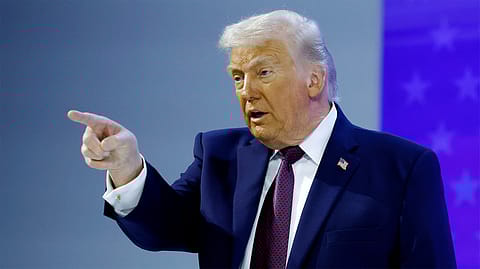
US President Donald Trump. | Credits: Getty Images
US President Donald Trump has sharply escalated tensions with Iran, warning that the United States is prepared to strike the country “Very Hard Tonight” while also signalling a future move to take control of key Iranian energy assets.
In a post on his social media platform Truth Social, Trump claimed Iran’s military capabilities had been significantly degraded and suggested that Washington was prepared to adopt a far more aggressive posture in the region. The comments come amid heightened hostilities between the two countries and growing concerns over stability in the Gulf.
The comments come at a time when geopolitical tensions in the Middle East are already running high. Any threat to Iranian oil infrastructure carries global significance, given Iran's position as a major energy producer and the region's central role in international crude oil trade and maritime shipping routes.
‘Iran’s defences are gone’
“The United States will be hitting Iran (Whose Navy, Air Force, Radar, Anti Aircraft, and all other forms of Defense, together with most its offensive capability, are GONE!), VERY HARD TONIGHT. At some point in the not too distant future, we will be taking Kharg Island, and other oil infrastructure points, and assume total control of their Oil and Gas Markets, much like we have with Venezuela, which is working out brilliantly for both Venezuela and the United States of America. Thank you for your attention to this matter! President DONALD J. TRUMP.”
Kharg Island is among the most strategically important assets in Iran’s energy network and has long served as a major crude oil export terminal. Analysts view any threat involving the island as significant because of its role in global oil supplies and its proximity to the Strait of Hormuz, one of the world’s busiest energy shipping routes.
Why India will be watching closely
Any escalation involving Iran’s energy infrastructure could have implications far beyond the Middle East. A disruption in oil flows from the Gulf region may put upward pressure on crude prices, potentially increasing import costs for large energy-consuming economies such as India.
Recommended Stories
For New Delhi, developments around the Strait of Hormuz are particularly important as a substantial share of India’s crude oil imports transit through the region. Higher energy prices could influence inflation, logistics costs and the broader macroeconomic outlook, making the evolving US-Iran situation a closely watched geopolitical and economic risk.