The FAQs are AI-generated, and Fortune India is not responsible for its content or any associated copyright issues.
El Niño, fertiliser supply risks may weigh on kharif yields despite good start: Crisil
/ 3 min read
The IMD has forecast below-normal rainfall for 2026 at 90% of the long-period average.
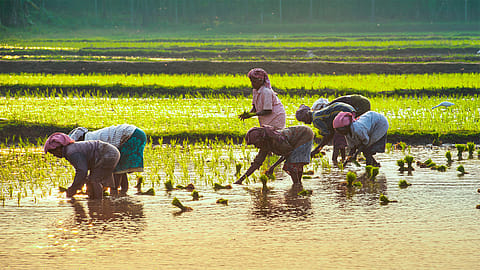
Despite concerns over rainfall, Crisil expects kharif sowing to remain largely resilient due to favourable pre-sowing conditions. | Credits: Shutterstock
India's 2026 kharif season is expected to begin on a stable footing despite the onset of El Niño conditions, but below-normal rainfall, rising pest pressure, and potential fertiliser shortages could pose key risks to crop yields, according to a report by Crisil.
The report noted that India is entering the kharif season under the influence of El Niño, a climate phenomenon historically associated with weaker monsoon rains and heightened uncertainty around agricultural output. As 70-80% of the country's annual rainfall is received during the southwest monsoon, rainfall deviations during this period can have a substantial impact on farm production.
The India Meteorological Department (IMD) has forecast below-normal rainfall for 2026 at 90% of the long-period average (LPA). Most parts of the country are expected to receive deficient rainfall, with normal to above-normal precipitation largely confined to parts of the western Himalayan region, the Northeast and isolated pockets of Andhra Pradesh, Telangana, and Odisha.
Historically, El Niño has been a major risk factor for Indian agriculture. Since 1950, seven out of 16 El Niño years have resulted in below-normal monsoon rainfall and widespread drought conditions.
Despite concerns over rainfall, Crisil expects kharif sowing to remain largely resilient due to favourable pre-sowing conditions.
As of May 29, reservoir storage levels across the country were about 19% above normal and marginally higher than the corresponding period last year. Adequate water availability is expected to support timely land preparation and sowing across major agricultural regions.
Even though nearly three-fourths of the kharif-sown area is projected to receive below-normal rainfall, higher-than-normal reservoir storage and extensive irrigation coverage are expected to cushion the impact in key farming states such as Punjab, Haryana, Rajasthan, Uttar Pradesh, Gujarat, Madhya Pradesh, Maharashtra, and Karnataka.
In eastern India, reservoir levels remain around 11% below normal. However, recent rainfall has improved soil moisture conditions, supporting early crop establishment. The region remains more dependent on the timely progression and distribution of monsoon rainfall than other parts of the country.
The report said farmers are likely to make more strategic cropping decisions this year, taking into account rainfall prospects, crop profitability, procurement support and prevailing market conditions.
Crisil identified three major risks that could affect kharif crop yields this season.
Below-normal rainfall
RANK
COMPANY NAME
REVENUE
(INR CR)
(INR CR)
{{#current-rank}} {{current-rank}} {{/current-rank}} {{^current-rank}} {{rank}} {{/current-rank}} {{name}} {{#revenue}} {{revenue}} {{/revenue}} {{^revenue}} {{noi}} {{/revenue}}
Rainfall deficits during the critical July-September period could adversely affect crop productivity. While July is crucial for crop establishment and vegetative growth, August and September coincide with flowering, pod development, fruit setting and boll formation stages, making crops more vulnerable to moisture stress.
The report said the spatial and temporal distribution of rainfall would be the key determinant of final crop outcomes.
Higher pest and disease incidence
Elevated temperatures and uneven rainfall patterns are expected to increase pest and disease outbreaks in crops such as cotton, chilli, soyabean, pulses and vegetables.
This could boost demand for agrochemicals, particularly insecticides. However, prolonged dry spells may force farmers to cut costs by delaying pesticide applications, limiting the potential increase in demand.
Fertiliser supply constraints
The ongoing conflict in West Asia has raised concerns over fertiliser availability for the kharif season.
According to the report, inventories of urea and diammonium phosphate (DAP) may fall short of projected demand during the May-August period. Global prices of key fertiliser inputs such as sulphur, phosphoric acid, and ammonia have risen sharply due to geopolitical disruptions.
Recent import tenders indicate urea prices have surged by around 123% and DAP prices by 39% compared with pre-conflict levels. While existing inventories may be sufficient for the next two-and-a-half to three months, supply shortages could emerge between mid-July and early August.
The report warned that any disruption in fertiliser availability would particularly affect nitrogen-intensive crops such as paddy, maize, cotton, and sugarcane while pulses and oilseeds are likely to be less impacted.
Frequently Asked Questions
NEXT STORY