The FAQs are AI-generated, and Fortune India is not responsible for its content or any associated copyright issues.
Execution delays hit 60% of HAM road projects, but credit profiles stay stable: Crisil
/ 2 min read
Land acquisition hurdles, regulatory bottlenecks and approval delays are stretching execution timelines across India’s highway pipeline, though concession safeguards continue to shield developers from major financial stress
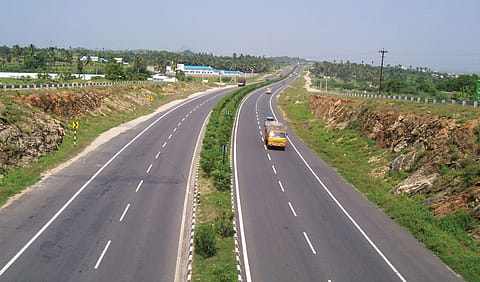
Crisil stated that 54 per cent of the under-construction HAM road length has already secured approved extensions from concessioning authorities such as MoRTH | Credits: NHAI
Execution bottlenecks continue to weigh on India’s highway construction pipeline, with nearly 60 per cent of under-construction Hybrid Annuity Model (HAM) projects witnessing average delays of 11 months, even as contractual safeguards and extension approvals help preserve developers’ credit quality, according to Crisil Ratings.
Under the HAM framework — a Public-Private Partnership (PPP)model widely used in national highway development where the government bears 40 per cent of the project cost during construction while the remaining investment is funded by the developer and repaid through fixed annuity payments — developers are relatively insulated from traffic-linked revenue risks.
The ratings agency analysed 72 under-construction HAM projects spanning around 2,600 km — roughly one-third of the total HAM road length currently under construction with appointed dates between calendar years 2021 and 2025.
The study found that non-availability of right of way (RoW) remains the single-largest execution hurdle, accounting for delays in nearly 75 per cent of the affected projects. Environmental clearances, forest approvals, local authority permissions, protests and heavy rainfall also contributed to project slippages.
Extension approvals mitigate credit stress
“Around 60% of under-construction HAM road projects are delayed by over 11 months on average. Non-availability of right-of-way is the primary reason 75% of these projects are delayed,” said Manish Gupta, Senior Director and Deputy Chief Ratings Officer, Crisil Ratings.
“About 90% of the length experiencing delays has received extension approval from the authority as the reasons for delays are not attributable to the concessionaire, mitigating the impact on credit risk profiles,” Gupta added.
Crisil said 54 per cent of the under-construction HAM road length has already secured approved extensions from concessioning authorities such as the Ministry of Road Transport and Highways (MoRTH) and the National Highways Authority of India (NHAI), while another 5 per cent remains pending approval. Only 41 per cent of projects are progressing on schedule.
Notably, NHAI has closed FY2025-26 on a strong note, surpassing its annual construction target and marginally exceeding budgeted capital spending, reflecting sustained momentum in highway development
Cost overruns rise as timelines stretch
The prolonged execution cycle has also inflated project costs by 5-10 per cent on average, exposing concessionaires to cost-overrun risks. However, Crisil noted that inflation-linked indexation embedded in concession agreements is helping developers recover part of the increased costs.
RANK
COMPANY NAME
REVENUE
(INR CR)
(INR CR)
{{#current-rank}} {{current-rank}} {{/current-rank}} {{^current-rank}} {{rank}} {{/current-rank}} {{name}} {{#revenue}} {{revenue}} {{/revenue}} {{^revenue}} {{noi}} {{/revenue}}
“The delays expose the concessionaire to cost-overrun risks. Nevertheless, the concession agreement allows inflation indexation which helps in the recovery of some of the increased costs,” said Anand Kulkarni, Director, Crisil Ratings.
Kulkarni added that provisions such as de-scoping and de-linking of project stretches where RoW is unavailable have helped protect concessionaire cash flows and enabled several projects to secure provisional completion certificates despite delays.
Operational HAM projects have also seen execution slippages. According to Crisil, around 58 per cent of HAM road length that became operational by March 2026 witnessed delays averaging 9.5 months, although most projects received extension approvals, limiting rating pressure.
Frequently Asked Questions
NEXT STORY