From the Strait of Hormuz to the Panama Canal: Here are the major global trade chokepoints and the value they handle
/ 2 min read
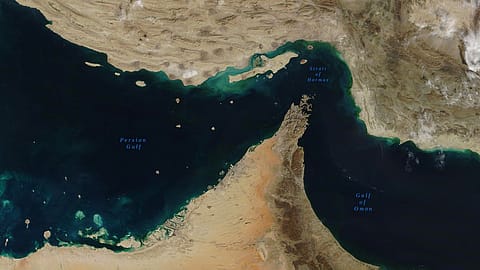
Among the most vital is the Strait of Hormuz which has been under blockade by Iran following the launch of attacks by US and Israel. | Credits: Shutterstock
From the Strait of Hormuz to the Panama Canal: Here are the major global trade chokepoints and the value they handle
Global trade relies heavily on a handful of narrow maritime chokepoints that carry most of the world’s seaborne goods, oil and container traffic. From the Strait of Hormuz and Malacca to the Suez, Bab el-Mandeb and Panama Canal, these routes handle trillions in commerce but are increasingly exposed to geopolitical tensions, disruptions and rising costs for shippers worldwide.
This summary is AI-generated, and Fortune India is not responsible for its content or any associated copyright issues.
Notably, 80–90% of global merchandise trade by volume is transported through these sea routes, according to estimates by the United Nations Conference on Trade and Development
Among the most vital is the Strait of Hormuz which has been under blockade by Iran following the launch of attacks by US and Israel. | Credits: Shutterstock
The narrow maritime passages across the world continue to underpin global trade, carrying a disproportionately large share of goods, energy supplies, and container traffic, even as rising geopolitical tensions expose the fragility of these critical supply routes. Notably, 80–90% of global merchandise trade by volume is transported through sea routes, according to estimates by the United Nations Conference on Trade and Development, highlighting the central role of maritime corridors in the global economy.
The Strait of Hormuz
Among the most vital is the Strait of Hormuz which has been under blockade by Iran following the launch of attacks by US and Israel. Through the strait, nearly 20% of the world’s oil consumption flows, as per data from the U.S. Energy Information Administration. The route is central to crude exports from major Gulf producers to Asia, including India, making it one of the most sensitive energy corridors globally. Any disruption here has an immediate impact on oil prices and freight rates.
Strait of Malacca: The busiest shipping lane in the world
Equally significant is the Strait of Malacca, the busiest shipping lane in the world. It carries around a quarter of global seaborne trade and a substantial share of oil shipments to China, Japan, and other Asian economies, according to industry estimates and multilateral studies. Its narrow width and heavy congestion make it a key vulnerability in global logistics.
The Suez Canal
The Suez Canal serves as the main artery connecting Asia and Europe, accounting for 12–15% of global trade and roughly one-fifth of container traffic, based on shipping industry data. Trade worth over $1 trillion annually transits through this route, underscoring its importance for manufactured goods, energy cargo and commodities.
Bab el-Mandeb Strait
At the southern end of the Red Sea lies the Bab el-Mandeb Strait, which handles nearly 8–9% of global trade, according to maritime analytics firms. As a gateway to the Suez Canal, disruptions here can directly affect shipping between Europe and Asia, forcing vessels to take longer and costlier routes around Africa.
Panama Canal
In the Americas, the Panama Canal facilitates about 5–6% of global trade, acting as a crucial shortcut between the Atlantic and Pacific Oceans. It is particularly important for US-bound cargo, energy shipments and agricultural exports.
Taken together, these choke points form the backbone of global commerce, with a major share of the world’s seaborne trade passing through them. However, their concentration also creates systemic risks. Shipping disruptions, whether due to conflict, accidents or climate-related factors, can quickly push up insurance premiums, rerouting costs and delivery timelines.
With tensions persisting in key regions such as West Asia and the Red Sea, industry experts warn that the smooth functioning of these maritime corridors will remain critical for stabilising global supply chains, energy markets and trade flows in the months ahead.
Follow Fortune India
NEXT STORY