The FAQs are AI-generated, and Fortune India is not responsible for its content or any associated copyright issues.
Govt says all seafarers safe amid West Asia tensions; fuel, LPG supplies remain adequate
/ 3 min read
The government said enforcement agencies remain on alert to prevent hoarding and black marketing of petroleum products
According to the ministry, digital adoption in LPG distribution has strengthened supply efficiency, with online LPG cylinder bookings rising to 99% and OTP-based deliveries exceeding 96%.
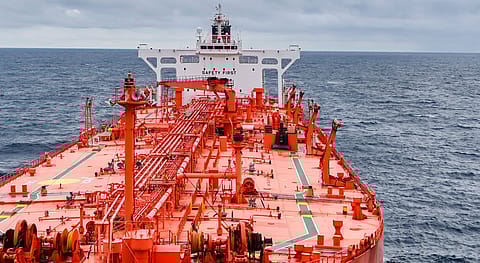
The Central government on Thursday said all Indian seafarers in the Gulf and West Asia region are safe and that no incident involving an Indian-flagged vessel or a foreign vessel carrying Indian crew has been reported in the past 72 hours, as New Delhi stepped up monitoring of the fallout from the ongoing regional conflict.
At an inter-ministerial briefing on developments in West Asia, the Ministry of Ports, Shipping and Waterways said it continues to work closely with the Ministry of External Affairs, Indian missions abroad and maritime stakeholders to ensure the welfare of seafarers and uninterrupted maritime operations.
“All Indian seafarers in the region are safe, and no incident involving an Indian-flagged vessel or foreign vessel carrying Indian seafarers has been reported in the past 72 hours,” said Opesh Kumar Sharma, Director in the ministry.
Sharma said the Directorate General of Shipping has handled more than 11,600 calls and 25,800 emails since the activation of its support mechanism for seafarers and stakeholders amid the crisis.
Maritime operations remain unaffected
The government also sought to reassure consumers on the availability of petroleum products, saying the country has sufficient stocks of petrol, diesel, LPG and natural gas despite concerns over potential disruptions in global energy markets.
Sujata Sharma, Joint Secretary in the Ministry of Petroleum and Natural Gas, said no LPG distributorship in the country has reported a stock-out situation.
“The country has an adequate stock of petrol, diesel, LPG and natural gas. No dry outs have been reported in any LPG distributorship,” she said.
According to the ministry, digital adoption in LPG distribution has strengthened supply efficiency, with online LPG cylinder bookings rising to 99% and OTP-based deliveries exceeding 96%.
The government said enforcement agencies remain on alert to prevent hoarding and black marketing of petroleum products.
Highlighting recent supply performance, Sharma said around 14.3 million domestic LPG cylinders were delivered across the country over the last three days. During the same period, about 19,000 tonnes of commercial LPG were sold, while more than 157,000 five-kilogram free trade LPG cylinders were distributed.
She added that over 800,000 piped natural gas (PNG) connections have been gasified since March, while infrastructure has been created for another 298,000 connections.
RANK
COMPANY NAME
REVENUE
(INR CR)
(INR CR)
{{#current-rank}} {{current-rank}} {{/current-rank}} {{^current-rank}} {{rank}} {{/current-rank}} {{name}} {{#revenue}} {{revenue}} {{/revenue}} {{^revenue}} {{noi}} {{/revenue}}
MEA advises against travel to Iran
Meanwhile, the Ministry of External Affairs advised Indian citizens against travelling to Iran as tensions persist in the region.
Additional Secretary (Gulf) Asim R. Mahajan said the government is closely monitoring developments across the Gulf and West Asia and continues to assist Indian nationals through round-the-clock helplines.
“Indian Embassies and Consulates continue to operate round-the-clock helplines to provide timely assistance and are proactively assisting Indian citizens,” Mahajan said.
He added that flight connectivity from the region is gradually improving, with additional services being operated to various destinations in India. “The overall flight situation continues to improve,” he said, noting that regular advisories are being issued covering local regulations, flight schedules and travel-related information.
ATF support to shield passengers
The briefing also highlighted the Cabinet's recent approval of a ₹10,000-crore aviation turbine fuel (ATF) price stabilisation mechanism aimed at insulating airlines and passengers from extreme fuel price volatility linked to the West Asia conflict.
Rohit Raj, Director at the Ministry of Civil Aviation, said the measure was introduced “in the larger public interest, to protect air connectivity, ensure stability in air services and shield passengers from the impact of extraordinary global volatility”.
He stressed that the arrangement is “not a subsidy, but a temporary stabilisation method” designed to smooth the impact of exceptional fuel price fluctuations while ensuring accountability and recovery of funds.
“By reducing the exposure of airlines to extreme fuel price fluctuations, the Government aims to minimise the pass-through of such cost to travellers,” Raj said.
According to the ministry, the support mechanism is expected to help airlines maintain operations and preserve connectivity, particularly for regional routes that are critical for tourism, trade, healthcare, education and investment. The government reiterated its commitment to maintaining affordable and reliable air services while supporting the growth of the civil aviation sector.
Frequently Asked Questions
NEXT STORY