India outpaces global manufacturing growth as supply chain shift boosts its appeal: ASSOCHAM study
/ 2 min read
India's manufacturing growth averaged 4.15% in the post-pandemic period, nearly two percentage points above the global average, as companies diversify supply chains beyond China, according to ASSOCHAM.
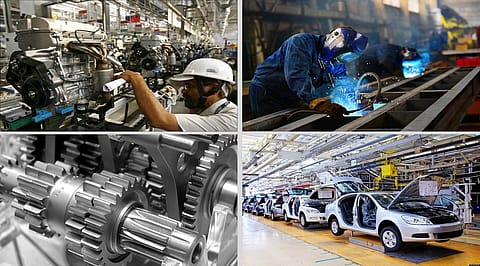
ASSOCHAM attributed India's improving manufacturing performance to expanding domestic demand, infrastructure upgrades, better logistics, rising investor confidence under the China+1 strategy and policy initiatives such as the PLI schemes | Credits: BDB
India is emerging as one of the biggest beneficiaries of the post-pandemic realignment of global supply chains, with its manufacturing sector outperforming the global average as multinational companies increasingly diversify production beyond China, according to a study by industry body ASSOCHAM.
The study, Global Manufacturing Undergoing Strategic Realignment: India Emerges as a Key Beneficiary of Supply Chain Diversification, found that India's average manufacturing growth rose to 4.15% during 2022-25 from 3.44% in the pre-pandemic period (2016-19).
This helped the country move from nearly one percentage point below the global average to almost two percentage points above it, underscoring its growing competitiveness amid the global shift towards China+1, nearshoring and friendshoring strategies.
India joins emerging manufacturing leaders
The analysis, covering the world's 10 largest manufacturing economies that account for nearly 65% of global manufacturing output, showed India joining the United States, Germany, France, Italy and the United Kingdom in outperforming the global manufacturing average after the pandemic.
In contrast, China—while retaining its position as the world's largest manufacturing economy—slipped from 2.4 percentage points above the global benchmark before the pandemic to 2.26 percentage points below it during 2022-25. Mexico remained the strongest performer, while Russia continued to post above-average manufacturing growth.
Policy reforms, infrastructure drive fuel momentum
ASSOCHAM attributed India's improving manufacturing performance to expanding domestic demand, infrastructure upgrades, better logistics, rising investor confidence under the China+1 strategy and policy initiatives such as the Production Linked Incentive (PLI) schemes, PM Gati Shakti and industrial corridor development.
The report also recommended accelerating logistics projects, strengthening domestic supplier ecosystems, promoting Industry 4.0 technologies and leveraging free trade agreements to deepen integration with global value chains.
"The global manufacturing landscape is undergoing a gradual but important shift. Companies are no longer looking at efficiency alone; they are equally focused on resilience and diversification. India's improving manufacturing performance reflects the impact of sustained reforms and growing investor confidence," said Nirmal K. Minda, President, ASSOCHAM.
He added that the next phase should focus on implementation, scale and building globally competitive manufacturing ecosystems to position India as a preferred partner in global value chains.
Follow Fortune India
NEXT STORY