Mumbai redevelopment pipeline may unlock 59,000 homes worth ₹1.5 lakh crore by 2031; 70 projects signed in Q1: Knight Frank India
/ 2 min read
Redevelopment activity gathers pace as developer agreements cross 1,050; suburban Mumbai accounts for 95% of projects, with Borivali emerging as the city's top hotspot.
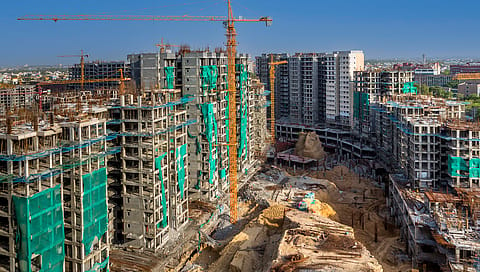
The property consultancy estimates that Mumbai's redevelopment pipeline could unlock nearly 59,000 new homes with an estimated market value of about ₹1.5 lakh crore by 2031. | Credits: Narendra Bisht
Mumbai's redevelopment cycle has entered a new growth phase, with nearly 70 developer agreements (DAs) signed in the first quarter of 2026—already accounting for over 30% of the total agreements recorded during the whole of 2025, according to a study by Knight Frank India.
The property consultancy estimates that Mumbai's redevelopment pipeline could unlock nearly 59,000 new homes with an estimated market value of about ₹1.5 lakh crore by 2031. Society redevelopment projects are also expected to generate more than ₹9,115 crore in stamp duty revenues over their lifecycle, underlining the segment's growing contribution to both housing supply and government revenues.
Developer agreements cross 1,050 as ageing housing stock drives demand
Redevelopment activity has accelerated amid rising urban density and an ageing housing stock. Knight Frank noted that Mumbai currently has 1,094 societies under redevelopment, collectively unlocking nearly 432 acres of land across the city. According to the Brihanmumbai Municipal Corporation's audit report, around 1.6 lakh buildings in Mumbai are more than 30 years old and require structural audits.
As of March 15, 2026, around 70 societies covering 52.2 acres had entered redevelopment, compared with 229 societies spanning 104.8 acres in the whole of 2025 and 196 societies covering 101.3 acres in 2024. Redevelopment activity also accounted for nearly 8% of Mumbai's rental housing demand as of March 2026, reflecting the growing number of residents relocating temporarily during project execution.
Cluster-led projects gain traction
The report highlights a structural shift towards larger redevelopment projects. Land parcels exceeding 10,000 square metre accounted for more than half of the total redevelopment area in 2026, aided by policy reforms such as DCPR 2034 and the Self-Redevelopment Policy.
Shishir Baijal, chairman and managing director of Knight Frank India, said redevelopment will remain central to Mumbai's long-term urban growth strategy as land scarcity and ageing residential stock continue to constrain greenfield development opportunities. He added that the increasing scale of projects and growing traction across suburban micro-markets point to a more organised and economically viable redevelopment ecosystem.
Borivali leads redevelopment activity; suburbs dominate pipeline
Suburban Mumbai continues to dominate redevelopment activity, accounting for nearly 95% of all projects. The western suburbs led with 773 societies under redevelopment, followed by 261 societies in the central suburbs.
Borivali emerged as Mumbai's leading redevelopment hotspot since 2020 with 220 developer agreements, followed by Andheri (115), Bandra (75), Malad (68) and Ghatkopar (59). Other active micro-markets include Kandivali, Vile Parle, Goregaon, Chembur and Mulund.
Gulam Zia, senior executive director, research, advisory, infrastructure and valuation at Knight Frank India, said redevelopment demand remains broad-based across established and emerging residential corridors. However, he cautioned that aggressive commercial expectations from both housing societies and developers could affect project feasibility at a time when the broader housing market is showing signs of moderation.
NEXT STORY