Retail inflation inches up to 3.40% in March on rising food prices
/ 2 min read
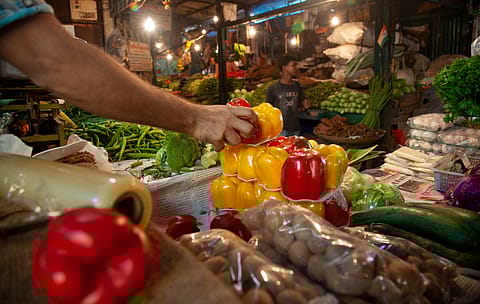
The rural component was higher at 3.96%, while urban food inflation was recorded at 3.71%, indicating continued pressure on essential commodities. | Credits: Fortune India
Retail inflation inches up to 3.40% in March on rising food prices
India’s retail inflation edged up to 3.40% in March from 3.21% in February, driven mainly by higher food prices, official data showed. Rural inflation, at 3.63%, outpaced urban inflation at 3.11%. Food inflation reached 3.87%, with rural areas again higher than cities, while housing inflation stayed subdued at 2.11%, reflecting contained price pressures in that segment.
This summary is AI-generated, and Fortune India is not responsible for its content or any associated copyright issues.
Food inflation, measured by the Consumer Food Price Index (CFPI), stood at 3.87% in March.
The rural component was higher at 3.96%, while urban food inflation was recorded at 3.71%, indicating continued pressure on essential commodities. | Credits: Fortune India
India’s retail inflation rose to 3.40% in March from a revised 3.21% in February, according to data released by the Ministry of Statistics and Programme Implementation on Monday.
The year-on-year inflation rate, based on the All India Consumer Price Index (CPI) with base year 2024, stood at 3.40% (provisional) for March 2026 compared to the same month last year. Rural inflation was recorded at 3.63% while urban inflation came in lower at 3.11%.
Food inflation
Food inflation, measured by the Consumer Food Price Index (CFPI), stood at 3.87% in March. The rural component was higher at 3.96%, while urban food inflation was recorded at 3.71%, indicating continued pressure on essential commodities.
Housing inflation
Housing inflation remained relatively subdued during the month, coming in at 2.11%. Within this, rural housing inflation was estimated at 2.54%, while urban housing inflation stood at 1.95%.
On inflation, the RBI in its latest MPC outcome last week observed that while headline inflation remains below target, upside risks have increased due to rising energy prices and possible weather-related disruptions. “Upside risks to inflation have increased, driven by higher energy prices and potential weather-related disturbances,” RBI Governor Sanjay Malhotra said.
Radhika Rao, Senior Economist and Executive Director at DBS Bank, said, "March inflation numbers were modestly higher, signalling the first round of price pressures in the wake of the Middle East crisis. Input costs were selectively passed on to end consumers, while food prices continued to normalise. Precious metals have come off the boil, though they remain up double digits on a year‑to‑date basis. We expect the impact of higher energy prices to gradually percolate over the coming months, as replacement supplies arrive with a lag. At the same time, we continue to monitor the risk of a fuel price increase in the weeks ahead. Core inflation, meanwhile, remained below 4%, reducing the need for the central bank to adopt a hawkish stance in the near term. The impact of higher oil and gas prices is likely to be more material in the WPI index."
The data is based on extensive price collection carried out by the National Statistical Office under the ministry. Prices were gathered from 1,407 urban markets, including online platforms, and 1,465 villages across all states and Union Territories through weekly field visits.
During March, price collection covered 100% of both rural and urban markets, with reporting efficiency at 99.93% for rural markets and 100% for urban markets, ensuring a high level of data accuracy.
Follow Fortune India
NEXT STORY