The FAQs are AI-generated, and Fortune India is not responsible for its content or any associated copyright issues.
Retail inflation rises to 3.48% in April as food prices remain elevated
/ 2 min read
Food inflation edged up to 4.20% in April, compared with 3.87% in March, underlining persistent pressure on essential commodities
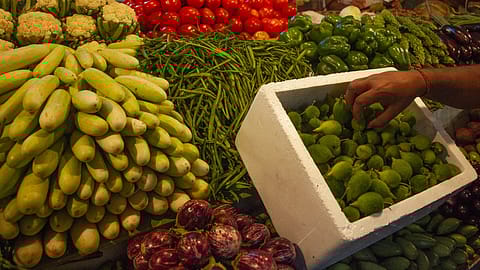
At the same time, certain food items continued to see high inflation, with tomato (35.28%) and cauliflower (25.58%) remaining expensive on a year-on-year basis | Credits: Fortune India
India’s retail inflation increased marginally to 3.48% in April compared to 3.40% in the preceding month, as food prices continued to remain elevated, according to data released by the Ministry of Statistics & Programme Implementation on Tuesday.
The year-on-year inflation rate based on the Consumer Price Index (CPI) stood at 3.74% in rural areas and 3.16% in urban regions, indicating a slightly higher price pressure in the countryside.
Food inflation edged up to 4.20% in April, compared with 3.87% in March, underlining persistent pressure in essential commodities.
"The April inflation reading came in softer than expectations. However, the outlook remains clouded with upside risks amid supply side disruptions from geopolitics and ElNino. We expect RBI to remain on a wait and watch mode for now to assess the pass through of the risks. However, the risks for early rate hikes (probably from October onwards) are building up,” said Upasna Bhardwaj, Chief Economist, Kotak Mahindra Bank.
Vegetable prices drag headline inflation lower
A sharp decline in key vegetable prices helped contain overall inflation during the month. Items such as potato (-23.69%) and onion (-17.67%) recorded steep deflation, easing pressure on household budgets.
Other categories like vehicles and household appliances also saw negative inflation, contributing to the moderation in headline numbers.
At the same time, certain food items continued to see high inflation, with tomato (35.28%) and cauliflower (25.58%) remaining expensive on a year-on-year basis.
Recommended Stories
Personal care, jewellery prices spike
Inflation remained significantly high in discretionary and lifestyle categories. Personal care and miscellaneous goods recorded inflation of 17.66%, the highest among major segments.
Precious metals and jewellery continued to see extreme price pressures, with silver jewellery inflation at 144.34% and gold and other jewellery at over 40%, reflecting global commodity trends.
Housing, transport remain stable
Core segments such as housing and transport showed relatively stable trends. Housing inflation came in at 2.15%, while transport inflation remained almost flat.
This suggests that while food and select discretionary categories are driving volatility, broader price pressures in the economy remain contained.
RANK
COMPANY NAME
REVENUE
(INR CR)
(INR CR)
{{#current-rank}} {{current-rank}} {{/current-rank}} {{^current-rank}} {{rank}} {{/current-rank}} {{name}} {{#revenue}} {{revenue}} {{/revenue}} {{^revenue}} {{noi}} {{/revenue}}
Southern states see higher inflation
Among major states, Telangana recorded the highest inflation at 5.81%, followed by Andhra Pradesh, Tamil Nadu and Karnataka, all reporting inflation above the national average.
The divergence highlights regional variations in price trends, particularly in food and services.
“In India, recently, a deviation between food and non-food inflation trends continues to impact the inflation outlook. Volatility in agricultural commodities, baring seasonal commodities, and precious metals may continue to influence household inflation expectations in the near term,” said Dr. Ranjeet Mehta, SG and CEO, PHDCCI.
What was the retail inflation in March?
For March 2026, India’s retail inflation stood at 3.40%, with rural inflation at 3.63% and urban inflation at 3.11%. Food inflation during the month was slightly higher at 3.87%, with rural food inflation at 3.95% and urban at 3.71%, indicating that price pressures were already building in essential items even before the uptick seen in April.