West Asia war: MSME lenders face first stress; vehicle financiers next as fuel shock ripples through economy, says Nomura
/ 3 min read
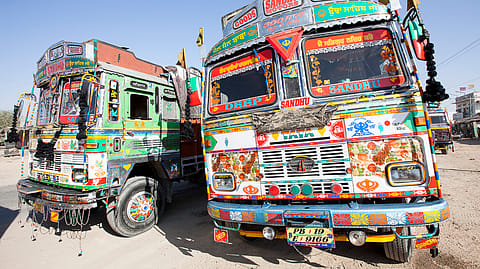
The brokerage estimates diesel prices could rise by about ₹10 per litre at $100 per barrel crude, with further increases of around ₹6 per litre for every additional $10 rise in crude. | Credits: Getty Images
West Asia war: MSME lenders face first stress; vehicle financiers next as fuel shock ripples through economy, says Nomura
Nomura warns that the West Asia conflict and fuel shock are triggering the first signs of stress for Indian NBFCs, with MSME and business loan lenders most exposed and vehicle financiers facing second-order pain as trips and freight activity decline. While asset quality pressure is expected to rise in these pockets, the brokerage does not see a system-wide balance sheet crisis emerging.
This summary is AI-generated, and Fortune India is not responsible for its content or any associated copyright issues.
The brokerage believes that retail fuel price hikes may have been deferred due to elections, with increases likely once the political cycle concludes around end-April.
The brokerage estimates diesel prices could rise by about ₹10 per litre at $100 per barrel crude, with further increases of around ₹6 per litre for every additional $10 rise in crude. | Credits: Getty Images
Non-banking financial companies (NBFCs) with exposure to MSME and business loans are likely to be the first to face stress from the ongoing West Asia conflict, with vehicle financiers expected to see second-order impact as supply chains weaken and freight activity slows, according to a report by Nomura.
“NBFCs will remain cautious on business/MSME loans; this segment could see elevated credit costs from 1Q27 and the risk of NBFCs slowing down disbursals,” the brokerage said.
The report, however, stopped short of flagging a system-wide balance sheet risk, instead describing the situation as a segment-specific stress event, with uneven impact across loan categories.
MSME stress building across industrial clusters
Nomura pointed to widespread disruptions across MSME hubs, citing multiple reports of production cuts, shutdowns and rising costs across sectors such as ceramics, textiles, engineering and auto ancillaries.
“Multiple media reports… indicate disruptions caused by lack of fuel, higher price of fuel and shortage of labour in different industrial belts of India,” it said, adding that “MSME-focused NBFCs will be first hit due to this.”
MSME-linked lending—including secured and unsecured business loans—accounts for roughly 24% of NBFC credit, making it among the most vulnerable segments.
Vehicle finance: trip compression, not just fuel costs
While MSMEs face direct pressure, the brokerage expects vehicle financiers to feel the impact through weaker logistics activity.
“The bigger challenge is from the reduction in number of trips,” Nomura said, highlighting that even if fuel cost increases are passed on, lower fleet utilisation could majorly hurt borrower cash flows.
Scenario analysis shows that net income for truck operators could fall sharply if trips decline, stressing risks for leveraged fleet owners.
For instance, net income for a used truck operator could fall from about ₹2.36 lakh to ₹81,000 if trips halve, while for new trucks it could drop from ₹1.81 lakh to just ₹26,000, highlighting stress potential for leveraged fleet owners.
Fuel pricing: delayed pain likely
A key assumption in Nomura’s outlook is that retail fuel price hikes may have been deferred due to elections, with increases likely once the political cycle concludes around end-April.
RANK
COMPANY NAME
REVENUE
(INR CR)
(INR CR)
{{#current-rank}} {{current-rank}} {{/current-rank}} {{^current-rank}} {{rank}} {{/current-rank}} {{name}} {{#revenue}} {{revenue}} {{/revenue}} {{^revenue}} {{noi}} {{/revenue}}
“We think that this move may buy some time till the state elections are over by end-April… the government may allow OMCs to raise prices gradually,” the report said.
The brokerage estimates diesel prices could rise by about ₹10 per litre at $100 per barrel crude, with further increases of around ₹6 per litre for every additional $10 rise in crude.
Not all segments equally exposed
On the other hand, Nomura flagged that some segments remain relatively insulated.
“On the flip side, asset quality in housing, gold and power loans is of lesser concern, in our view,” it said.
Power and housing together account for over 40% of NBFC credit, providing a buffer for diversified lenders.
Funding costs rise, favouring diversified lenders
The report also flagged pressure on funding costs, with AAA NBFC yields rising 61–68 basis points year-to-date.
“With cost of funds pressure mounting… we expect housing and diversified NBFCs to be better placed,” Nomura said, citing their higher share of floating-rate assets.
India’s energy buffer limits immediate risk
Despite the risks, Nomura does not expect an immediate supply crisis.
“Given India’s relatively comfortable position in terms of total reserves, we do not see energy lockdowns in India in the immediate future,” it said.
It also pointed to early signs of easing LPG supply as more vessels transit through the Strait of Hormuz.
The brokerage suggests the West Asia conflict is unlikely to trigger a broad financial shock, but could weigh on growth and asset quality in specific segments.
The immediate pressure is expected in MSME and business lending, with broader transmission through logistics, consumption and credit demand.
NEXT STORY