Air India grounds a Boeing 787 Dreamliner after fuel control switch defect
/ 3 min read
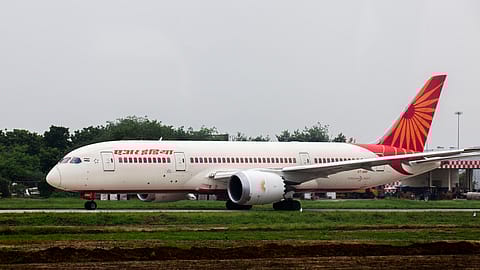
Alarming situation | Credits: Sanjay Rawat
Air India grounds a Boeing 787 Dreamliner after fuel control switch defect
Air India has grounded a Boeing 787 Dreamliner after a fuel control switch defect was reported by the crew of flight AI 132. This grounding is significant due to past concerns about the switch, linked to the crash of AI 171 in Ahmedabad. The incident may reignite debates over the crash's cause, with investigations ongoing.
This summary is AI-generated, and Fortune India is not responsible for its content or any associated copyright issues.
The grounding is significant, especially against the backdrop of concerns about the fuel control switch, whose movement is cited as the reason for the crash of Air India flight AI 171 in Ahmedabad last year
Alarming situation | Credits: Sanjay Rawat
Air India has grounded a Boeing Dreamliner aircraft after the crew of its flight AI 132, flying between London and Bengaluru, reported abnormal behaviour of the airline’s fuel control switch.
The grounding is particularly significant, especially against the backdrop of concerns about the fuel control switch, whose movement is cited as the reason for the crash of Air India flight AI 171 in Ahmedabad last year. According to a preliminary investigation by the Indian government, the cause was attributed to the fuel switch moving from the run to the cut-off position during take-off, which cut off fuel to the engines, leading to the crash.
The latest grounding by the airline is likely to reignite a debate over the probable cause of the accident, in which 260 people died, and was the worst crash on Indian soil in over a decade. Since the crash, speculation has been rife that the switch was intentionally moved by a pilot.
“We are aware that one of our pilots has reported a possible defect on the fuel control switch of a Boeing 787-8 aircraft,” a spokesperson for Air India said. “After receiving this initial information, we have grounded the said aircraft and are involving the OEM to get the pilot’s concerns checked on a priority basis. The matter has been communicated to the aviation regulator, DGCA.”
Air India checked the fuel control switches on all Boeing 787 aircraft in its fleet following a DGCA directive and found no issues soon after the crash. “At Air India, the safety of our passengers and crew remains top priority,” the spokesperson added.
The AI 171 crash in Ahmedabad involved a Boeing 787 Dreamliner, aged less than 13 years old, and was the first accident involving a Dreamliner. A month later, the country’s Aircraft Accident Investigation Bureau pointed to the fuel switches in the aircraft transitioning from "run" to "cutoff" position one after another, within a second of each other, as the cause, fueling speculation of pilot error.
The accident in July last year also curtailed Air India’s international operations and eroded customer confidence, and the airline lost its position as the country’s largest homegrown foreign carrier. If it is proven that the fuel switch is faulty, it would also absolve Air India to some extent for the accident and give the company a breather, as it has been plagued by criticism for its poor service and safety record.
The company returned to the Tata Group after seven decades but struggled for many years due to a lack of investment, poor service, overemployment, mismanagement, and a poorly timed merger with the government-owned Indian Airlines. For many years, Air India had been making losses.
Under the Tata Group, which took control of the airline in October 2021, the first six months were spent addressing accumulated issues, followed by an 18-month programme to invest in systems, people, aircraft, training, and internal products. That was to be followed by the growth phase. But a little over four years later, the airline has yet to deliver a significant breakthrough, while the country's largest airline, IndiGo has raced ahead and is now expanding into international markets and operating long-haul routes.
All eyes will now be on Boeing and what the DGCA makes of the fuel switch issue.
Follow Fortune India
NEXT STORY