Govt mandates QR code tracking for vaccines, antibiotics, cancer drugs in anti-counterfeit push
/ 2 min read
The provisions relating to vaccines, narcotic and psychotropic drugs, and anti-cancer medicines shall come into force from 1 July 2027, while the provisions relating to antimicrobials shall become effective from 1 July 2028.
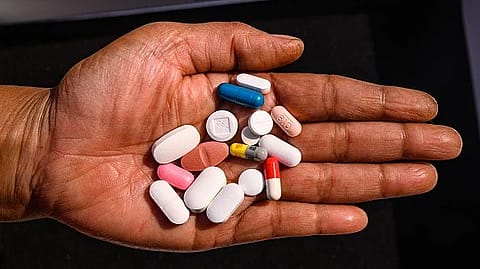
The QR Code shall store information that can be accessed through software applications to facilitate authentication and verification of the product throughout the supply chain. (Representational image) | Credits: Getty Images
Union Ministry of Health and Family Welfare has decided to introduce QR code-based track and trace framework for all vaccines, antimicrobials, narcotic and psychotropic drugs covered under the Narcotic Drugs and Psychotropic Substances (NDPS) Act, 1985, and all anti-cancer drugs that have been included under Schedule H2 of the Drugs Rules, 1945, in a phased manner.
The provisions relating to vaccines, narcotic and psychotropic drugs, and anti-cancer medicines shall come into force from 1 July 2027, while the provisions relating to antimicrobials shall become effective from 1 July 2028.
The move is seen as a major step towards strengthening the quality, safety and integrity of India's pharmaceutical supply chain. The staggered implementation through phased timelines for compliance was taken to provide adequate time to industry and other stakeholders.
With this amendment, manufacturers of these drug formulations will be required to print or affix a Bar Code or Quick Response (QR) Code on the primary packaging label of the product or, where there is inadequate space, on the secondary packaging label. The QR Code shall store information that can be accessed through software applications to facilitate authentication and verification of the product throughout the supply chain.
The QR Code will contain key product information including the unique product identification code, generic and brand names, name and address of the manufacturer, batch number, manufacturing and expiry dates, manufacturing licence number, and details of excipients, wherever applicable.
The requirement for QR Code-based identification was earlier applicable to the top 300 pharmaceutical brands in the country. The present amendment significantly expands its coverage to include all vaccines, antimicrobials, anti-cancer medicines and narcotic and psychotropic drugs, thereby broadening the scope of traceability and strengthening safeguards against the circulation of counterfeit and substandard medicines.
Once implemented, the enhanced traceability mechanism will facilitate authentication of medicines at various stages of the supply chain and enable improved tracking and verification of drug products. The measure is expected to strengthen regulatory oversight and support efforts to curb the distribution of spurious medicines in the market. It will also contribute to the national fight against anti-microbial resistance (AMR) by enabling better identification and monitoring of counterfeit and substandard antimicrobial products.
This will also help in tracking and authenticating NDPS Drugs supply chain to help in the nation's fight for "Nasha Mukt Bharat".
NEXT STORY