India’s Biggest Unicorns: CRED is banking on good credit for its future growth. Here’s how
/ 6 min read
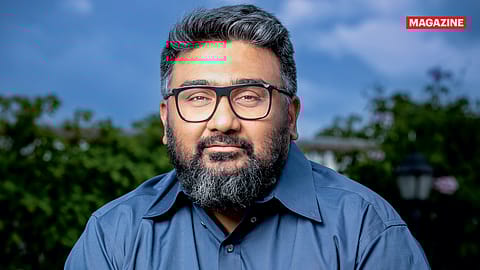
Kunal Shah, founder, CRED
India’s Biggest Unicorns: CRED is banking on good credit for its future growth. Here’s how
CRED, a fintech company founded in 2018, has carved a niche by targeting high-income, credit-disciplined users, offering rewards for credit card bill payments. Despite its mysterious business model, CRED has expanded into lending, vehicle management, and digital gold transactions, becoming a unicorn in 2021. With a focus on user experience and trust, CRED aims to stand out in the competitive fintech landscape.
This summary is AI-generated, and Fortune India is not responsible for its content or any associated copyright issues.
CRED, Kunal Shah’s second startup and No. 7 on the list, is drawing lessons from his experience as an early fintech mover to build a business focussed on high creditworthy and financially-aware individuals.
Kunal Shah, founder, CRED
This story belongs to the Fortune India Magazine march-2026-indias-biggest-unicorns issue.
THE INDIAN PREMIER LEAGUE, arguably the biggest tournament in the annual cricketing calendar, starts every March. But in 2020, when the pandemic struck, it was pushed back to September and the venue shifted to the U.A.E. As 2019 champions Mumbai Indians took on Chennai Super Kings at Abu Dhabi on September 19, viewers cooped up at home were intrigued by a series of commercials that featured their favourite ’90s stars — Madhuri Dixit, Govinda, Anil Kapoor, Bappi Lahiri, and Alka Yagnik-Udit Narayan — auditioning for ad spots of a financial services company and failing spectacularly. The product: CRED. The tagline: ‘Not everyone gets it’.
Open to only consumers with a credit score of at least 750, CRED — founded in 2018 — promised reward points every time you paid your credit card bill on the platform. The tagline was a play on the service not being offered to everyone, with a tongue-in-cheek reference to most people being unable to comprehend what the product was.
More than five years later, it is still “not everyone gets it”. What most don’t get is CRED’s moat, something that founder Kunal Shah has been questioned about quite often. Shah points to two things: one, compared to developed economies, India’s understanding of internet companies is still nascent; and two, it will take a while for people to adjust to these companies because they are not standard trading companies.
“It’s sometimes good that it is somewhat mysterious on how you make money and how you scale things because you want your differentiation factor to be unique enough for many, many years before it becomes quite obvious for people to know,” says Shah, who is also CEO of CRED.
Shaped by his family’s brush with financial problems early in life, Shah’s inclination towards finance and technology saw him sell Freecharge — his first venture — to Snapdeal in 2015 for closer to half a billion dollars. The exit cash turned him into a prolific angel investor. Before starting CRED, Shah had stints with Y Combinator and Sequoia Capital India, which he says has helped him understand how the India opportunity was different than what has been historically thought of to be.
What shaped CRED’s business proposition, as Shah puts it, were a few insights: one, focussing on a small customer base can generate meaningful revenue — something large financial institutions such as banks have always known; and two, having an original idea — because, trying to replicate playbooks of the U.S. or China was less likely to help build a solid Indian company. “The third bigger realisation was that if you are able to really identify unique pain points, [and] address a very differentiated market value proposition, the Indian consumer is quite willing to try unique apps and products, and investor confidence follows,” Shah tells Fortune India. CRED’s backers include Peak XV Partners, Sofina Ventures, and GIC, among others. The company became a unicorn in April 2021, after raising $215 million in Series D funding, reaching a valuation of $2.2 billion.
Inside Cred’s Business
More Stories from this Issue
Starting out as a credit card payment management facilitator with redeemable rewards, CRED has branched out into other allied financial services such as lending through partners, including IDFC FIRST Bank, Aditya Birla Capital, and Newtap Finance Private Ltd (where Shah has a majority stake), among others.
It also runs ‘CRED Garage’, aimed at vehicle owners to manage their insurance, challans, and other needs. CRED also allows its users to buy digital gold and receive physical possession of gold within 48 hours, which can be sold or redeemed at select outlets of brands it has tie-ups with. While members can also manage their investments on the app, more recently it launched the invite-only ‘Sovereign’ card, providing access to high-end lifestyle experiences — concierge services, early-stage investment opportunities, and curated, private events, among other benefits.
CRED claims 15 million users and 60% of multi-card holders in India are active on the platform. Shah explains that the focus on just credit card users as its customer pool allows it to build very differentiated products, which other fintech platforms may be missing. “I would say we may have competitors in the form of banks and fintech that offer similar monetisation products, but when it comes to focus on users, I don’t think we truly have competition,” he says.
By focussing on high-income, credit-disciplined users, CRED has built a low-risk database that can be a goldmine for banks and luxury brands. And it encourages users to centralise their financial data on one platform by offering CRED coins and rewards.
{{#most-powerful-women-snapshot-individual.slug}} {{/most-powerful-women-snapshot-individual.slug}} {{^most-powerful-women-snapshot-individual.slug}} {{/most-powerful-women-snapshot-individual.slug}} {{#showRanking}} {{current-rank}} {{/showRanking}} {{#photo.0.url}}
{{name}}
But what are its sources of revenue, since the app is free to use? According to industry watchers, CRED makes most of its money from financial services. These include loans (CRED Cash) and a P2P lending platform (CRED Mint, where it charges a service fee on the interest). Besides, brands pay fees and commissions to access its wealthy cohort on its curated marketplace (CRED Store) and to display targeted ads. CRED also earns commissions for merchant sites using its checkout option (CRED Pay), besides revenue from vehicle management (CRED Garage) and commissions on mutual funds/SIPs (Kuvera).
The company reported improved performance for FY25 in a press release it issued this January. Consolidated operating revenue for FY25 stood at ₹2,735 crore, 16% higher year-on-year, with gross margins at 70% and operating losses down by 51% to ₹298 crore, the release said. The company attributed this partly to deeper engagement of its users with the platform through multiple products that resulted in strong monetisation; 45% of active members engaged with three or more products resulting in an ARPU of ₹2,000, the release said.
In FY25, CRED’s lending business grew with AUM hovering at around ₹22,000 crore, the release said, adding that lending was one of the Top 3 revenue drivers, along with payments and insurance. “We focus on two broad categories of monetisation. One is cross-selling and distribution of financial services from regulated companies like banks, NBFCs, insurance, wealth companies, and we will continue to do that. We also help brands and merchants cross-sell on our platforms through deals, promotions, shopping, and so on,” says Shah.
But competition is intense. Not just established players such as banks and insurance companies, other fintech firms are also fighting for the same slice of the pie. Asit C. Mehta Investment Intermediates Limited’s credit card report for January 2026 shows that while card issuance remained healthy — with 870,000 million new cards being issued that month, taking the total cards in force to 116.7 million — the top four banks (HDFC Bank, SBI, ICICI Bank, and Axis Bank) accounted for 76.5% of total industry spends. “While card issuance remains steady, aggregate spends and transaction volumes have not scaled proportionately. This suggests that a significant portion of incremental cards may be issued to existing credit card customers… The current trend, therefore, indicates portfolio expansion is likely driven more by cross-sell than by meaningful customer base deepening,” the report says.
How then does one stand out? Shah says that how a platform engages with its users will define its future. “In the times to come, I foresee consumers spending more time on fintech apps vs. banks or insurance apps because the experience and the ability to build consumer experiences is unique to tech companies,” he explains.
The road ahead
In June 2025, CRED raised $75 million in Series G funding — at a valuation of $3.5 billion — led by GIC of Singapore, Sofina, and RTP Global, with additional investors, including DST Global, Tiger Global, Peak XV Partners, General Catalyst, Alphawave Global, and others.
With many home-grown fintech companies having gone public and more in the pipeline, Shah says it puts pressure on companies to accelerate because of some success stories. But CRED is unperturbed. “We will consider this at the time where we feel it’s right for the company. Not at this point of time,” says Shah.
For businesses in India being built on rewarding a certain type of consumer behaviour, Shah says that customer stickiness will be defined by a few factors. One, the user experience needs to be outstanding for the Indian consumer who now has access to global apps. And with AI in play, “I think people will not have any tolerance for low-quality, high-friction experiences,” warns Shah.
With ‘trust’ being fundamental to any financial business, Shah believes that consumers will truly continue to value things and products that create more trust and discard those that create mistrust or friction.
In the long run, he says, what matters is the brand being able to hold on to trust. “And trust is not limited to end consumers. You have to be trustworthy for banks, brands, and merchants who work with you. Ultimately, you have to become a high-trust network and be able to deliver experiences,” explains Shah.
Follow Fortune India
Sign in to read full story
To access our exclusive magazine content, sign in to your Fortune India account.
Sign In NowNEXT STORY