How French automobile major Renault is attempting a reboot in India
/ 9 min read
Renault reboot in India
How French automobile major Renault is attempting a reboot in India
Renault is making a strategic comeback in India with the reintroduction of the Duster, aiming to capture the growing SUV market. The new Duster features a strong hybrid engine, promising better mileage and city performance. Renault's focus is on building trust and relevance, with plans to expand its market share to 3-5% over the next five years.
This summary is AI-generated, and Fortune India is not responsible for its content or any associated copyright issues.
A look at how Renault built itself, failed, and is now attempting a reboot in India.
Renault reboot in India
This story belongs to the Fortune India Magazine march-2026-indias-biggest-unicorns issue.
IF THERE IS one thing Stéphane Deblaise is quietly confident about, it’s his deep understanding of cars.
That means a painstaking obsession with the stitches on a seat, the careful attention to the rattling or perhaps the silence of the engines, and even the thud of the door. Deblaise, an engineer by training, is the India CEO of the Renault Group, and has been in the role for a little over five months.
“I am a car guy,” Deblaise tells Fortune India. “I know every detail of the car, every stitch. I know why there are stitches, or why there are no stitches. Customers can feel the love you put into cars. And I can tell you that we are now putting a lot of love into our cars, and they will feel it.”
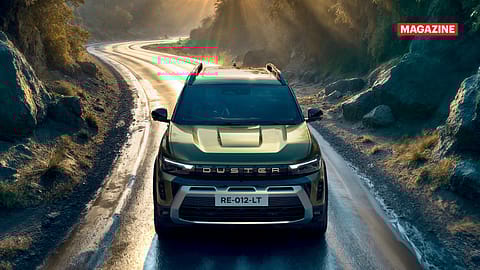
Deblaise and his team just launched the new Renault Duster, a vehicle that, in many ways, was the catalyst for India’s SUV boom around a decade ago. “Duster is really an icon,” Deblaise says. “It’s showing India that we are back, and we believe in this country.”
That’s also why, in an extravagant display of that intention, Renault booked Chennai’s Jawaharlal Nehru Stadium, a multipurpose outdoor stadium with a capacity of 40,000, to announce the return of the Duster, a vehicle that the company hopes will rewrite its fortunes in the world’s third-largest automotive market. The Duster was launched on January 26, marking a growing tradition among automakers of launching vehicles on days of patriotic fervour.
“The expectation is very simple,” adds Deblaise. “It is to capitalise on the past and to have a car for today’s consumer. This car is amazing, both in terms of ride and handling.” The USP, Renault feels, is the introduction of a strong hybrid engine that can run almost 80% of the time in city traffic on the electric motor, which will likely give the car additional mileage.
“From a strategic standpoint, the reintroduction appears to be a measured portfolio reset anchored in an established nameplate,” says Harshvardhan Sharma, group head, automotive tech and innovation, Nomura. “The earlier model had strong brand recall and was closely associated with positioning in India. At its peak, it had a majority share of volumes in the country, at a time when the mid-size SUV segment itself was significantly smaller.”
More Stories from this Issue
Today, India’s SUV segment, which accounts for 65% of the country’s car market, includes popular ones such as the Hyundai Creta, Kia Seltos, Tata Sierra, and Skoda Kushaq, alongside the Duster. “The segment has expanded materially, supported by sustained consumer preference for SUVs,” adds Sharma of Nomura. “In that context, revisiting a known product architecture can be viewed as a risk-calibrated re-entry into a growth category.”
The car of a generation
The Duster, in many ways, brought Renault closer to the Indian consumer.
Until then, the launches from the European carmaker’s stable had been the Logan, Fluence, Pulse, Scala, and Koleos. The Logan, a successful sedan in Europe, began selling in India in 2007 through a partnership with the Mahindra Group. But with decent interior space and a reliable engine, it soon fell into the fleet category, pushing personal car buyers away from the brand. Eventually, Renault sold its stake in the JV to Mahindra, which renamed the Logan, Verito.
The Fluence and Koleos, which were brought to India as import kits, too, failed to make a mark, while the Pulse and Scala, cross-badged versions of the popular hatchback Micra and the Nissan sedan Sunny, couldn’t entirely help Renault cement its place in the country. That meant the French automaker desperately needed something to showcase in India, especially after setting up a massive manufacturing plant in Chennai to build vehicles for the Renault-Nissan alliance.
{{#most-powerful-women-snapshot-individual.slug}} {{/most-powerful-women-snapshot-individual.slug}} {{^most-powerful-women-snapshot-individual.slug}} {{/most-powerful-women-snapshot-individual.slug}} {{#showRanking}} {{current-rank}} {{/showRanking}} {{#photo.0.url}}
{{name}}
Renault and Nissan have shared a global partnership since 1999. Mitsubishi was later brought into the partnership, commonly known as the Renault–Nissan–Mitsubishi Alliance. The partnership allows for cross-shareholding and the sharing of technology, platforms, and manufacturing to drive efficiency, while retaining individual identity.
For Renault, though, that’s where the Duster came into play. Conceived by Renault’s subsidiary, Dacia, in 2010, the Duster was built as value-for-money, with up to 70% localisation, higher ground clearance, and a price point that made SUVs more affordable in the country. The company also studied 30 Indian families in close proximity to understand their needs and tailor the product accordingly. In all, over 40 changes were made to the Duster sold in European markets for the Indian consumer.
Among other offerings, the Duster came with an additional rear AC vent, keyless entry, audio mounted on the steering wheel, an onboard trip computer, and electrically adjustable external mirrors. It went on to become a runaway success, and by 2014, accounted for over 80% of Renault’s sales in India. The company also launched an all-wheel-drive option and, in many ways, began redefining the compact SUV segment in India.
At launch, the Duster came in eight trims and three engine options, including a base 1.6-litre petrol version starting at ₹7.19 lakh and the 1.5-litre diesel at ₹7.99 lakh. Within six months of its launch, Renault had delivered over 20,000 units of the Duster, which grew to over 100,000 by 2014. In many ways, Renault’s success with the Duster also fuelled the craze for SUVs in India, prompting many of its competitors to focus on the space. Notably, the country’s SUV market leader, the Hyundai Creta, was launched only three years after the Duster.
“Renault’s India momentum dipped after the Duster because it couldn’t follow up with high-volume products in the right segments,” says Vivek Kumar, project manager, automotive, GlobalData, a London-based consultancy firm. “Its line-up remained narrow, and update cycles were slow, while rivals moved faster with newer, compact SUVs, making Renault’s offerings value-focussed, but less aspirational. Add to that a thinner dealer and service footprint and weaker resale confidence versus bigger players, and the brand struggled to sustain scale.”
The years of struggle
By 2015, Renault was selling over 53,000 vehicles in the country and had even launched the Kwid, a subcompact SUV. Three years after launching the Duster, Renault also brought out an updated version. The success of the Kwid and the Duster turned into a shot in the arm for the French automaker, which now had two very successful models in the country.
Within a year of its launch, the Kwid mopped up sales of over 100,000. The numbers meant Renault’s market share had swelled to 4.43% by 2017. It was Renault’s best numbers in its two-decade-long journey in India. The company also set a target of 320 outlets by 2017-end from the existing 270.
By 2018, however, sales had begun to slow down. Group chairman Carlos Ghosn was arrested in Japan on corruption charges, rattling the automaker’s expansion plans, especially in markets such as India, which often relies on the global team for direction.
“Post the initial success [of the Duster], a consistent presence across the key ₹10-20 lakh segment, which now accounts for a large share of the industry value, would have helped,” says Sharma of Nomura. “As competition intensified, especially from players with broader line-ups, dependence on a limited number of models increased its [Renault’s] vulnerability. Additionally, product lifecycle management and refresh cadence lagged peers, while brand positioning alternated between value-led and aspirational, reducing long-term clarity. Over time, this translated into lower volumes and sub-scale market presence.”
By 2022, Renault discontinued the Duster, and didn’t have much to show in India’s highly competitive SUV segment. “We should have kept the Duster alive,” says Francisco Hidalgo Marques, vice president, sales and marketing, Renault India. “Here, novelty really matters… We launched a car, but weren’t doing enough to keep it alive. We didn’t relaunch it. And people don’t forgive you for that. They want something new, or they move somewhere else.”
Today, the automaker has some serious challenges to tide over. The Indian passenger vehicle market has become more consolidated, with carmakers benefitting from scale, rapid development cycles, and well-established dealer networks. That means, for the likes of Renault, rebuilding momentum will likely require multiple competitive launches over a defined time horizon, and a clear signalling of long-term commitment to the market. “Without this, customer and dealer confidence can be difficult to rebuild in a market where alternatives are well-established,” adds Sharma.
The new ambition for India
With the launch of the new Duster in India, Renault aims to reboot its play in the country. The company currently sells three models, the Kwid, Triber, and Kiger, apart from the Duster, which is expected to begin sales in March this year. But, with sales of less than 50,000 units per annum, and a market share of about 0.8% in the world’s third-largest automobile market, it’s a tough task for Renault.
“The Duster has three ‘disruptions’,” says Deblaise. “The hybrid solution, [where the car runs] 80% of the time in EV mode in the city; Google’s automotive services; and two additional engines.”
But having a powerful engine and other features is only one aspect of the task. “A Renault reboot in India will have to be built on trust and relevance, not just value pricing, because buyers now want reliable, durable cars with comfort, safety, and hassle-free ownership, beyond mileage,” adds Kumar. “That means launching segment-right products with competitive features, and safety as standard, backed by high localisation, consistent quality, faster update cycles, and a much stronger after-sales promise (service reach, parts availability, warranties).”
Already, home-grown carmakers such as Mahindra and Tata have scripted a phenomenal turnaround in their domestic journeys, even sidelining Hyundai Motor in the fight, with their offerings in the SUV segment. “It will be challenging because rivals, especially home-grown brands, have cemented their advantage through dense networks, strong resale, and rapid product rollouts, so Renault must show clear differentiation and long-term commitment to rebuild confidence,” adds Kumar.
But there is a silver lining — the Indian consumer is often forgiving and gives a brand another shot at success, as evidenced by the cases of Tata and Mahindra. Even Skoda Motors, which took over as the lead brand for the Volkswagen Group in India in the volume segment, also expanded its dealer network after years of lacklustre performance.
“Indian consumers are tough,” says Marques. “They are very demanding because they want novelty and a lot of features. They want to be able to see them and show that they have done well in life. They are also very price-sensitive. That combination makes it a very demanding market, which is why we are so serious about India, because India has a massive potential.” Last year, Renault inaugurated its largest design centre outside France, in Chennai.
“India is a key pillar of our growth outside Europe, supported by a strong local ecosystem spanning design, engineering, and manufacturing,” says Fabrice Cambolive, chief growth officer, Renault Group and CEO, Renault brand. “As part of the Renault International Game Plan 2027, we are making India a key pillar of our growth outside Europe. The new Duster is the first step in Renault’s renewal in India.”
Can it get there?
For now, the Duster remains Renault’s priority for the Indian market. The new platform that the company has used for the Duster, the Renault Group Modular Platform (RGMP), is a scalable architecture designed to support multiple body styles, powertrains, and market requirements.
“We are working in three directions,” says Deblaise. “One is the engines. Secondly, you have connectivity, and finally, you have the body types. And at Renault, in India, we now have two platforms that we will use even more. The platform we call CMFA, which is... [used in] Triber and Kiger. And we will continue to improve and renew these kinds of cars, as well as the Duster platform, which is the new Renault global platform.”
For an OEM attempting a reboot, Sharma of Nomura reckons it hinges on three factors — portfolio focus, cost-value alignment, and competitive pricing. “Portfolio success will likely depend on sustained participation in high-growth SUV segments rather than a fragmented product strategy,” Sharma says. “Competitive pricing, combined with relevant features rather than excess complexity, will be important to sustain volumes.”
Renault isn’t likely to focus on multiple powertrains, unlike some of its rivals in the country, such as the Tata group and Mahindra. Both home-grown automakers have been expanding powertrain options across models. For instance, the Tata Nexon currently offers EV, petrol, diesel, and CNG powertrains. The Tata Punch, too, is sold across multiple powertrains.
“Today in India, you have diesel; we are, maybe, the last country with such high diesel cars,” adds Deblaise. “We have gasoline, CNG, hybrid, battery electric vehicle (BEV), and a very high level of manual transmission and automatic transmission. It’s the biggest diversity I've seen in the world. In China, everything is an automatic gearbox, whether electric or hybrid. In Europe, there are hybrid and EVs. But here you have everything. We think diesel will increasingly move towards hybrid.”
All said, Renault is targeting a 3-5% market share over the next five years. For the sharpshooting Deblaise, is that target achievable? “I am very confident,” he says. “If not, I leave. Market share is a result of what you do every day and the love you put into your cars. We put a lot of love into our cars.”
Follow Fortune India
NEXT STORY