India’s bet on creativity needs a cultural fix
/ 4 min read
The country’s youth dividend will convert into employment only if the scaffolding matches the ambition.
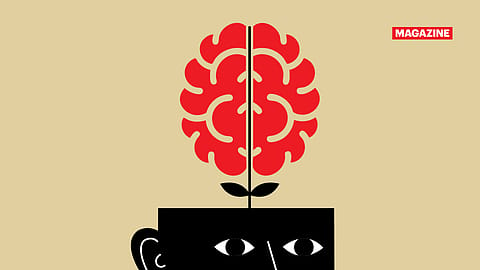
Credits: Anirban Ghosh
This story belongs to the Fortune India Magazine may-2026-biocon-next issue.
MANUFACTURING IS automating faster than it’s hiring. While it is essential for India to be competitive and be a key player, the country cannot build its employment future on perpetual wage competition in garments or assembly. What the country needs to add is not simply better factories — it needs employment engines that do not compete on cost at all.
That is where the creative economy matters. Animation, gaming, content creation, and digital services compete on storytelling, quality, and cultural resonance — not wages. Here, India already has vital building blocks: English fluency at scale, deep digital adoption, and a generation that instinctively creates content rather than merely consuming it. The government has recognised this, articulating plans through the Indian Institute of Creative Technologies to set up 15,000 content labs across schools and colleges by 2030, targeting two million professionals.
The knowledge grid
India’s creative advantage, in fact, does not stem from digital fluency — it includes cultural depth, which the government hopes to tap through the National Destination Digital Knowledge Grid. This will document places of cultural, spiritual, and heritage significance and provide opportunities for local researchers, historians, content creators, and technology partners. The idea is to turn India’s living culture into economic infrastructure.
When India documents destinations, it is not merely archiving history; it is building a new cultural production layer around places. Every well-told destination becomes a living curriculum: stories, maps, oral histories, and microeconomies that surround them. Yet this is not enough. Each destination must capture what lives and breathes: craft lineages, local food cultures, performing arts, music traditions, dance forms, theatre, and artists and practitioners who keep these alive.
When a destination grid displays not just monuments but living culture — a Baul singer in rural Bengal, a Kathputli puppeteer in Rajasthan, a Chhau dancer in Jharkhand, a pottery cluster in Gujarat — and better still, shows them using contemporary tools and platforms, it creates visibility, which creates demand. Tourists do not just want to see forts; they want to experience craft workshops, attend folk performances, commission artisans, and carry home stories along with mementoes.
Enabling artisans
More Stories from this Issue
Yet artists and artisans rarely reach audiences on their own. The knowledge grid can become the discovery layer, but someone must build the operating layer — curators who package experiences, managers who schedule performances, digital marketers who tell stories, event planning partners who oversee fulfilment, and platforms that connect creators to buyers. These intermediaries do not dilute authenticity; they enable sustainability. An artisan who cannot reach customers ceases to be an artisan. A musician without bookings stops performing.
If done with seriousness and commitment, this grid can become a demand engine for exactly the kind of work India is at risk of losing: artisanal skills, crafts, trades, and unique performance traditions that are fading because they were never contemporised, right-skilled or given modern distribution. The work and talent exist. What is missing: discovery, storytelling, market access, and the capacity to make culture economically viable and a true business that gives employment to millions.
This is where a larger employment strategy begins to take shape. Craft and culture already exist across rural and small-town India. The right exposure, design support, digital storytelling, and market access can turn a craft cluster into a micro-industry.
The good news is that the government has quietly added a practical enabler: it has removed the ₹10-lakh per-consignment value cap on courier exports for small businesses, artisans, and startups to access global markets through e-commerce.
{{#most-powerful-women-snapshot-individual.slug}} {{/most-powerful-women-snapshot-individual.slug}} {{^most-powerful-women-snapshot-individual.slug}} {{/most-powerful-women-snapshot-individual.slug}} {{#showRanking}} {{current-rank}} {{/showRanking}} {{#photo.0.url}}
{{name}}
Improving mobility
Yet this addresses only part of the problem. It helps artisans ship products, but does not help performing artists travel. What would unlock mobility for musicians, dancers, and theatre groups is a simplified touring and performance licensing framework. Currently, small artists face fragmented permit requirements across states — police clearances, venue approvals, amplification licenses, crowd management certificates — each with different fees and timelines. A unified digital single-window clearance for performances under a certain audience size (say, 500 people) would remove friction. Artists could register once, perform anywhere, and focus on craft rather than compliance. This is not a subsidy; it is removing administrative drag so talent can travel and earn.
Of course, labs and grids do not automatically become livelihoods: execution will decide everything. Content labs must teach production discipline, not just software. The knowledge grid needs academic rigour and local participation, not outsourced templating. Likewise, for crafts to become a real force multiplier, we need design upskilling, modern storytelling, and predictable routes to market.
The government has placed a bet on creativity as an employment infrastructure and culture as an economic asset. But the cultural fix we need now goes beyond what any policy can decree. It requires execution at scale — not just in metros, but in the towns and villages where culture already lives and artists already work. If content labs produce creators but only Bengaluru and Hyderabad can employ them, we fail. If the knowledge grid documents artists but doesn’t help them earn, the impact remains limited. If craft clusters gain visibility without business support to reach buyers, exposure becomes observation, not engagement.
The real question is, can India build a creative economy that spreads opportunity as widely as the culture it’s built on? India’s youth dividend converts into employment only if the scaffolding matches the ambition. Whether this succeeds depends on what no government policy can mandate: the entrepreneurs, the platforms, the simplified regulations, and the local ecosystems that turn visibility into income. The cultural fix — removing friction, building markets, enabling entrepreneurs — is what needs to happen next.
(Views are personal.)
Follow Fortune India
Sign in to read full story
To access our exclusive magazine content, sign in to your Fortune India account.
Sign In NowNEXT STORY