India’s Biggest Unicorns: Meet the rescaled and reimagined OYO that is redefining global hospitality
/ 6 min read
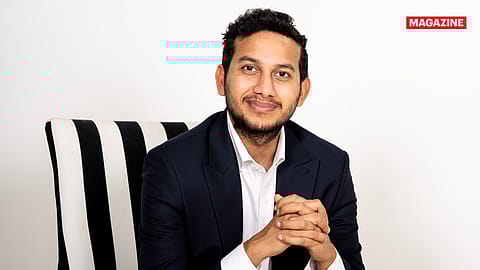
Ritesh Agarwal, Founder & Group CEO, PRISM
India’s Biggest Unicorns: Meet the rescaled and reimagined OYO that is redefining global hospitality
OYO's journey from a teenage experiment to a global hospitality giant is marked by resilience and transformation. Founder Ritesh Agarwal navigated challenges like inconsistent standards and a pandemic-induced slump to achieve profitability. The rebranding to PRISM and focus on premiumisation reflect a strategic shift, leveraging technology and AI to enhance customer experiences and operational efficiency.
This summary is AI-generated, and Fortune India is not responsible for its content or any associated copyright issues.
How OYO, ranked No. 6, is redefining global hospitality through premiumisation, technology, and disciplined growth.
Ritesh Agarwal, Founder & Group CEO, PRISM
This story belongs to the Fortune India Magazine march-2026-indias-biggest-unicorns issue.
THERE WILL BE challenges, but if you persist, there is always success at the end of the tunnel.”
For Ritesh Agarwal, the line is more than a motivational quote — it captures the rise, fall, and resurgence of one of India’s most closely watched startups. From a bold teenage experiment to a global hospitality chain, navigating failed models, intense investor scrutiny, a pandemic-induced collapse in travel and years of financial strain, OYO has seen it all.
Agarwal’s journey began far from boardrooms and valuations. He left Odisha as a teenager, determined to build something transformative. It led to the launch of Oravel Stays, with an aim to organise affordable homestays across India. The concept showed promise, but struggled with inconsistent standards, operational inefficiencies, and trust gaps between hosts and guests.
But rather than retreating, Agarwal absorbed the lessons. In 2013, at 19, he pivoted and launched OYO, short for “On Your Own”, with a sharper focus on standardising budget hotels. Backed by the Thiel Fellowship and investors like SoftBank, OYO scaled rapidly, expanding across cities and international markets to become one of the world’s largest hotel chains.
But then, rapid growth also had its pitfalls. The pandemic hit, crippling travel, and pushing the company into a prolonged financial slump. For a while, OYO became a symbol of the excesses of startup-era expansion.
What followed was a quieter, more disciplined rebuild. Over the next five years, OYO clawed its way back from a staggering loss of ₹3,937 crore in FY21, to sustained profitability. Losses narrowed to ₹1,942 crore in FY22 and further to ₹1,287 crore in FY23, reflecting steady financial repair. By FY24, the company had returned to the black with a net profit of ₹230 crore. Momentum continued into FY25, when profit after tax rose 7% year-on-year to ₹245 crore, supported by stronger revenue realisation, tighter cost management and operational restructuring undertaken over the past few years.
“Our profitability momentum has been driven by three factors: building loyal customers, focussing on quality over quantity in our portfolio, and maintaining a disciplined cost structure,” says Agarwal, who turned 32 on November 16. “In hospitality, loyal customers drive profitability. At the same time, top-line growth must translate into bottom-line discipline.”
More Stories from this Issue
For FY25, OYO reported revenues of ₹6,326 crore, registering a 14% YoY growth, driven by expansion in premium stays, international markets, and improved pricing discipline. Total sales also rose 16% YoY to ₹6,253 crore, aided by stronger operating traction across segments.
The turnaround was most visible in profitability indicators. Ebitda stood at ₹1,084 crore in FY25, maintaining positive momentum. It marked a significant improvement compared with losses recorded in earlier years.
In November 2025, global rating agency Moody’s Ratings reaffirmed PRISM’s B2 corporate family rating with a stable outlook, citing strengthening profitability and robust liquidity. The agency noted that PRISM’s “credit metrics remain appropriately positioned,” and said the stable outlook reflects expectations of “stable earnings and cash flows” over the next 12–18 months.
Rebranding for growth
{{#most-powerful-women-snapshot-individual.slug}} {{/most-powerful-women-snapshot-individual.slug}} {{^most-powerful-women-snapshot-individual.slug}} {{/most-powerful-women-snapshot-individual.slug}} {{#showRanking}} {{current-rank}} {{/showRanking}} {{#photo.0.url}}
{{name}}
In September 2025, the company rebranded its parent entity as PRISM, to bring its rapidly expanding global portfolio under a unified corporate structure. The portfolio spans diverse hospitality and travel segments, including brands such as Sunday Hotels and Townhouse, Motel 6, Belvilla, DanCenter, Studio 6, Innov8 and Weddingz.in.
For Agarwal, the move signals an evolution, aligned with shifting consumer behaviour, and positioning PRISM as a premium umbrella while retaining OYO’s brand strength. “We started the business over a decade ago with a strong focus on providing clean and comfortable accommodation in the budget segment, where there was a clear gap in branded offerings. Over time, as customer aspirations and incomes grew, we saw a strong demand for premium- and mid-market travel experiences,” he says. “PRISM gives us a unified umbrella that allows us to grow across segments, premiumise our portfolio and scale globally, while retaining a strong consumer connect.”
The restructuring followed the company’s acquisition of G6 Hospitality in 2023, a move that strengthened its North American footprint and accelerated evolution from a budget accommodation provider to a diversified, multi-format global hospitality ecosystem. “G6 Hospitality is an iconic American brand with a loyal franchise base,” Agarwal says, adding, many G6 owners are of Indian origin, which creates a strong emotional connection, and “combined with OYO U.S., this makes us one of the largest economy platforms in the U.S.”
A premium stay
As OYO looks beyond its stronghold in the value- and mid-scale segments, its next phase of growth is being shaped by a clear shift towards premiumisation, without abandoning the advantages of scale that helped build the brand.
Agarwal sees premiumisation as a response to evolving aspirations. “Our customers want better experiences. Our property owners want better yields. Our role is to build commercially sustainable models that deliver both—and that’s how we think about every new category we enter.”
“We are very focussed on thinking ‘customer-backwards’,” Agarwal says. “If you look at our journey, we started by solving [for] choice and standardisation in the economy segment. Then customers told us they wanted something more — better design, better service, and a more premium experience. So we evolved.”
The move to go upmarket is supported by structural advantages, since property owners operate across segments — those owning economy hotels, also own mid-scale or upscale properties, making expansion into those segments a lot more seamless.
Then there’s operational capability, which also aids premiumisation. “We manage over 1,500 hotels in India under our company-serviced programme. As we move into upscale categories, we mandate stronger on-ground management to ensure consistent service quality. Premiumisation without operational discipline doesn’t work,” says Agarwal.
In all these, technology is taking centre-stage. “Our central reservation systems, property management software, and dynamic pricing — all of it is built in-house. For premium offerings, we’ve even created a separate platform experience so that customers clearly differentiate between value and upscale products,” Agarwal adds.
Sunday Hotels, the premium brand from the OYO universe, reflects this ambition, particularly in the international markets popular with Indian travellers. Agarwal is aware of the opportunity. “As more Indians fly to destinations like Bali or Dubai, we want them to consider Sunday as their preferred upscale brand. We can offer them an upmarket experience that still feels familiar.”
SCALe meets strategy
Going forward, the focus will be on long-term growth — not through reckless expansion, but calibrated scale aligned with structural tailwinds in travel demand. The opportunity ahead is bigger than cyclical recovery; it is anchored in a generational shift in how Indians and global travellers spend.
“Our focus is to keep compounding what we’ve built — premiumisation, loyal customers, great service, and sustainable profitability,” Agarwal says decisively. “If we can continue strengthening these pillars over the next few years, we will have an incredible story in our hands.”
He believes the broader macro environment is creating a durable runway for growth. “The travel and hospitality industry, particularly short-term rentals, is growing faster than GDP in most parts of the world. India is on the path to becoming a developed economy, and this generation is choosing to spend more on experiences than goods. Demand for travel will remain strong.”
Commenting on rising hotel prices during major global events in the country, Agarwal thinks the challenge lies in supply rather than demand. “While room price increases are partly due to supply constraints, the solution lies in building more high-quality supply,” he explains.
Digital adoption, AI
Speaking on digital adoption and artificial intelligence, Agarwal highlights how technology is increasingly becoming the backbone of OYO’s growth and customer engagement strategy, particularly under its premium positioning through PRISM. “Over 65% of our revenues come through app and website. Direct digital demand allows us to provide better customer experiences and improve profitability.”
Explaining how technology is reshaping guest journeys, Agarwal points to the company’s operations in Europe. “In our Sunday Hotels in the U.K. and Europe, almost 100% of check-ins happen digitally through mobile-enabled locks. Guests upload their IDs, receive digital key codes and access their rooms seamlessly. Digital adoption improves efficiency for both customers and property owners.” He also emphasises that while PRISM is designed for digitally aware travellers, it encourages digital adoption among all kinds of users.
Despite the focus on strengthening direct channels, Agarwal reiterates the company’s commitment to third-party partnerships to remain a preferred brand across booking platforms.
For him, artificial intelligence is a generational technological shift. “AI will be a transformative force for every industry. Just as smartphones created trillion-dollar ecosystems, AI will define the next generation.”
OYO’s AI-led roadmap outlines some key areas. “For us, AI has four major applications: dynamic pricing to optimise yields, customised recommendations for customers, underwriting better location decisions, and improving customer distribution via foundational models,” Agarwal explains.
AI seems all set to drive both profitability and guest experience at PRISM’s 23,000-plus hotels and 2,00,000-plus homes across India and abroad.
Follow Fortune India
Sign in to read full story
To access our exclusive magazine content, sign in to your Fortune India account.
Sign In NowNEXT STORY