India’s long-term consumption story remains compelling, says HUL CEO & MD Priya Nair
/ 4 min read
Nair took over at a time when high growth was eluding the company and its core brands were losing sheen. But Nair has already set the ball rolling.
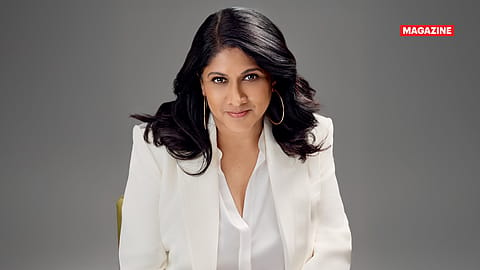
Priya Nair: “Demand conditions are stable, and we are seeing early signs of recovery across rural and urban markets.”
This story belongs to the Fortune India Magazine july-2026-mpw-100-most-powerful-women issue.
Priya Nair had one mandate when she took over as the CEO & MD of Hindustan Unilever (HUL) in August 2025: to move the growth needle of the legacy FMCG major. She took over at a time when high growth was eluding the company and its core brands were losing sheen. But Nair has already set the ball rolling. HUL achieved its highest growth in 12 quarters in Q4FY26. In an interview with Fortune India, she talks about her game plan for the next two-three years.
Edited excerpts:
You were celebrated not only as the first-ever woman MD & CEO of HUL but also by the industry at large. What did you tell yourself? Did being a woman CEO really matter, or was the focus more on taking HUL to the next level?
The role came with a deep sense of responsibility. I believe leadership is ultimately about outcomes. If my journey helps normalise seeing more women in such roles, that is important, but what matters to me is how the organisation grows, how our people thrive, and how consistently we deliver for consumers. My focus has been to drive performance, build a future-ready HUL, and stay deeply connected to our consumers and people.
You stepped into the role at a difficult time amid stiff competition and geopolitical disruptions. What has been your strategy? What has been your advice to your employees and the trade?
This is a challenging period. Our approach has been to stay firmly anchored in the fundamentals that have always served us well: deep consumer relevance, strong execution, and organisational resilience. We have been deliberate about continuing to invest where it truly matters, in strengthening our brands, driving meaningful innovation, and building capabilities in future‑ready channels.
India’s long‑term consumption story remains compelling. Demand conditions are stable, and we are seeing early signs of recovery across rural and urban markets. While near-term volatility will continue, the underlying drivers of growth give us confidence, supported by the strength of our portfolio across the price-benefit pyramid and a robust financial position that allows us to keep investing through cycles. This reinforces our belief that staying close to consumers and responding with agility is critical. My message to our teams and partners has been consistent: focus on consumers, remain agile in execution, and keep sight of long‑term value creation. When you combine discipline with clear direction, you can navigate volatility, build, and emerge stronger.
More Stories from this Issue
What’s your game plan for the next two to three years?
Our growth priorities will be shaped by the way India is transforming. A rising GDP, improved per capita income, a young demographic, and supportive macroeconomic reforms are creating a more enabling backdrop for consumption. The country’s low per capita FMCG consumption highlights the potential.
Over the years, HUL has been transforming with India. The utmost priority will be radical consumer segmentation. India is no longer one market, but many, with power spenders, premiumisers, and democratisers all evolving at different speeds. Our advantage is the breadth of our portfolio across the full price-benefit pyramid, which allows us to drive competitive, volume‑led growth while making targeted bets in high‑growth, high‑value spaces. Today, we hold leadership positions in over 85% of our business and have built 19 brands with annual turnover exceeding ₹1,000 crore. This ability to serve every demand space will be central to how we grow.
Building stronger brand desire at scale is another key focus. Through our SASSY framework, we are fundamentally stepping up how our brands show up across ‘science, aesthetics, sensorials, said by others, and youthful’. This is about making our brands more distinctive, contemporary, and culturally relevant, not through isolated initiatives, but through consistent execution across the portfolio. As we build desire, backed by strong execution, we are seeing this translate into healthier growth and improved portfolio quality.
{{#most-powerful-women-snapshot-individual.slug}} {{/most-powerful-women-snapshot-individual.slug}} {{^most-powerful-women-snapshot-individual.slug}} {{/most-powerful-women-snapshot-individual.slug}} {{#showRanking}} {{current-rank}} {{/showRanking}} {{#photo.0.url}}
{{name}}
We will also continue to modernise categories and shape new consumer habits. Category development remains a critical engine of growth. As consumers seek more performance, assurance, and convenience, we will invest in formats and technologies that redefine the categories.
Another priority is accelerating our frontline and omni‑channel execution. As India becomes a digital‑first consumer economy, we are rewiring our marketing and sales engine — from social‑first brand building to precision demand generation, and a next‑generation sales model across general trade, modern trade, e‑commerce, and quick commerce. Speeding up decision‑making, availability, and execution quality at the point of sale is central to this effort.
Finally, innovation and capability building will continue to underpin our growth agenda. With a dedicated India R&D structure and a more unified operating model, we can respond faster to market and channel dynamics. We are also being more ‘choiceful’ in where we invest, focussing on fewer, bigger bets that can meaningfully move the growth needle, while continuing to strengthen the fundamentals of the business. As India grows, becomes more affluent, and digitises, our focus will remain consistent: to modernise our brands, lead market development, and deliver competitive, volume‑led growth built for the next-decade India.
A recent report says that only 12-13% women are in CXO-level roles. Women in board roles are only slightly higher (19%). What needs to be done to change this equation?
When we talk about gender diversity in leadership, I always start from a simple belief: strong organisations are built on merit, fairness, and inclusion. Diverse teams make better decisions, stay closer to the consumer, and create more resilient businesses. It is about building environments where every talented person can realise their potential. At HUL, our approach has been to embed equity into the system. Today, women represent 42% of our managerial talent, reflecting years of investment in capability, culture, and enabling policies. But representation only matters if it is backed by everyday support and opportunity. That is why we have inclusive people-first policies, including enhanced parental leave, flexible and hybrid work models, caregiver policies, and frameworks that make it easier to balance work and life. These are essential to ensuring that talented individuals can sustain long, meaningful careers during various life stages.
For India Inc., the road ahead requires two accelerations. First, redesigning work to make it more inclusive for people at different life stages. Second, building cultures where belonging is felt every day. This means challenging biases, having transparent opportunities, and ensuring that inclusion is a lived leadership behaviour.
Follow Fortune India
Sign in to read full story
To access our exclusive magazine content, sign in to your Fortune India account.
Sign In NowNEXT STORY